The Best French Movies: Top Iconic Films from France.
France has long been known as the country where diverse and unique films are made. Therefore, the best French movies is an interesting topic that requires analysis by genres and scripts.
In general, the best French films can be both popular and independent. Thus, the TOP French movies can be tailored to one’s personal preferences.
The Best French Movies
French cinema has remained one of the most influential in the world for many decades. It is known not only for its authors' approach to directing but also for its ability to combine deep emotions, sharp humor, bright characters, and unconventional plots. Much of the cinematic movements that changed the perception of modern cinema and influenced directors of various generations originated in France. French films confidently embody the genres of drama, comedy, crime thriller, melodrama, and adventure action. They rarely rely solely on grand special effects; rather, the main focus is usually on character development, dialogues, and character psychology.
That’s why many French films remain relevant even decades after their premiere. Many have won prestigious international awards, become cult classics, or inspired numerous remakes in other countries. French actors have also made a significant contribution to the development of world cinema, creating dozens of characters that have become true classics. For many viewers, French cinema is associated with refined style, a unique atmosphere, and the ability to find unusual stories even in everyday life.
Among the most famous French films, special mentions include:
-
«1+1»;
-
«Amélie»;
-
«Léon»;
-
«Anatomy of a Fall»;
-
«Taxi».
These films represent different genres and eras, but each has become an important part of French cinema history.
French cinema has always been marked by its diversity. Some directors create intimate psychological dramas, while others prefer light comedies or intense crime stories. Regardless of the genre, French films often leave room for reflection and do not offer easy answers. This particular feature has made them popular far beyond the borders of France. Many films have received prestigious international awards, and some have become examples for directors from various countries. Strong scripts, high-quality directing, and convincing acting play a crucial role in this. French cinema is not afraid to combine drama with humor or lightness with serious social themes. That is why, even after viewing, many stories linger in the memory for a long time. Among the best French films of different years are «1+1», «Amélie», «Léon», «Anatomy of a Fall» and «Taxi». Each of these films demonstrates the strong points of the French school of cinema in its own unique way.
1+1 (Intouchables, 2011)
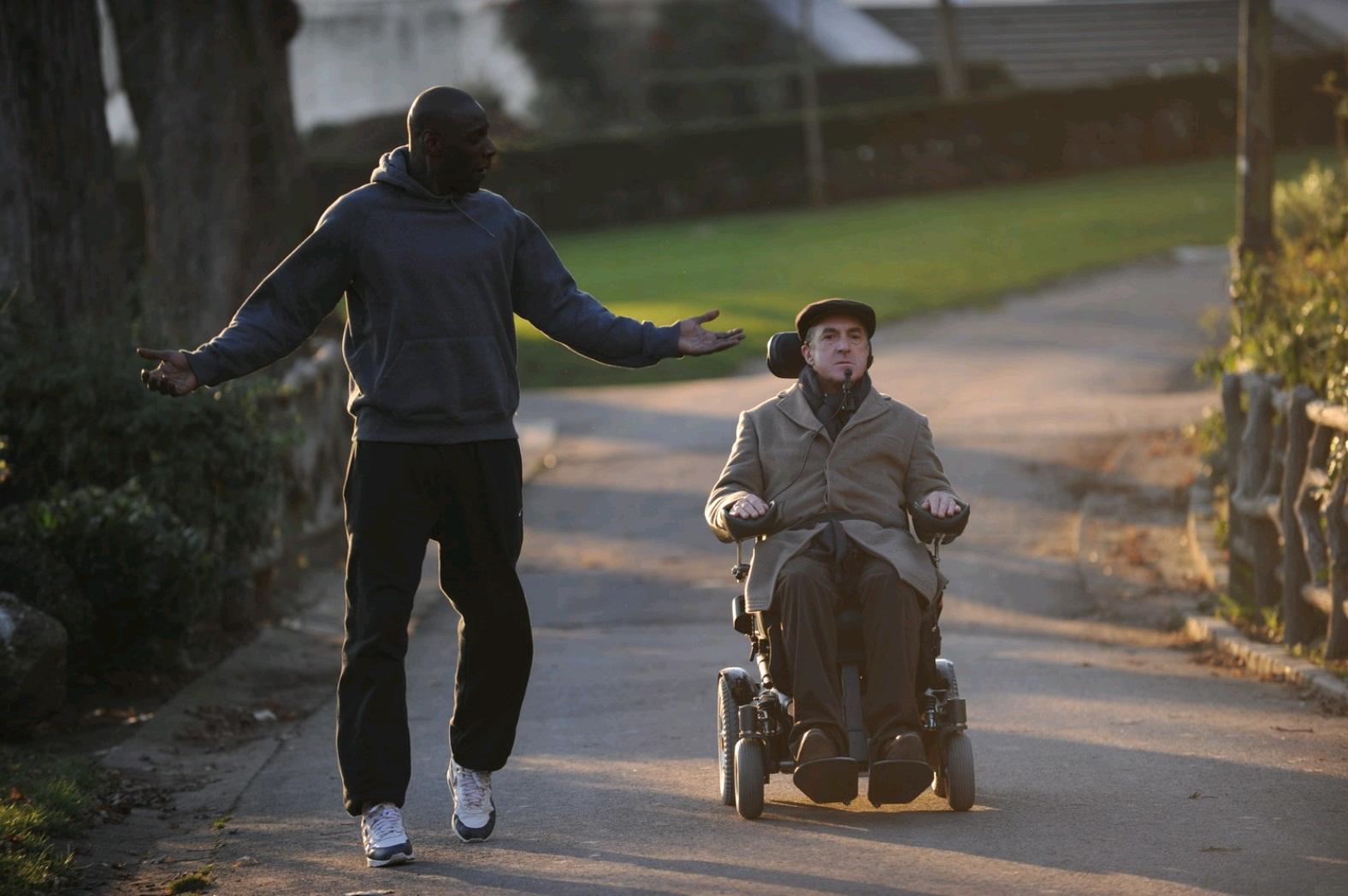
«1+1» became one of the most successful French films of the 21st century and gained immense popularity well beyond Europe. Directed by Olivier Nakache and Éric Toledano, the storyline is based on a true story. The main character, Philippe – a wealthy aristocrat – can only move in a wheelchair after an accident. His role was brilliantly portrayed by François Cluzet. To take care of himself, he unexpectedly hires Driss – a young man from the suburbs who has no experience as a caregiver. Driss is played by Omar Sy, whose charismatic performance earned him international recognition and a prestigious César Award. Despite their drastically different backgrounds, worldviews, and lifestyles, the characters gradually become true friends.
Driss reignites Philippe’s interest in life, helps him overcome loneliness, and rediscover the joy of ordinary moments. At the same time, Driss learns responsibility, discovers new opportunities, and reevaluates his life priorities. The film masterfully combines drama with comedic moments, which makes even complex themes feel natural and devoid of excessive pathos. It is the sincerity of the story, the convincing interactions between the lead actors, and the well-written dialogues that made «1+1» one of today’s most beloved French films.
Amélie (Amélie, 2001)
«Amélie» directed by Jean-Pierre Jeunet has long become a symbol of French romantic cinema. Audrey Tautou, who created one of the most famous female characters of the early 21st century, plays the main role. Amélie works as a waitress in a small Parisian café and leads a rather reclusive lifestyle. One day she accidentally finds a childhood box full of old memories and decides to return it to its owner. This act changes her life, as the heroine starts secretly helping others find happiness. She organizes small acts of kindness without expecting anything in return, gradually opening herself up to genuine feelings.
The film's special atmosphere comes from a vibrant color palette, unusual camera work, and the music of Yann Tiersen, which has become an inseparable part of the movie. Paris in the film is not just a setting but a full-fledged character in the story, with its own personality and mood. Audrey Tautou masterfully conveys Amélie’s shyness, imagination, and inner kindness, earning the character genuine sympathy. «Amélie» has become one of the most famous French films in the world and is still regarded as a model of refined romantic comedy.
Léon (Léon: The Professional, 1994)
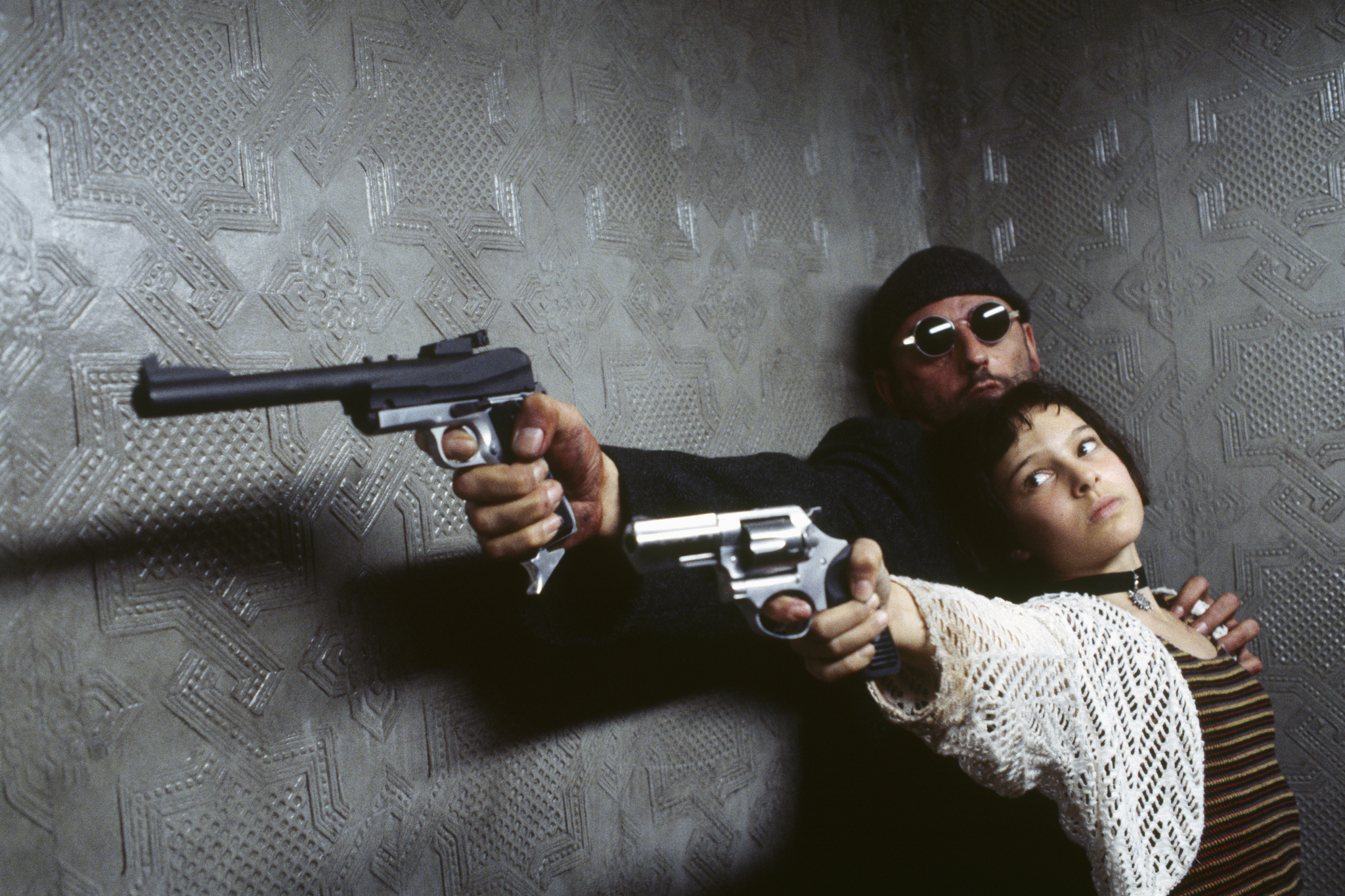
«Léon» directed by Luc Besson is long considered one of the best crime dramas in European cinema. The central character is professional hitman Léon, played by Jean Reno. He lives a secluded life, works for the mafia, and hardly lets anyone into his world. Everything changes after he meets twelve-year-old Mathilde, played by Natalie Portman in her first major role. After the brutal murder of her family, the girl finds refuge in Léon’s apartment. Gradually, a complex human connection develops between the characters, built on mutual trust and support.
Léon teaches Mathilde the profession of a hired killer, while she helps him see life from a new perspective, which previously only consisted of dangerous contracts. One of the most memorable characters is the corrupt police officer Norman Stansfield, portrayed by Gary Oldman. His unpredictable behavior and cruelty make him one of the most infamous villains in cinema. «Léon» successfully combines crime thriller elements with a psychological drama and emotional story about loneliness, responsibility, and the chance to change one’s life even when it seems that there are no options left.
Anatomy of a Fall (Anatomy of a Fall, 2023)
«Anatomy of a Fall» is a French courtroom drama directed by Justine Triet, which has become one of the most talked-about European film premieres in recent years. The film won the Palme d'Or at the Cannes Film Festival and received international recognition for its strong script and brilliant acting. The story centers on writer Sandra Voyter, played by Sandra Hüller. Following the mysterious death of her husband near their family home, she becomes the main suspect in a murder case.
The investigation cannot definitively determine whether it was a tragic accident, suicide, or intentional crime; thus, all circumstances are thoroughly examined during the trial. The couple's son, Daniel, plays an important role in the unfolding events, as he, despite his vision problems, cannot accurately reproduce what he saw, but his testimony gradually gains critical importance. The court proceedings become not only an attempt to establish the truth but also a detailed analysis of family relationships, hidden grievances, and psychological conflicts.
The director skillfully shows how an ordinary criminal case gradually shifts into the realm of personal experiences and moral dilemmas. Each new piece of evidence forces viewers to reevaluate the characters' nature, their motives, and relationships. The script is constructed in such a way that the audience cannot definitively decide until the very end whether the main character is guilty. This ambiguity creates a constant psychological tension. Sandra Hüller compellingly transmits her character's inner restraint, forced to defend herself not only from accusations but also from societal prejudices. Another important character is the lawyer, who gradually unveils hidden details of the couple's family life and helps see the situation from different perspectives. The dialogues deserve special attention, as they form the film's main dramaturgy. There is almost no traditional action or unexpected chases in the film; however, tension rises due to words, emotions, and subtle psychological nuances.
«Anatomy of a Fall» also explores the themes of creativity and family relationships. The couple had a tumultuous relationship associated with professional fulfillment, personal ambitions, and raising their son. The trial gradually reveals details of their shared life, making private conflicts subject to public discussion. The film raises questions about how well people can truly know even the closest members of their family and whether there is such a thing as completely objective truth. Thanks to its deep psychology, strong acting, and skilled direction, the film has become one of the best representatives of modern French cinema.
Taxi (Taxi, 1998)
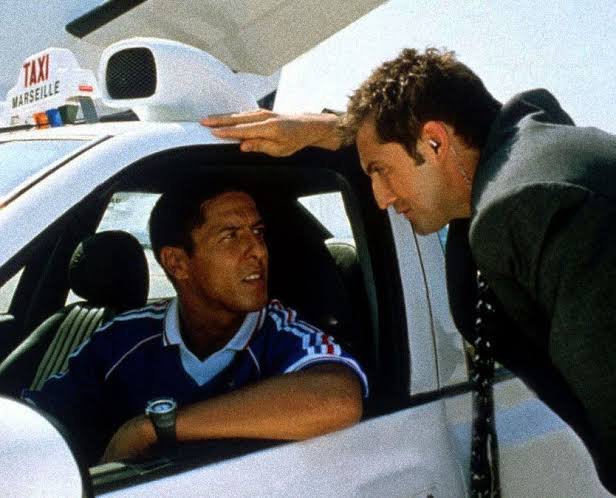
«Taxi» is one of the most famous French adventure comedies, which launched a popular franchise and made its main characters true audience favorites. The film's producer and screenwriter is Luc Besson, while the director is Gérard Pirès. The central character is Daniel Morales, played by Samy Naceri. A former courier, he fulfills his long-standing dream of becoming a taxi driver in Marseille. However, his car is far from an ordinary vehicle. Thanks to numerous technical upgrades, an ordinary Peugeot 406 instantly transforms into an exceptionally fast car, capable of easily overtaking even powerful sports cars.
After a traffic violation, Daniel meets inexperienced police officer Émilien, portrayed by Frédéric Diefenthal. Despite their differing personalities, they are forced to join forces to help the police catch a dangerous gang of criminals, who move in powerful cars and manage to evade capture each time. This is where a series of spectacular races, humorous situations, and unexpected adventures begins. The successful combination of action and comedy has become the film’s main feature. The creators skillfully maintain the plot's dynamics without overloading it with complex dramatic lines.
Samy Naceri created a charismatic character who feels at home behind the wheel and is not afraid to take risks for the sake of achieving his goals. Frédéric Diefenthal, on the other hand, convincingly embodies the image of a somewhat insecure yet friendly police officer who often finds himself in comical situations. The contrast between the main characters provides a significant portion of the humor. Secondary characters also received vibrant personalities, which made the story even more lively and easy to perceive.
Particular attention should be paid to the car chases. For the late 1990s, they appeared incredibly spectacular and technically complicated. Many stunts were performed without the use of computer graphics, which is why the chase scenes remain impressive even today. Marseille became not just a setting but a full-fledged part of the film's atmosphere. The narrow streets, waterfront, and urban roads are ideal for dynamic chases, which have become the hallmark of the entire franchise.
After the great commercial success, the first part received several sequels, and the «Taxi» series transformed into one of the most famous French film projects. The film proved that French cinema can create not only psychological dramas or romantic stories but also high-quality entertaining action films with excellent humor. Thanks to its charismatic characters, dynamic plot, vibrant car scenes, and light-hearted atmosphere, «Taxi» has remained a classic of French comedy cinema for over two decades and one of the most well-known European films about speed, friendship, and adventure.
Hate (La Haine, 1995)
«Hate» directed by Mathieu Kassovitz is considered one of the most important French social dramas of the 1990s. The events unfold over a single day following mass riots in the suburbs of Paris. The main characters are three friends – Vinz, Saïd, and Hubert – who live in a troubled neighborhood and face violence, unemployment, and constant tension in their relations with the police daily. They are played by Vincent Cassel, Saïd Taghmaoui, and Hubert Koundé. Despite their different backgrounds and personalities, all the heroes share a sense of hopelessness and lack of prospects. The film is shot in black and white, which further enhances the atmosphere of anxiety and social alienation. Kassovitz does not attempt to divide the characters into positive and negative but shows the complex world where violence begets new violence. One of the film's strongest aspects is its dialogues, which sound natural and closely resemble real life. Vincent Cassel convincingly embodies the image of a young man gradually losing control over his emotions, while Hubert's character seeks a peaceful way out of the conflict. This contrasting portrayal raises questions of responsibility, social inequality, and the influence of the environment on personality formation. The film’s finale leaves room for reflection and is still considered one of the most powerful endings in French cinema.
Life in Pink (La Vie en Rose, 2007)
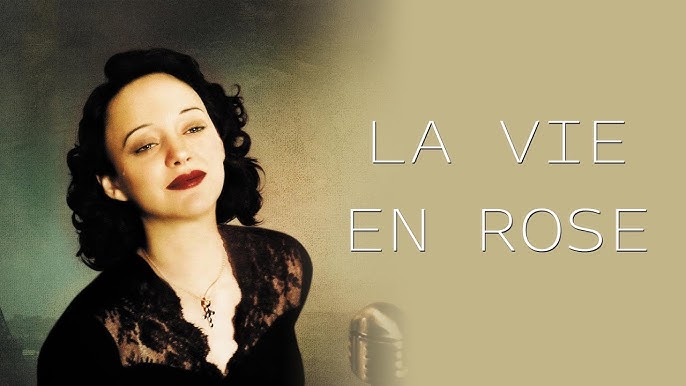
«Life in Pink» is a biographical drama directed by Olivier Dahan, dedicated to the legendary French singer Édith Piaf. The film covers various periods of her life – from a difficult childhood to worldwide acclaim and her final years of creativity. The central role is played by Marion Cotillard, who fully transformed into the famous artist. Her performance received the highest praise from critics and earned her an «Oscar», which was a significant event for French cinema. The film depicts not only Piaf’s stage success but also personal tragedies, losses, difficult relationships, and serious health issues. The creators paid significant attention to how life’s trials influenced the singer's creativity and her unique singing style. The film features some of Édith Piaf’s most famous compositions, which are intricately woven into the plot's development and emphasize the emotional state of the protagonist. Marion Cotillard remarkably conveys the transformation of the character’s personality over the years – from a young dreamer to a global celebrity. The visual presentation, costumes, and makeup allow for complete immersion in the atmosphere of mid-20th century France. «Life in Pink» has become one of the most successful French biographical films and rightfully ranks among the best films about outstanding artists.
The Artist (The Artist, 2011)
«The Artist» directed by Michel Hazanavicius became a true phenomenon in modern cinema. At a time when almost all films were made using the latest technologies, the creators took the risk of filming almost entirely a silent black-and-white movie, stylized like the films of the 1920s. The leading roles are portrayed by Jean Dujardin and Bérénice Bejo. The plot tells the story of a famous actor, George Valentin, whose career quickly declines after the advent of sound cinema. Meanwhile, young actress Peppy Miller rapidly gains popularity thanks to the new format of cinema. Against this backdrop, a complex relationship arises between the characters, intertwining support, mutual sympathy, and professional ambitions. Jean Dujardin excellently demonstrates acting mastery without a significant number of dialogues, relying on facial expressions, gestures, and physicality.
For this role, he won an «Oscar» for Best Actor. The film was also awarded for directing, music, and Best Picture of the Year. «The Artist» not only pays tribute to classical cinema but also reminds us of the complex transition of Hollywood from silent to sound films. Due to its unusual format, heartfelt story, and masterful execution, the film has become one of the most significant French films of the 21st century.
Breathless (À bout de souffle, 1960)
«Breathless» directed by Jean-Luc Godard became one of the main symbols of the French «New Wave» and had a huge influence on the development of world cinema. The main character, Michel Poiccard, is played by Jean-Paul Belmondo, while the role of American student Patricia is portrayed by Jean Seberg. After stealing a car and accidentally killing a police officer, Michel hides in Paris, trying to leave the country. At the same time, he attempts to convince Patricia to go with him, but their relationship gradually becomes more complicated. Godard deliberately rejected many traditional cinematic techniques, using improvisation, natural lighting, and the famous editing style with abrupt cuts, which later became his artistic signature.
The film significantly changed perceptions of the possibilities of directing and cinematic language. Jean-Paul Belmondo created the image of a charismatic antihero, which became iconic for several generations of viewers. The film combines a criminal plot with a romantic story and philosophical reflections on freedom, love, and personal choice. Despite its age, the film still appears modern due to its bold directorial decisions. That is why «Breathless» regularly finds its way onto lists of the best films in the history of world cinema.
The Count of Monte Cristo (The Count of Monte Cristo, 2024)
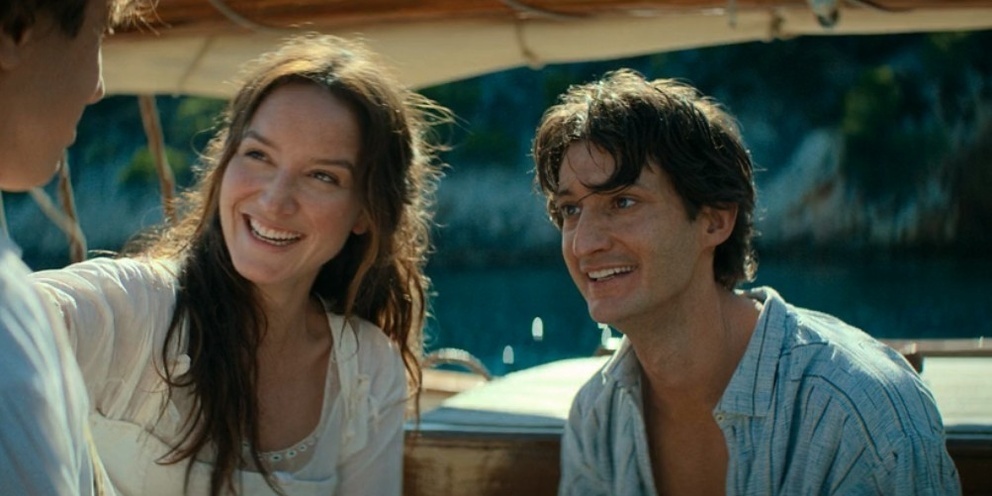
The French film «The Count of Monte Cristo» from 2024 has become one of the most monumental adaptations of the famous novel by Alexandre Dumas in recent decades. Directors Alexandre de La Patellière and Matthieu Delaporte aimed to preserve the atmosphere of the literary primary source while making the story comprehensible to the modern viewer. The lead role of Edmond Dantès is played by Pierre Niney, who convincingly displays the transformation of a young sailor into a mysterious and extraordinarily influential Count of Monte Cristo.
At the story's beginning, Dantès becomes a victim of a conspiracy by those closest to him, who, for selfish reasons, deprive him of his freedom and future. After years of imprisonment in the Château d'If, the hero escapes, finds the legendary treasure, and returns under a new alias to execute a carefully planned revenge on each of his wrongdoers. However, as the plot unfolds, revenge gradually ceases to be the hero's sole goal, as he must rethink his moral principles and the consequences of his decisions. The filmmakers paid significant attention to the historical decor, costumes, and details of the era, creating an expansive adventure film. Pierre Niney successfully combined restraint, intellect, and inner strength in the character, making him multidimensional and convincing. The film skillfully merges historical drama, adventure cinema, and psychological thriller while staying true to the main themes of the novel – justice, honor, love, and the price of revenge. Thanks to its quality production, strong cast, and respect for the classic work, the new «Count of Monte Cristo» has become one of the most notable French film premieres in recent years.
However, this list can be frequently updated, as the French also release new films regularly. They achieve great success and certainly have their audience.
Read also
- Movies about Betrayal: The Best Films about Passion, Deception, and Relationships
- Best Movies About Hitmen: Top Engaging Crime Thrillers
- 2026 Emmy Awards Nominees Revealed: Who's Competing for the Top Honors
- The Best Psychological Movies: A Top List of Engaging Films for the Mind and Emotions
- The Best Movies of the 90s: Top Cult Films of the Decade
- Ashton Kutcher's Movies: The Most Famous Roles and Popular Films of the Actor