Odesa covered by a red danger code: rains brought 224% of the monthly norm.

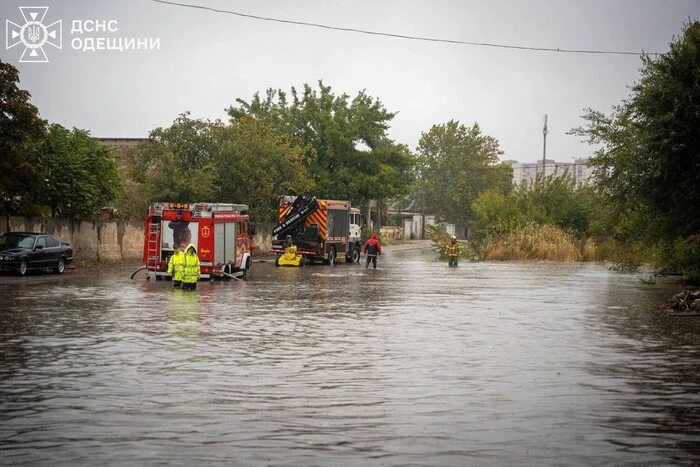
On September 30, Odesa was hit by heavy rains caused by a local cyclone over the Black Sea. In one day, 94 mm of precipitation fell - 224% of the monthly norm. Due to the danger of flooding, forecasters raised the warning level three times - from yellow to red. This was reported by 'Hlavkom', citing the hydro-meteorological center.
Reasons for Heavy Rains
According to inkorr.com: The cyclone over the Black Sea moved slowly, while the anticyclone hindered its displacement. This led to the intensification of atmospheric fronts and local downpours, forecasters explain.
Due to the growing danger, the warning level was raised several times. Heavy rains in the northwest of the Black Sea are becoming more frequent due to sea warming, active convective processes, and increased moisture in the atmosphere as a result of global warming. Climatologists note that extreme precipitation is now being recorded even in mid-latitudes, where they were previously rare.
Impact of Urbanization and Climate Change
Urbanization adds new risks: asphalt and concrete do not allow water to pass, leading to increased flows during rains. Studies from the USA and the UK show that in cities with high levels of development, water flows increase by 20-50% due to impervious surfaces, while climate change makes rains more intense. To adapt, it is necessary to implement 'green' infrastructure, such as permeable pavements and green areas that can reduce flooding by one third.
Heavy rains that hit Odesa due to a local cyclone caused significant precipitation, leading to flooding and a raised warning level. Climatologists note that extreme precipitation is becoming more frequent due to climate change. This underscores the importance of taking measures to adapt cities to new weather conditions in order to reduce the risk of potential consequences in the future.
Read also
- Romanian F-16 Shoots Down Drone Over National Airspace: Key Details on the Incident
- Zaporizhzhia Bombing: 30 Wounded, Including Seven Children, After Russian Airstrike
- Two Wounded, Furniture Store Damaged in July 24 Strike on Odesa
- July 24 Missile Strike on Kyiv: 10 Dead and Nearly 100 Wounded
- Deadly Strikes Hit Kyiv Region and Sloviansk: 11 Killed, Dozens Wounded
- Two Bombs Hit Sloviansk: 5 Killed and 9 Wounded in Russian Strike