Aurea's Shine 2.0: A Portable Wind Turbine for Charging Your Devices.

New Product from Aurea Technologies
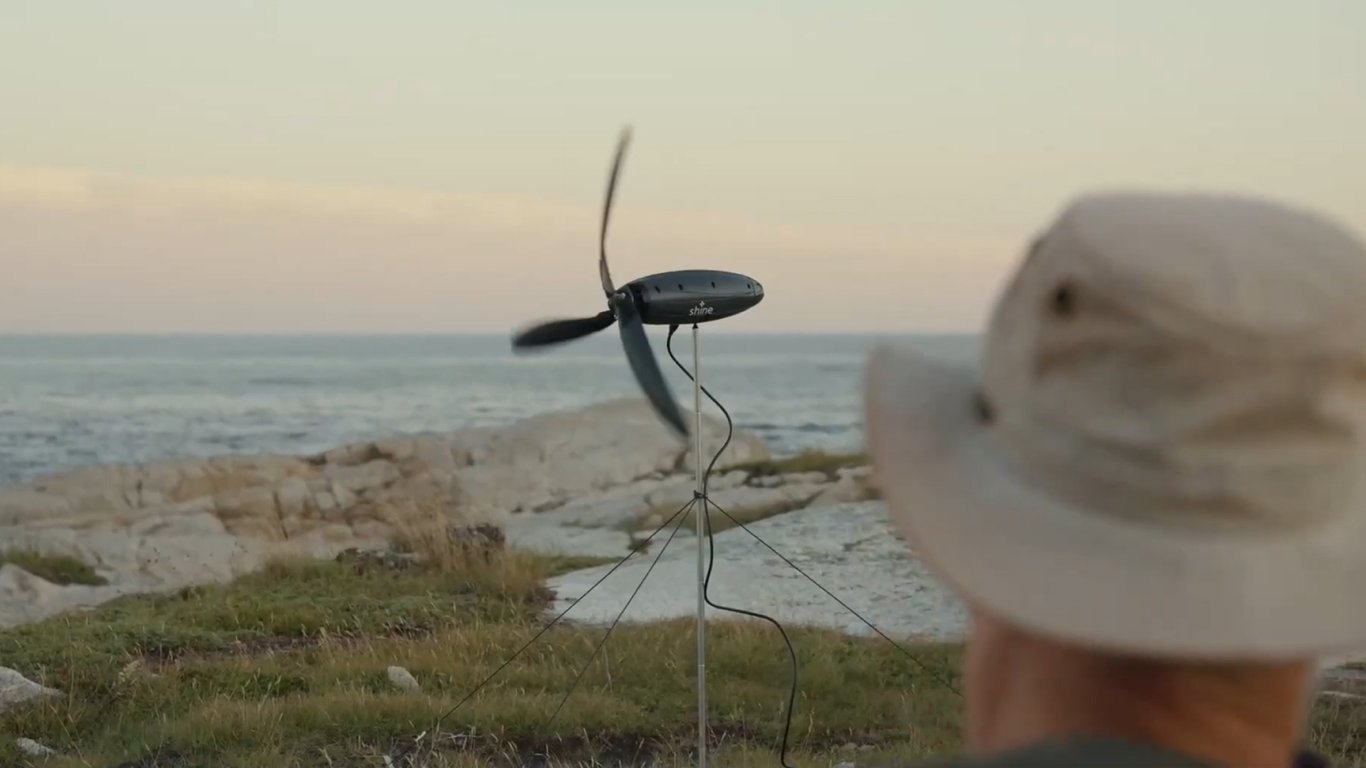
According to Novyny.live: Canadian company Aurea Technologies has unveiled the Shine 2.0, a portable wind turbine designed to charge small electronics in moderate wind conditions. Weighing approximately 1.4 kg, this innovative device is aimed at travelers and outdoor enthusiasts who need a reliable power source off the grid.
The turbine boasts a rated power output of up to 50 watts, making it efficient for charging various gadgets. It features a built-in 12,000 mAh battery for energy storage. Operation begins at wind speeds between 13 and 45 km/h, ensuring stable performance in variable conditions. Portable renewable energy solutions like this are becoming increasingly popular for emergency kits and sustainable travel.
Key Features of the Shine 2.0
- Equipped with a USB-C port supporting fast charging up to 75W.
- An early-bird price is set around $400.
- The expected retail price will be $571.
This release marks a significant step in the evolution of portable power sources, offering greater energy independence for electronic device users.
The Shine 2.0 wind turbine from Aurea Technologies highlights the growing demand for renewable energy in the portable device sector. Given current trends toward eco-friendly technology, such a device could see widespread adoption among travelers and outdoor adventurers seeking sustainable ways to power their gear.
This innovation underscores the importance of technologies that reduce reliance on traditional power grids, especially in a world with ever-increasing energy demands.
Read also
- NVIDIA Confirms Rigel Core for Rosa Processors: What to Expect from the Upcoming Lineup
- Intel’s 14A2 Process with Dual-Side Power Delivery: How It Could Reshape the Chip Market
- 260 Starlink Satellites Decommissioned by SpaceX: What’s Happening in Orbit
- First Jet1 Aircraft Model Now Under Assembly in Mojave: Promises Up to 50% Fuel Savings
- Seasonic Reveals RTX 5080 SUPER Specs: 415W TBP and 24GB Memory
- Electric vehicle range gets a massive boost as South Korea unveils next-generation battery electrodes