2026 may force Putin to go for peace: what will break the Kremlin.

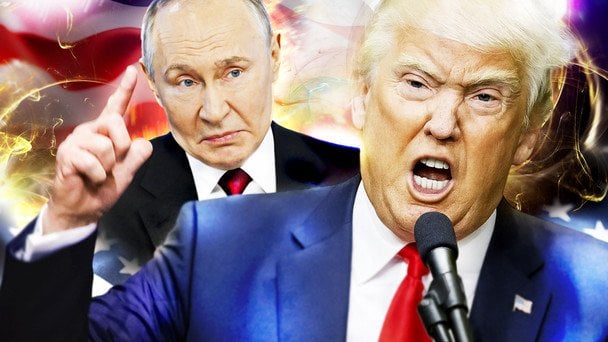
According to ТСН: Russian military forces are facing serious difficulties in the conflict with Ukraine, while the United States continues to demonstrate effective operations. Russia's economy is experiencing significant problems, and President Vladimir Putin may find himself in an even more complicated situation by 2026. There are several reasons that could compel the Kremlin to initiate real peace negotiations.
2026 has started poorly for Putin
This year has proven to be unsuccessful for Putin. As of January 11, the war had lasted 1,418 days - the same duration as the Great Patriotic War. During this time, the Soviet army was able to capture Berlin, while the achievements of the modern Kremlin are significantly paler. Last year, the Russian forces occupied less than 1% of Ukrainian territories. If the situation remains unchanged, Russia will need at least a year to gain control over the territories that Putin considers crucial for peace.
Maduro's arrest - a blow to the image of the Russian army
The events of January 3, when the U.S. arrested Venezuelan dictator Nicolás Maduro, dealt another blow to the reputation of the Russian military, demonstrating their weakness.
“The brilliant success of the Americans, who demonstrated what a 'special military operation' should actually look like through Venezuela, further demoralizes the residents of Russia - both ordinary people and the elite. The contrast between the highest efficiency of American military and intelligence services and the striking inefficiency of their Russian counterparts is too obvious,” said Russian political analyst Abbas Gallyamov.
Moreover, the situation has been complicated, as Maduro was considered one of Moscow's closest allies.
Seizure of the oil tanker - another painful signal for Putin
On January 7, the U.S. intercepted an oil tanker near Iceland, even with the Russian fleet accompanying it, which became yet another unacceptable signal for Putin.
Reform plan from Kozyak
The internal factor has also complicated Putin's position. His former ally Dmitry Kozyak, who recently left his position due to the war, released a large-scale reform plan in the influential Russian media. Political expert Oleg Ivanov noted that this document impresses with its boldness and proposes profound changes in key state institutions.
Although Putin may try to silence Kozyak, it is important to remember that he was not the only one warning about the consequences of the invasion of Ukraine in February 2022.
The war against Ukraine has cost Russia too much
Dissatisfaction is growing among those who formally supported the war. The conflict with Ukraine has become extremely costly for Russia. It is estimated that since the beginning of 2025 until mid-October, at least 100,000 Russian soldiers have died. The front lines, in fact, no longer exist - they have been replaced by a zone of destruction, where drones disable up to 80% of equipment on both sides.
Russia's military expenses in 2025 reached about 15.5 trillion rubles, which is five times higher than the level of 2021, not including the costs of maintaining the occupied territories.
The budget deficit forces the government to raise VAT, negatively impacting the lives of ordinary people and heightening the desire to end the war. Sociological studies show that support for the war among the population has sharply decreased.
Allies and oligarchs may force Putin to agree to peace negotiations
On January 8, Moscow categorically rejected the peacekeepers' proposal for deploying a contingent, while the Russian army struck the Lviv region with a hypersonic missile.
Despite the possibility of suppressing protest sentiments, Putin cannot wage war without the support of his entourage. If the U.S. provides Ukraine with means to fight against Russian aggression, the Kremlin's support may waver. War-weary allies and oligarchs may indeed force Putin to agree to peace negotiations that will be acceptable to Ukraine.
British expert Hamish de Bretton-Gordon believes that a peace agreement with Ukraine is the best scenario for Russia, as future events will only worsen the situation. The Kremlin may face a serious shortage of finances and human resources, and when the youth from the elite end up on the front lines, the oligarchs will begin to openly speak out against the war.
Currently, the Russian government is facing enormous challenges, both in terms of domestic politics and international relations. The prospects for peace negotiations may depend not only on formal proposals but also on internal pressure within the country. Economic difficulties and budget deficits can lead to changes in the political course in the Kremlin, especially if support for the war continues to decline.
Read also
- G7 Leaders Adopt Joint Declaration on Ukraine: New Air Defense Systems and Tougher Sanctions
- Putin Makes First Regional Trip in Seven Months Following Ukrainian Strikes
- Sibiga and Rubio Hold Pre-Evian Talks: Ukraine’s Frontline Gains, Cultural Losses, and the Iran Deal
- Energy and Military Challenges Could Trigger Leadership Shifts in Russia, Expert Warns
- Putin Will Only End the War When He Feels Personally Threatened, Says Political Analyst
- Zelenskyy Links Massive Strike on Kyiv to Putin's Birthday Greeting for Trump