The Sealed Tomb of China's First Emperor: Why the Terracotta Army's Resting Place Remains Unopened.

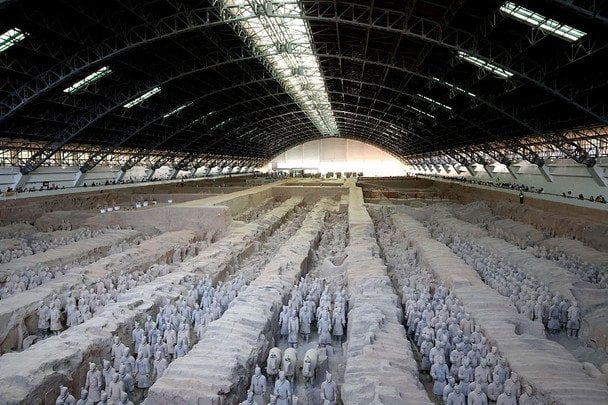
The Unopened Tomb of China's First Emperor: A Legacy Preserved by Danger
According to TSN.ua: In 1974, Chinese farmers made a stunning discovery: the Terracotta Army, a collection of 8,000 statues of soldiers, horses, and chariots guarding the mausoleum of Qin Shi Huang, China's first emperor. This incredible find is considered one of the greatest archaeological discoveries of the 20th century. Yet, the emperor's central tomb itself remains sealed and untouched by modern excavators. Archaeologists cite several major reasons for this caution: the fear of destroying priceless history, the potential for ancient booby traps, and alarmingly high levels of mercury in the soil above the burial chamber.
A primary concern is the fragile paint on the statues, which begins to flake and peel within a mere 15 seconds of exposure to air. This demonstrates how even minimal intervention could cause irreversible damage to these ancient artifacts.
The craftsmen were ordered to set up crossbows and arrows, rigged to shoot anyone who entered the tomb. — Sima Qian
There is a real possibility that such lethal trap mechanisms could have survived intact over 2000 years, adding a literal layer of physical danger to any excavation attempt.
Furthermore, soil samples reveal mercury concentrations over the tomb that are many times higher than normal levels, posing a significant toxic hazard to researchers. Collectively, these factors present immense challenges for scientists eager to explore this unique site. The tomb of the First Emperor therefore remains a profound mystery, guarding its secrets behind a wall of very real and modern dangers.
The Delicate Balance of Archaeology
The decision to leave the tomb unexcavated highlights the complex ethical and practical balance between archaeological discovery and the preservation of cultural heritage. Curators, researchers, and governments worldwide must carefully weigh the risks of disturbing significant yet vulnerable sites. This dilemma extends far beyond the Terracotta Army to many other archaeological treasures globally, which require cautious approaches and innovative solutions to ensure their survival for future generations.
Read also
- IAEA and 47 Nations Condemn Russian Strike on Ukraine's Nuclear Waste Storage Facility
- Russia's Supply Line Crippled: Bridge Strikes in Chongar Cut 100 km of Logistics
- Germany Pledges €300 Million to Czech-Led Ammunition Plan, Securing 50,000 Shells for Ukraine
- Mariupol Port Destroyed by Azov and SBU Forces, Cutting Off Russia’s Sea Access
- Ukrainian Forces Push Back Russian Army on the Alexandrovsk Front: New Gains Reported
- Can Russia Capture Kramatorsk and Sloviansk? The Growing Pressure in Donetsk Region