22 Dead Dolphins Found on Odesa Coast as Tuzly Estuaries Change Color.

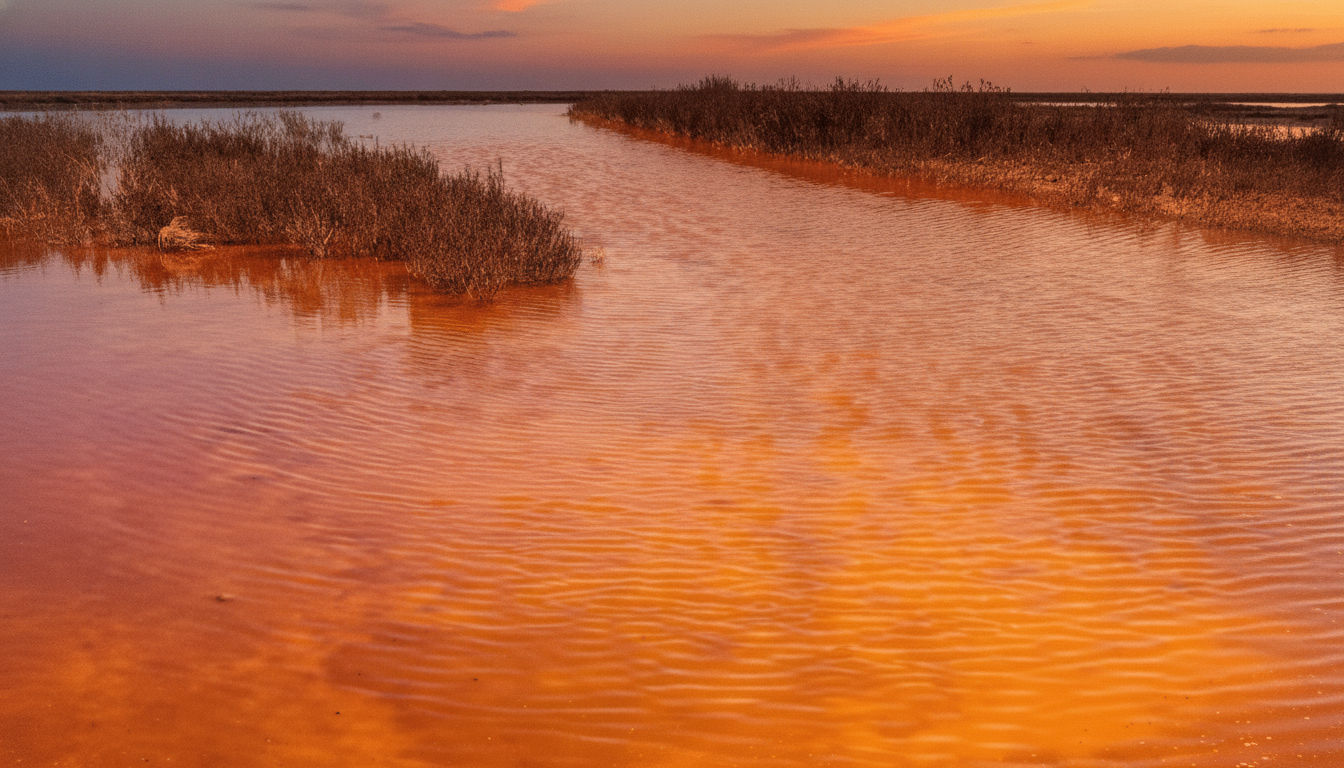
Water Transformation in the Tuzly Estuaries
According to Novyny.live: A striking shift in water color has been observed in the saline basins of the Tuzly Estuaries National Nature Park, driven by a rapid bloom of microorganisms. The water now displays brown and rust-like hues, attributed to organisms thriving in hyper-saline conditions, particularly the alga Dunaliella salina.
'The brown, rusty, or deep-orange tint seen in some smaller saltwater estuaries and cut-off lakes results from the explosive growth of specific microbes.'
Ivan Rusev
Rusev further explained that 'in shallow waters under the blazing sun, ultraviolet radiation becomes lethal. Beta-carotene acts as an optical filter.' He added that 'as water temperatures rise even more and salt concentration increases due to evaporation, this brown color often transitions into a striking bright pink or red.'
Dolphin Deaths Along the Odesa Coastline
Separately, the Odesa coastline has seen the deaths of 22 Black Sea dolphins. Over a 25-kilometer stretch of shore, the following were found:
- 20 harbor porpoises
- one bottlenose dolphin
- one common dolphin
An additional 15 dead cetaceans were later discovered. These incidents have raised alarm among scientists and conservationists, as they may signal broader ecological distress in the area.
The observed water changes and mass dolphin mortality point to potential environmental threats that could disrupt the local biosphere. Experts are urging more rigorous monitoring of the Tuzly Estuaries and adjacent waters to identify root causes and prevent further ecosystem decline. The microorganism bloom may indicate shifts in water quality, demanding immediate action from environmental agencies and state authorities.
Read also
- Romanian F-16 Shoots Down Drone Over National Airspace: Key Details on the Incident
- Zaporizhzhia Bombing: 30 Wounded, Including Seven Children, After Russian Airstrike
- Two Wounded, Furniture Store Damaged in July 24 Strike on Odesa
- July 24 Missile Strike on Kyiv: 10 Dead and Nearly 100 Wounded
- Deadly Strikes Hit Kyiv Region and Sloviansk: 11 Killed, Dozens Wounded
- Two Bombs Hit Sloviansk: 5 Killed and 9 Wounded in Russian Strike