An 800-Year-Old Gold Ring Found in Norway: Who Did It Belong To.

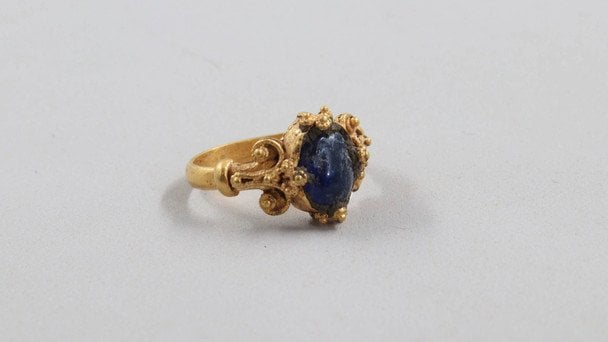
According to ТСН: In Norway, in the town of Tønsberg, which is considered the oldest in the country, archaeologists discovered a gold ring more than 800 years old with a large blue stone in the center.
This find was made last summer during excavations in southeastern Tønsberg. The archaeologist, commenting on the discovery of the ring, did not hide her emotions: 'I couldn't believe this was gold. Even after so many years in the ground, it has retained its distinctive shine.'
Description of the Find
The ring is small in size and likely belonged to a woman of high social status. It is adorned with delicate filigree work and a large blue stone, which is currently being studied - it could be either a sapphire or colored glass.
Archaeologists determined the approximate age of the ring through stratigraphy: the layer in which it was found is located below a layer dated from 1167 to 1269. This indicates that the ornament is older than this period.
The Social Significance of the Discovery
The discovery of the ring is important for understanding the social structure of early Tønsberg. It is believed that wealthy inhabitants predominantly lived in other parts of the city, but the find indicates that they also visited the excavation area, where craftsmen and common townspeople resided. The owner of the ring was likely a visitor from the upper echelons of society.
Researchers emphasize that the ornament may have been imported, which opens new horizons for exploring Norway's connections with other regions of Europe in the Middle Ages. The team of archaeologists continues to study the blue stone to definitively determine its origin and value.
As a reminder, archaeologists previously found ancient Russian beads in Volyn, with 289 glass beads, 288 of which are yellow-amber in color.
This find once again confirms how important archaeological discoveries can be for studying history and culture. The ring from Tønsberg not only adds information about the daily lives of people from that era but also highlights the complexity of social connections and trade routes in medieval Europe.
Read also
- Russia's Supply Line Crippled: Bridge Strikes in Chongar Cut 100 km of Logistics
- Germany Pledges €300 Million to Czech-Led Ammunition Plan, Securing 50,000 Shells for Ukraine
- Mariupol Port Destroyed by Azov and SBU Forces, Cutting Off Russia’s Sea Access
- Ukrainian Forces Push Back Russian Army on the Alexandrovsk Front: New Gains Reported
- Can Russia Capture Kramatorsk and Sloviansk? The Growing Pressure in Donetsk Region
- Ukrainian Drones Cripple Chongar Bridge to Crimea: Key Details on the FrontStrike Operation