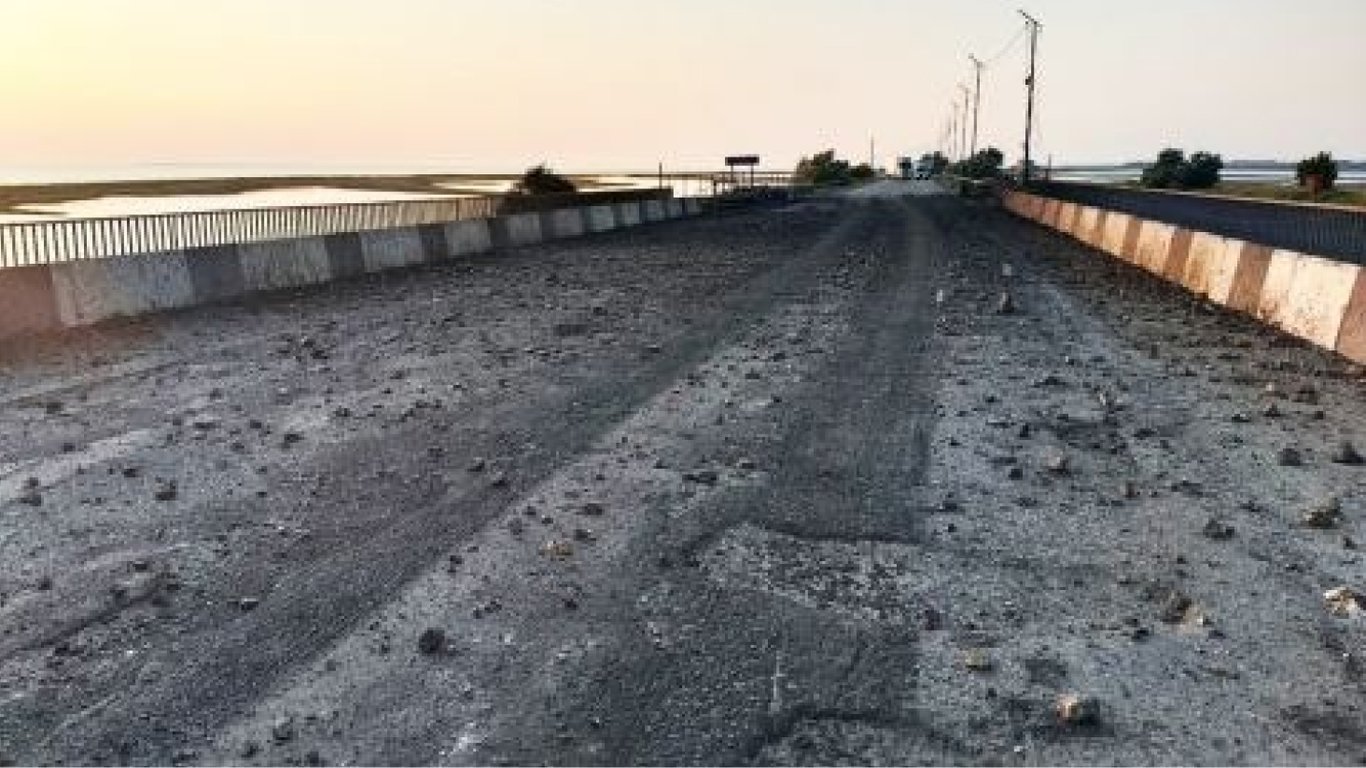
Three Bridges Near Armiansk Destroyed as Ukraine Disrupts Russian Supply Lines in the South.

How Strikes Are Crippling Russian Military Logistics
According to Novyny.live: Ongoing attacks on bridges and supply routes in southern Ukraine are severely hampering the ability of Russian forces to move equipment and personnel, particularly between Crimea and the Kherson region. Serhiy Bratchuk has highlighted the effectiveness of these operations, noting that strikes on logistics infrastructure occur daily. In the Zaporizhzhia sector, heavy fighting continues as Russian troops attempt to apply pressure using small infantry units.
Bridges Hit and Their Strategic Impact
Three bridges have been struck in the direction of Armiansk, including one that spans the North Crimean Canal. These precision hits are dismantling the Kremlin's military supply network. 'Three bridges on the Armiansk axis have been taken out,' Bratchuk stated. He acknowledged that the enemy may still rely on embankments or pontoon crossings, but the strikes are effectively supporting the objectives currently set for Ukrainian forces.
It is absolutely critical to keep up these kinds of strikes.
Serhiy Bratchuk
The persistence of these attacks underscores their strategic value in weakening the opponent's supply chain. 'At this point, you could say these routes are more alive than dead,' Bratchuk remarked, emphasizing that Ukraine's long-range strikes continue to disrupt Russian resupply efforts. According to Ukrainian intelligence, Russia launches over a hundred ballistic and hypersonic missiles each month, highlighting the intense volatility in the region.
As a result, continued strikes on Chongar and other critical infrastructure remain a vital tool in countering Russian aggression. These operations limit the enemy's logistical capacity and place additional strain on their forces.
The situation in southern Ukraine stays highly volatile, as attacks on supply corridors prevent Russian troops from effectively resupplying their units. Sustaining these offensives could significantly degrade the adversary's ability to conduct combat operations. With constant fighting ongoing, controlling key transport arteries has become a decisive factor for both sides in the conflict.
Read also
- Nearly 180,000 Targets Hit by Ukrainian Drones in May: Syrskyi Highlights Tactical Edge
- June 12 Brings a Sharp Weather Shift in Ukraine: From +30°C Heat to Hail and Downpours
- Severe Weather Hits Ukraine from June 12-14: Heavy Rain, Thunderstorms, and a Sharp Temperature Drop
- Ukrainian General Staff Reports 251 Combat Engagements in a Day as Russia Intensifies Assaults Near Pokrovsk and Huliaipole
- Demolition of a 1967 Bridge Marks Start of Overhaul near Kyiv’s Chernihivska Metro Station
- Ukrainian Forces Gain Upper Hand on Two Fronts: 73 Clashes and 1,190 Russian Casualties in a Single Day