Ukrainian tank crews create anti-drone hedgehogs: how homemade armor works.

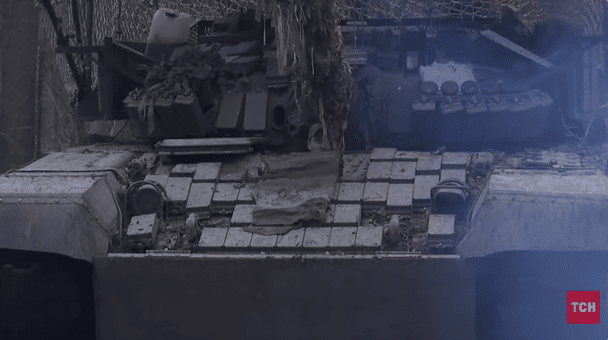
According to ТСН: Military personnel are developing tank defenses directly on the front lines, as enemy FPV drones have become a serious threat to equipment. Fighters from the "Charter" brigade have decided to strengthen their vehicles with homemade anti-drone "hedgehogs," creating front-line solutions during ongoing aerial attacks.
From "mangal" to "hedgehogs"
The protection of a tank that emerges from cover is referred to as "mangal" armor. Metal cables and wires, entwining the hull, serve not as camouflage but as reinforcements meant to protect the vehicle from FPV drones. Previously, simpler designs were sufficient, but the enemy quickly adapts.
"Holland," mechanic-driver of the 13th NGU "Charter" brigade: "Previously, about half a year to a year ago, these 'caps' worked well. They absorbed at least 90% of the impact. Now, however, the trend shows that technologies are not standing still, time is also passing, and they learn, and we learn from them."
When enemy drones started penetrating regular "mangals," tank crews began searching for new solutions. One of them is a structure that creates an additional screen around the vehicle.
"Ice," sergeant of the 13th NGU "Charter" brigade: "The drone cannot directly contact the armor due to our 'hedgehogs'. The impact goes to the screen, so to speak, made of cables we create — this provides about 80% better protection."
A week of welding work on one vehicle
Creating such a structure is genuine engineering work. Metal is cut, welded, and customized for each vehicle individually.
"Fedya," commander of the platoon of the 13th NGU "Charter" brigade: "Upon completion, the tank resembles a big hedgehog. As practice has shown, during an attack — either something blows up nearby or it can simply hang. To equip a tank with such 'hedgehogs,' and to weld it completely — it takes about a week."
Each element of these anti-drone systems is handcrafted. Soldiers spend hours cutting and unraveling cables, often in challenging conditions and from materials they manage to obtain.
"Lekas," tank loader of the 13th NGU "Charter" brigade: "In a day? Well, each person weaves about 15-20 pieces. It's hard, the back hurts, and you're in an uncomfortable position. It's difficult when we get poor cables. You unravel them, and they just fall apart, and all that work goes to waste."
Armor that gives a chance for survival
Tank crews note that this armor is not all-powerful. It cannot protect against heavy artillery or powerful ammunition. However, under conditions where the sky constantly buzzes with drones, even such homemade constructs can save equipment from destruction and the crew from injuries.
There is no time to wait for industrial solutions, as the war is rapidly changing.
The efforts of the "Charter" brigade fighters in creating protection for their tanks prove how important it is to quickly adapt to new threats on the battlefield. Creating such homemade structures not only reflects technical skills but also demonstrates the team spirit of soldiers who are ready to work under constant danger to ensure their own safety. Against the backdrop of the rapid development of drone technologies, such initiatives become a real salvation for Ukrainian soldiers in their fight.Read also
- Baltic Sentry: NATO Reduces Response Time to Sabotage from 17 Hours to One Hour
- Belgium Announces Major Aid Package for Ukraine, Including F-16 Delivery Timeline, Says Zelenskyy
- Kyiv Falls Behind on Winter Readiness: National Security Council Meeting Called Over $4 Billion Allocation
- Intercepted Russian Document Contradicts Claims of Drone Strike on Bus Carrying Belarusians, Says Ukraine's SBU
- Ukraine's Parliament Rejects Seven Motions on 2026 Budget: What It Means for Defense and Energy
- At the G7, Trump Proposed Backing Ukraine in Exchange for Iran Cooperation