Orban Vows to Block Ukraine's EU Bid for a Century, Prompting Second Zelenskyy Rebuke.

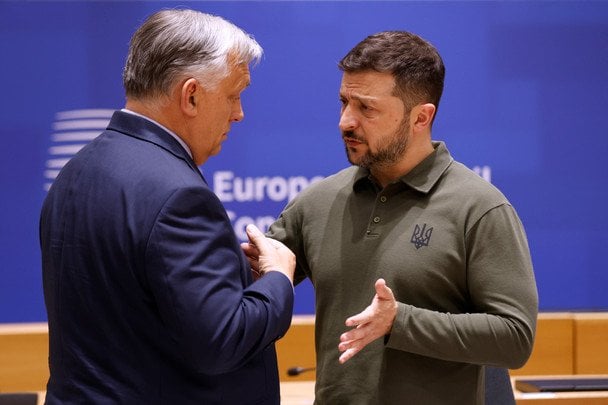
Ukraine-Hungary Tensions Flare at Munich Security Conference
According to TSN.ua: At the Munich Security Conference on February 14, Hungarian Prime Minister Viktor Orban declared his intention to block Ukraine's accession to the European Union for 100 years. This provocative statement, which drew significant international attention, prompted a second critical response from Ukrainian President Volodymyr Zelenskyy during the same day's proceedings. The long-running dispute centers on Hungary's objections to Ukraine's treatment of its ethnic Hungarian minority and broader geopolitical alignments.
During the conference, Zelenskyy was awarded the Ewald von Kleist Prize in recognition of his efforts to advance Ukraine's interests internationally. In his acceptance speech, he offered ironic thanks to Viktor Orban, stating:
“I even want to thank Viktor [Orban]. You all know who I mean. In his own way, he pushes all of us in Europe to be better.”This remark underscored the deep-seated tension between Kyiv and Budapest, framing Orban's actions as a challenge that ultimately strengthens European resolve.
Ukrainian Foreign Minister Dmytro Kuleba responded sharply to Orban's century-long blockade threat, asserting:
“Mr. Orban’s master in Moscow will not last another 100 years.”This comment highlights Ukraine's firm stance on its European integration path and its view of Hungary's position as being influenced by Russia.
Security and Integration Debates Take Center Stage
The Munich conference served as a crucial platform for discussions not only on security matters but also on Ukraine's EU integration, a topic currently causing divisions among member states. The event highlighted how bilateral disputes can significantly impact broader European policy and strategic decision-making.
The exchange between Zelenskyy and Orban illustrates the profound challenges Ukraine faces within the EU's consensus-based system. These ongoing disagreements may carry serious implications for European unity and the bloc's ability to respond cohesively to regional geopolitical threats, particularly from Russia.
Read also
- Abramovich’s Role in Talks Exposed by Rybachuk: Putin’s Key Question for Zelenskyy
- Putin Acknowledges Russian Military Setbacks: 'Progress Not as Fast as We Would Like'
- Up to 400,000 UAH in Extra Pay for Soldiers: Zelenskyy Unveils Contract Overhaul
- New Military Pay Hikes Announced by Zelensky: What Soldiers Will Earn
- Ukraine Strikes Target 800 km Inside Russia; Zelenskyy Announces Major Pay Hikes for Troops
- Sanctions Imposed by Zelenskyy Target Russian Judges and Media Outlets – 29 Individuals Listed