Six new species of barking geckos discovered in the Namib Desert.

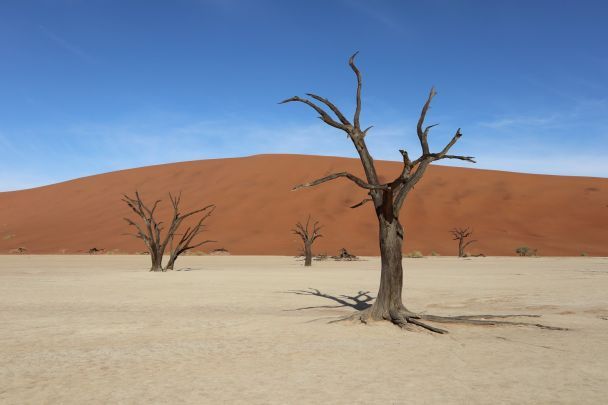
According to ТСН: In the Namib Desert of South Africa, scientists have made an important zoological discovery, expanding the number of known species of barking geckos (suborder Gekkota) from three to nine. The research was based on the analysis of their vocalizations, genetic data, and morphological characteristics of these elusive lizards.
Reason for discovery: Difference in vocalization
François Becker was the first to notice differences in the mating calls of geckos living in neighboring areas. Males emit sounds reminiscent of 'sinister laughter' near their burrows in an attempt to attract females.
It is known that each species of lizard has its own unique call, which prevents interbreeding. Becker suggested that the difference in pitch and frequency of these sounds indicates the existence of different species, rather than one scientifically recognized species (Ptenopus garrulus).
Integrative taxonomy and results
Becker collected samples of geckos from the sand dunes of Namib and neighboring gravel plains, where different calls could be heard.
Genetic sequencing of the samples showed that the lizards previously thought to be a single species are actually genetically distinct. The study covered the Namib and Kalahari deserts, taking into account the species' preferences for different types of soil.
In an article published in the journal Vertebrate Zoology, Becker (the current chief curator of the National Museum of Namibia) revealed that the three known species of barking geckos in South Africa actually consist of nine separate species. Some of these species have existed separately for 25 million years.
Significance for biology
The prolonged grouping of different species under a single name occurred because geckos rarely leave their burrows and due to their external similarity.
This discovery is an example of integrative taxonomy, where various data are used for classification: morphological features, colors, sounds, and DNA sequences, as noted by gecko expert Aaron Bauer.
Accurate species classification is necessary for assessing their distribution and adaptation to environmental conditions.
“We will come to incorrect conclusions if we group two or more species under one name,'Bauer added.
This discovery not only expands our understanding of gecko diversity but also highlights the importance of detailed study of species previously considered to be single. Understanding their evolution and adaptation to the environment can significantly impact the conservation of this group of lizards in the wild.
Read also
- Ukrainian Drones Stall Russian Army's Advance on Kupiansk Front: No Positions Lost
- IAEA Demands Iran Report on Uranium Stockpiles, Backed by U.S. and European Powers
- Germany’s Admiral Explains Why Ukraine Now Leads the World in Defense Innovation
- Ukraine Faces Record Night Attack: 221 Drones and Iskander Missiles Launched
- Zaporizhzhia and Sumy Under Russian Attack: Eight Wounded, Hundreds of Structures Damaged
- China Deploys HIMARS for the First Time Toward the Taiwan Strait: Exercise Breakdown