Canary Islands declare state of emergency due to migrants: what is happening.

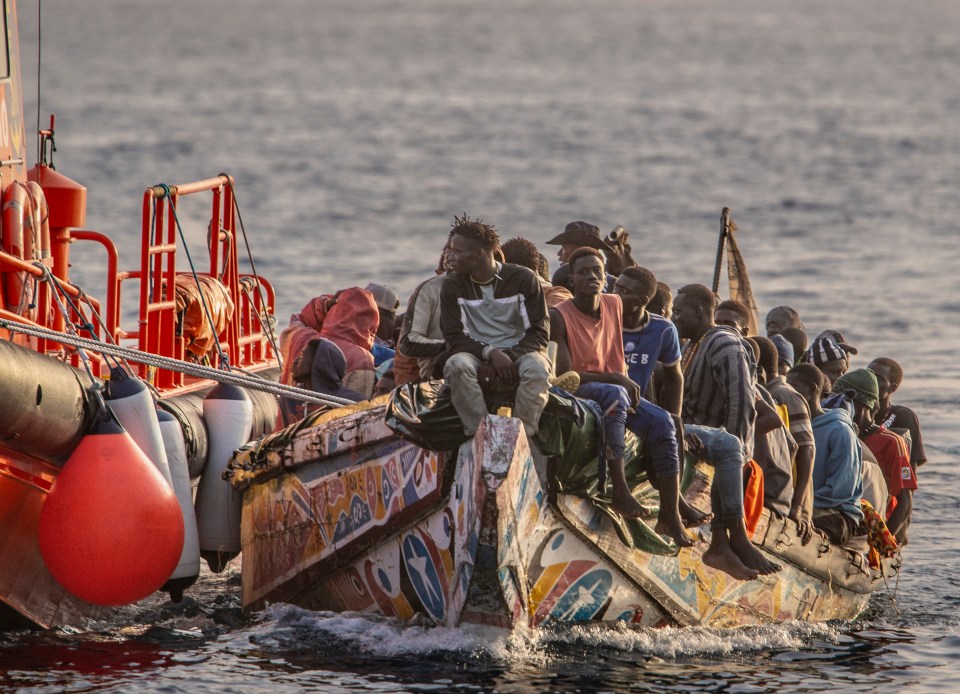
Growing migration crisis in the Canary Islands
According to The Sun: The authorities of the Canary Islands demand to declare a state of emergency due to the increasing migration crisis.
Last year, approximately 47,000 people reached Spain on small boats, and government officials noted that the number of unaccompanied minors nearly triples the available facilities.
AFPSince the beginning of this year, from January 1 to May 15, 10,882 people have arrived in the Canary Islands by sea.
Among them, the majority are children, and the government acknowledges that safety concerns are increasing due to the large number of arrivals.
The Canary Islands have limited facilities to accommodate 1,737 adult migrants.
However, the number of children arriving from West Africa across the Atlantic Ocean has sharply increased, and there are currently 5,017 minors in the archipelago.
The authorities of the Canary Islands have appealed to the Spanish government to declare a migration state of emergency.
According to reports, a decree was approved last week by the Spanish Council of Ministers.
The Ministry of Youth and Children intends to declare a state of emergency, which will allow for reforms in migration legislation to be activated.
This will allow unaccompanied minors without a roof over their heads to be moved from the Canary Islands to mainland Spain.
The president of the Canary Islands, Fernando Clavijo, assured: “There are no longer any excuses to start this process.”
Clavijo also noted that proper procedures need to be followed to ensure the safe and proper care of children.
This occurs amidst government recognition that the large influx of migrants to the Canary Islands poses a “security risk.”
The rising number of people arriving on the shores of Spain creates “serious public order risk situations,” according to Tragsa, which works with the Ministry of Social Security and Migration.
Their report states that “since the summer of 2023, there has been an unprecedented increase in the arrival of people on the shores of Spain.”
“This requires action to provide these individuals with basic needs and comprehensive services.”
“However, the arrival of migrants from Africa to our shores has not stopped so far.”
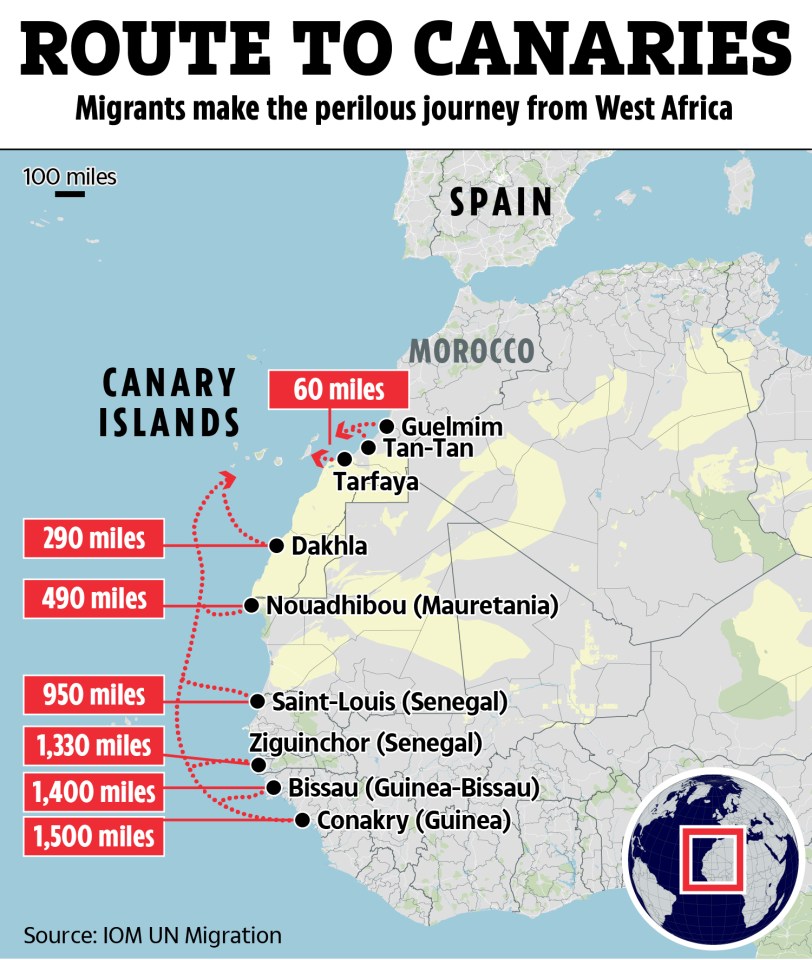
Despite the concerns, the number of migrants arriving has actually decreased compared to last year.
During the period from January 1 to May 15, 2024, 16,586 migrants arrived — nearly 6,000 more than this year, reported the Spanish Ministry of the Interior.
These figures reflect the overall trend across Spain, where the number has decreased by more than 5,500 individuals.
One of the major concerns related to migration in Spain is the high number of fatalities while attempting to reach the country.
The non-governmental organization Caminando Fronteras estimates that over 9,000 migrants have died during their journeys over the past 12 months.
The human factor
Recently, one of the worst humanitarian disasters occurred.
At least 69 people died after a boat capsized off the coast of Mauritania, according to the coast guard of the West African country.
Seventeen individuals were rescued, and an investigation is ongoing to locate dozens of other passengers who were heading to the Canary Islands.
Most of those onboard were reported to be from Senegal and Gambia, according to survivor testimonies.
 Jam Press
The government is concerned that the increase in migration to the Canary and Balearic Islands may provoke hostility among the population.
Migrants, mainly from Africa, arrive in the Balearic and Canary Islands practically every day; this summer, 4,700 individuals arrived in Mallorca, Ibiza, and Formentera.
The president of the Balearic government, Marga Prohens, noted that the wave of migration to the Balearic Islands is “worrying.”
Plans to implement approaches similar to British ones in tourist areas are already being developed in response to the increasing number of illegal migrants.
The Ministry of Social Security and Migration has begun allocating part of the budget for hotel accommodations for newcomers.
It is unclear whether the housing will be in the same hotels as tourists or whether entire hotels will be closed to the public for the free use of migrants.
AP
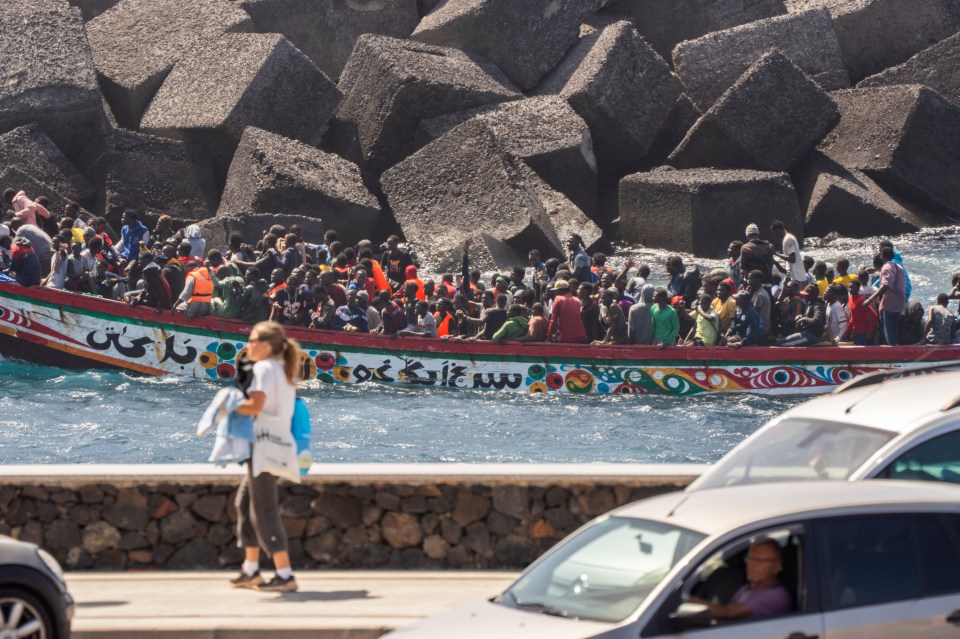
Local residents are getting used to the large number of migrants arriving in the Canary Islands.
The migration crisis in the Canary Islands requires urgent action as the influx of people continues to grow, and the government faces challenges in ensuring their safety and well-being. The situation demands not only adaptation of existing laws but also a comprehensive approach to address the social and humanitarian challenges that arise from this.
Read also
- Drone Strikes on Russia Surge 1,150%: June Target Toll Revealed
- NATO’s Eastern Flank on Alert: U.S. Intel Warns of Russian Threats as Poland Braces for Response
- Ukraine Targets Up to 50,000 Russian Troops Per Month in New Defense Strategy
- Why Russian Offensives Aren't Tied to Seasons: An Expert Reveals the Real Driver
- Ukraine's SBU Strikes Crimean Airfields Again, Destroying Seven Russian Aircraft in Second Attack This Week
- Seven Russian Aircraft Destroyed in Crimea as Ukraine Hits 'Saky' and 'Gvardiiske' Airfields