Key Supply Route to Crimea Cut as Chongar Bridge Destroyed: Occupiers Face Major Logistics Crisis.

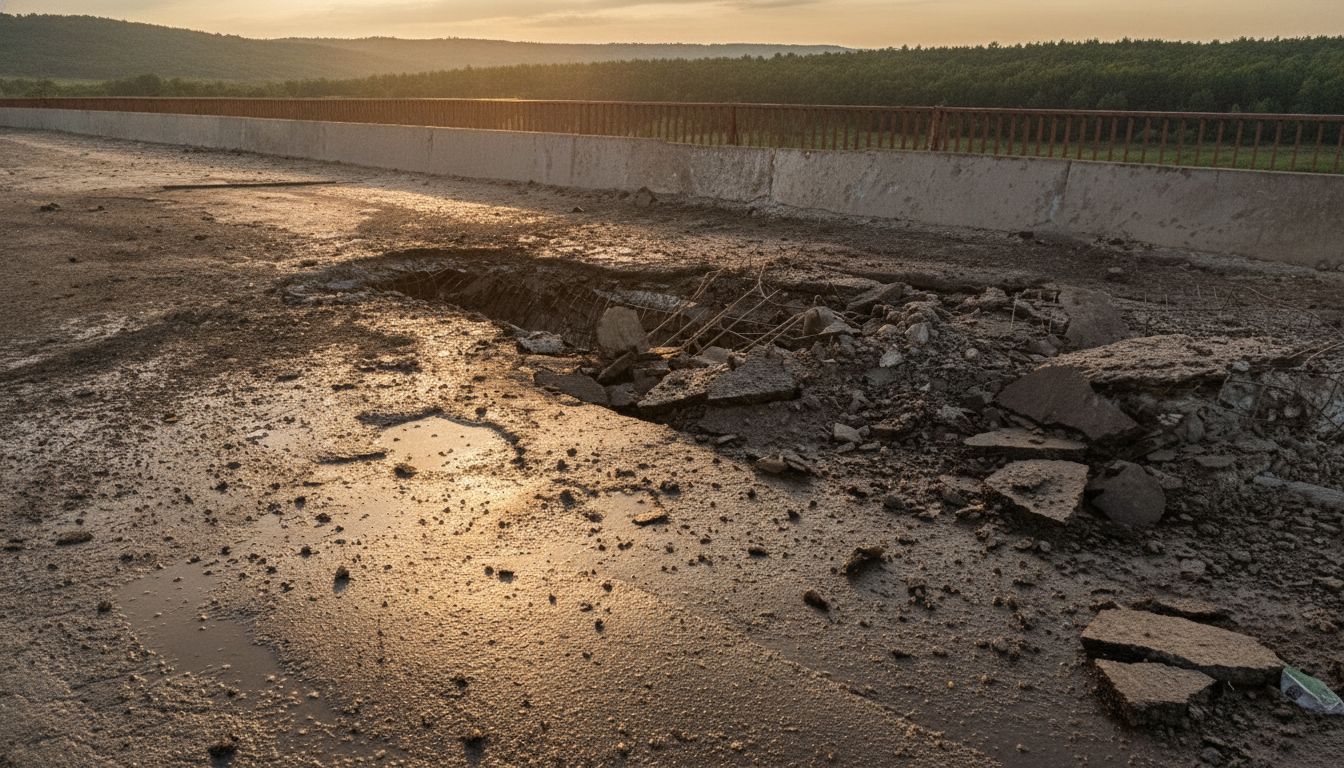
Chongar Bridge Destroyed: What It Means for the Conflict
According to UATV: The Chongar Bridge, located in the temporarily occupied part of Kherson Oblast, has suffered critical structural damage, making it completely impassable for any vehicles. As a result, Russian forces have been forced to reroute their supply lines into Crimea through alternative crossings, many of which remain under Ukrainian surveillance or fire control.
According to Dmytro 'Perun' Fylatov, the bridge now requires a full-scale reconstruction.
“The Chongar Bridge has sustained critical structural damage. In essence, it needs a complete rebuild,” he stated.No cargo or passenger traffic can cross the bridge. To compensate, the occupiers are deploying pontoon bridges and redirecting logistics through the 'Armiansk' checkpoint.
Lost Supplies and Logistical Nightmare
Additionally, a joint operation by the 1st Separate Assault Regiment and the 475th Assault Regiment destroyed part of a convoy of 50 military trucks.
“Today, this movement was essentially halted. We carried out another operation. There were about 50 trucks, part of which were destroyed,” Fylatov reported.The entire operation, from decision to execution, took roughly six hours. Notably, the Russian military command has banned the transport of military cargo via the land corridor to Crimea, further compounding the occupiers' logistical woes.
These infrastructure losses and transport restrictions are severely hampering the operational capabilities of Russian troops in the region.
This incident underscores the critical role of transport infrastructure in modern warfare. The destruction of the Chongar Bridge is likely to create prolonged supply chain disruptions for Russian forces, who already face mounting logistical difficulties. Rebuilding this strategic asset would require significant time and resources—both of which are in short supply—potentially limiting Russian military activities in the area for the foreseeable future.
Read also
- Two Cities Under Fire: Civilian Deaths and Injuries in Nikopol and Chernihiv
- Ten Killed as Foreign Cargo Ship Sinks in Black Sea After Russian Missile Strike
- A Russian drone-missile strike on Kharkiv with a 'Banderol' weapon has left one woman dead and more than 16 people injured
- Romanian F-16 Shoots Down Drone Over National Airspace: Key Details on the Incident
- Zaporizhzhia Bombing: 30 Wounded, Including Seven Children, After Russian Airstrike
- Two Wounded, Furniture Store Damaged in July 24 Strike on Odesa