Super Typhoon Ragasa Strikes the Philippines: Millions Evacuated in Asia.

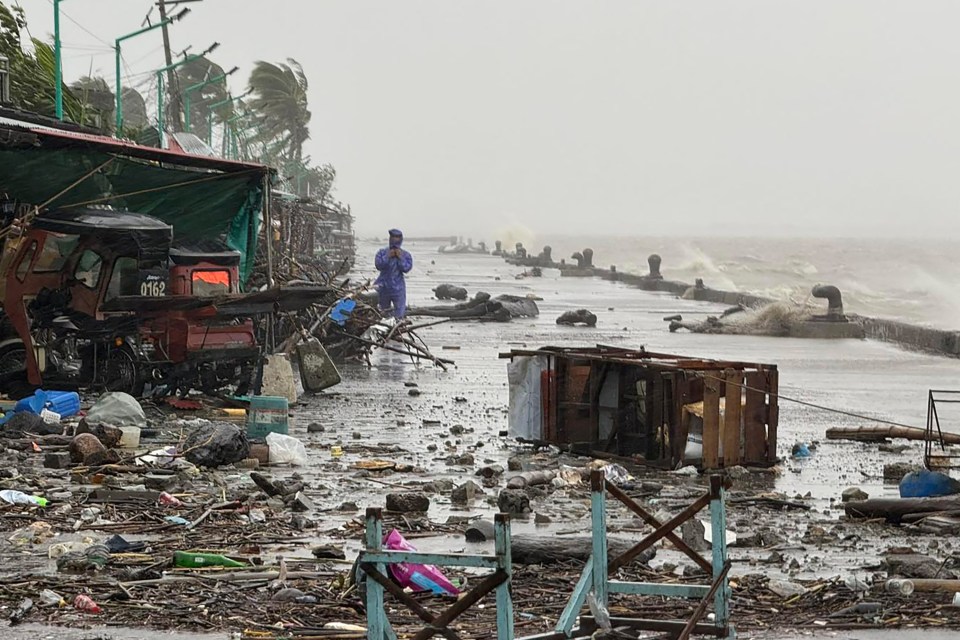
Super Typhoon Ragasa in the Philippines
According to The Sun: With winds of up to 137 miles per hour, the powerful Super Typhoon Ragasa has struck the Philippines, becoming the most destructive storm in the region in recent years. This has led to the cancellation of hundreds of flights, power outages, and mass evacuations across East Asia.
EPAThe storm swept through the northern islands of the Philippines and continued its path across the South China Sea toward Taiwan, Hong Kong, Macau, and southern China.
This Category 5 hurricane, named after the Filipino word for 'swift movement', is currently battering Calayan Island and Apayao Province, leaving thousands without power.
According to data, over 8,200 people were evacuated in Cagayan, with 1,220 individuals seeking shelter in emergency centers.
Threats and Hong Kong's Preparations
In Manila and 29 other provinces, school classes and office work were suspended, and flood warnings were issued. Local meteorologists warned of 'a high risk of disruptive storm surges with peak heights exceeding three meters (approximately 10 feet) over the next 24 hours' in Cagayan, Batanes, and Ilocos.
“Ragasa will pose a serious threat to Hong Kong, which could reach the levels of Hato in 2017 and Mangkhut in 2018,” warned deputy leader Eric Chan.
Residents of Hong Kong have begun stockpiling food supplies, leaving store shelves empty. Zoe Chan, who runs a clothing store in Wanchai, noted: “The most important thing is to take precautions so that I can sleep more peacefully.”
The Hong Kong Observatory has raised the third level of alert, T8, leading to business and transport closures.
 AP
AP
Preparing for the Aftermath
The airport authority has confirmed “significant disruptions to flight operations” since Tuesday evening, canceling over 500 Cathay Pacific flights. Qantas has also announced the suspension of passenger flights from Hong Kong for 36 hours.
In the neighboring city of Shenzhen, 400,000 people were forced to evacuate from coastal areas, and schools, offices, and public transport were closed. Supermarkets in Shenzhen and Hong Kong ran out of bread, vegetables, and fresh meat.
The ban on domestic flights and the suspension of 88 ferry services also occurred in Taiwan, while in Guangzhou, all trains were halted on Wednesday.
AFP
At this time, there have been no reports of casualties, but millions of people across Asia are preparing for the possibility of the deadliest storm of the year.
Alamy
Authorities have opened 46 temporary shelters for residents of low-lying areas, while major technological and financial centers in southern China prepare for the consequences of this natural event.
Scientists warn that storms like Ragasa are becoming increasingly powerful due to global warming, which warms the oceans. The storm has already been compared to Typhoon Rai in 2021, which resulted in the deaths of over 400 people in the Philippines.
Read also
- EU Ambassador Details Aftermath of Devastating July 2 Strike on Kyiv
- French Court Fines Tanker Owner €1 Million for Violating International Sanctions
- Ukraine’s General Staff Rejects Russian False Claims of Bus Attack: Key Details
- Russia Is 'Running Out of Steam': Expert Explains Drop in Missile Strikes
- Russian Offensive Slows to 50 Meters Per Day as Moscow Loses Ground
- Shift in Momentum: General Keith Kellogg Says Ukraine Has Gained the Upper Hand for the First Time Since 2023