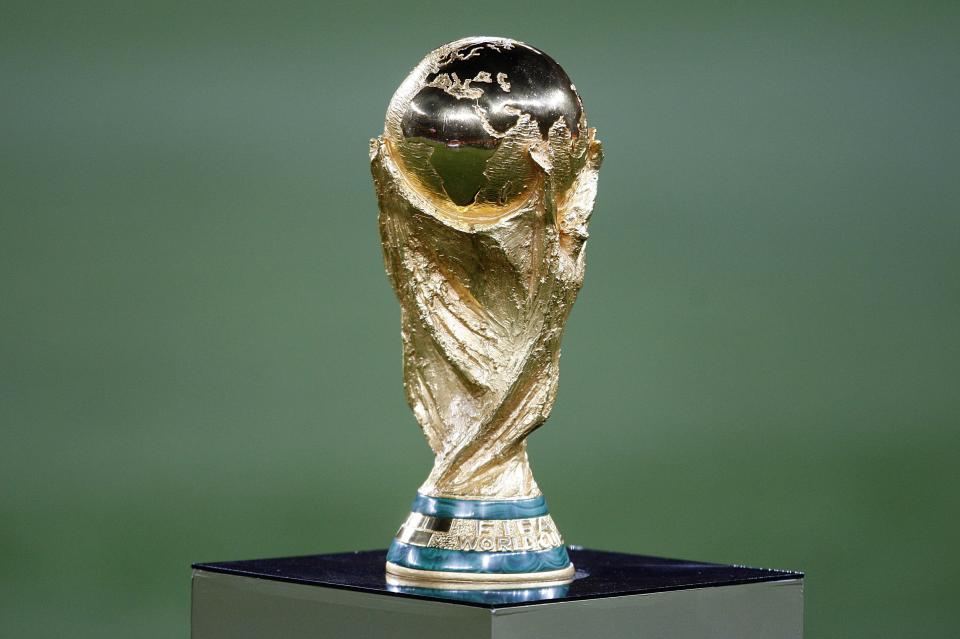
England first in Europe to qualify for World Cup 2026: what awaits fans.


According to The Sun: Officially: England has secured a ticket to the 2026 World Cup!
The “Three Lions” national team proved themselves by crushing Latvia 5-0.
EPA APThis victory allowed England to maintain a 100% record in Group K, becoming THE FIRST European nation to qualify for the tournament.
Now the fans of the “Three Lions” can start preparing for the competitions, which will be held in the USA, Mexico, and Canada.
However, what challenges might the players face, while Donald Trump prepares to host the most popular event on the planet?
Concerns are already arising regarding extreme weather, early match starts, and soaring ticket prices.
Here's everything you need to know as the nation prepares to see if Thomas Tuchel's team can achieve triumph for the first time since 1966...
WHICH TEAMS HAVE ALREADY QUALIFIED?
The USA, Canada, and Mexico, as tournament hosts, automatically secured their spots. This is the first World Cup with 48 teams.
45 spots remain, of which about half are already occupied.
Japan became the first nation to qualify in March, winning 2-0 against Bahrain.
Iran, Uzbekistan, South Korea, Jordan, Saudi Arabia, and Australia are among other Asian teams that qualified, with one more spot available for playoffs.
No team from the North American, Central American, and Caribbean region (CONCACAF) has qualified yet.
However, various teams, including Bermuda, Costa Rica, Curaçao, Grenada, Haiti, Honduras, Jamaica, Nicaragua, Panama, Suriname, and Trinidad and Tobago, are vying for a place in the tournament.
In South America, all six teams — Argentina, Brazil, Ecuador, Uruguay, Colombia, and Paraguay — have booked their spots, while Bolivia confirmed participation in the playoffs.
Lionel Messi, currently playing in the USA for “Inter Miami”, will also participate in the tournament.
New Zealand became the only nation from Oceania to qualify in March, while New Caledonia progressed to the playoffs.
Seven out of nine African teams have already secured their places in the tournament, including Morocco, Tunisia, Egypt, Algeria, Ghana, South Africa, and Cape Verde.
In Europe, Portugal seems to have also qualified for the tournament alongside England, allowing fans to witness a matchup between two old rivals — Cristiano Ronaldo and Messi on the grand stage.
 Getty
Getty
Getty
Getty
 Getty
Getty
HOST STADIUMS
In Canada, six matches will take place at the Toronto stadium, also known as BMO Field, and another seven at BC Place in Vancouver.
Mexico will use three stadiums, including Estadio Azteca in Mexico City (five matches), Estadio Guadalajara in Zapopan (four matches), and Estadio Monterrey in Guadalupe (four matches).
The USA will host most matches, including semifinals and the final.
The final will take place at the New York New Jersey stadium, known as MetLife Stadium, on July 19.
Seven more matches will also be held at this stadium.
The bronze match will occur at the stadium in Miami, known as Hard Rock Stadium in Florida.
Other stadiums in the USA include: Los Angeles Stadium (SoFi Stadium), Kansas City Stadium (Arrowhead Stadium), Houston Stadium (NRG Stadium), Dallas Stadium (AT&T Stadium), Boston Stadium (Gillette Stadium), and Atlanta Stadium (Mercedes-Benz Stadium).
Getty
Getty
WEATHER WARNINGS
Problems with extreme weather have become commonplace during the World Cup in summer.
Thunderstorms and heat waves negatively affected match conduct, some of which were delayed.
Many players suffered from high temperatures reaching 30-40°C.
FIFA confirmed that breaks for drinking will be planned after 30 and 75 minutes if necessary.
The football organization is also considering moving match starts to later hours, which would mean morning broadcasts for viewers in the UK.
Matches are currently planned for 5 PM, 8 PM, 11 PM, and 2 AM (all BST), similar to the format used during the World Cup.
However, the two earlier matches created problems for players due to heat reaching maximum levels at that time.
President of CONCACAF, Victor Montagliani, also noted that FIFA will 'learn' from the experiences of players and viewers after the World Cup.
Getty
 Reuters
TICKET SALE ISSUES
FANS visiting the World Cup can expect to pay thousands for a match due to FIFA's plans for implementing 'dynamic pricing'.
Previously, an average price of around £305 per match was reported.
FIFA management is now considering pricing options that take demand into account, which sparked debates during the summer's Oasis reunion.
This could lead to steep ticket price increases for the most critical matches, as demand exceeds supply, even though stadiums can hold over 70,000 spectators.
It appears that a similar system applied during the current World Cup resulted in prices dropping to £29 during group stages.
However, do not expect a similar situation at the World Cup, even with the expansion to 48 teams and a record 104 matches.
FIFA's model will NOT be applied to fans supporting the three host nations – the USA, Canada, and Mexico.
For other attendees, this system may lead to ticket prices of £5,000 and more for knockout stage matches.
Read also
- Iran Issues Threats Against Trump Over Soleimani Killing, Putting Doha Talks at Risk
- Ukraine Granted License to Produce Patriot Missiles, Zelenskyy Confirms
- Why Ukraine’s Plan to Produce Patriot Missiles Faces Major Hurdles and Long Delays
- Can Trump Stop the War? Putin Plans a New Offensive in Donbas
- Trump and Zelenskyy Meet in Ankara: Ukraine to Receive License for Patriot Missile Production
- Ukraine Secures License to Manufacture Patriot Missiles: Inside the Deal