Food prices are set to rise by 5.7% by the end of the year: what will cost more.

Food prices are set to rise
According to The Sun: Food and drink prices in the UK could increase by 5.7% by the end of the year due to rising production costs, industry experts say.
The Food and Drink Federation (FDF) has emphasized that current prices are the "highest in decades."
Consumers are getting much less for their moneyThe FDF, which represents a quarter of all food and drink sold in the UK, has raised its inflation forecast in light of skyrocketing costs.
Previously predicting inflation at 4.8% by the end of the year, the industry organization now warns of even greater increases.
Since January 2020, prices for food and non-alcoholic beverages have risen by 37%, significantly outpacing the overall price increase of 28%.
Critical price rises
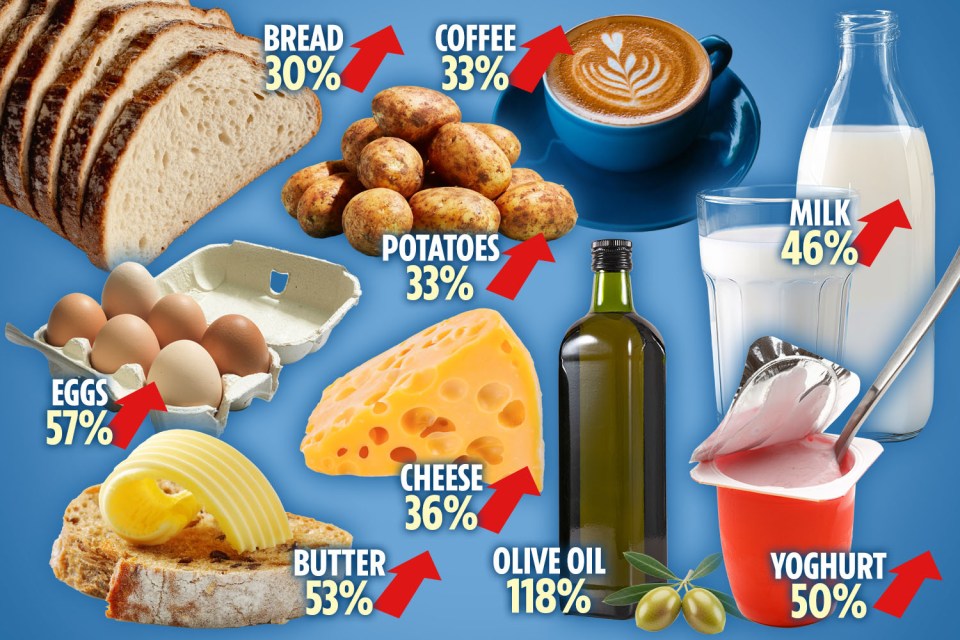
Prices for some essential items have increased particularly sharply:
- The price of olive oil has increased by 117%
- Eggs - by 57%
- Butter - by 53%
- Yogurt - by 50%
- Milk, cheese, potatoes, coffee, and bread have also risen by more than 30%
Consumers are getting significantly less for their money.
The FDF has noted that inflation in the UK food sector exceeds that of other European countries such as France, Germany, and Spain, indicating the impact of domestic policy.
The organization has also pointed out the increased national insurance rates for employers and new packaging taxes, which have significantly hit the sector.
Food manufacturers have been trying to absorb rising costs over the past few years, but are increasingly forced to pass these costs onto consumers through higher shop prices, the FDF notes.
Liliana Danila, chief economist at the FDF, noted: "Looking at the long-term picture, today’s prices are significant compared to the last few decades."
She also added that the rise in energy and raw material prices has now stabilized, so inflation is driven by the financial consequences of domestic policies, which are now being reflected in supermarket goods.
FDF chief Karen Betts emphasized that the UK is an "exception" compared to other European economies, adding: "Costs are so high that companies can no longer absorb them and must pass on at least part to buyers."
She urged the government not to increase already high regulatory costs in this sector.
"We are calling on the government to help us change this situation by working with the industry to attract investment, accelerate productivity growth, improve skills, and develop exports," Betts emphasized.
"This will help tackle inflation and provide a more sustainable future for the food and drink industry in the UK."
Therefore, the rapid rise in food prices in the UK is caused not only by global economic factors but also by changes in domestic policy. Increased production costs, taxes, and other financial obligations affect the final prices of goods that consumers will feel. This creates tension in the sector and can impact consumer demand in the country.
Read also
- Fire Point, a Ukrainian Manufacturer, Produces 200 Flamingo Missiles Monthly and Aims for Ballistic Capabilities
- Russia Weighs Seizing $40 Billion in Private Pension Funds to Finance Military Campaign
- As Russian Stocks Crash by Double Digits, the Wealthy Pivot to Crypto and Overseas Real Estate
- Trump Says Talks Possible as Oil Prices Crash After US and Iran Halt Attacks
- Sanctions Disguise Airline Bankruptcies as Rostec Plans a Restructuring of Russian Aviation
- Drone Strikes on CPC Terminal Drive Kazakhstan's Daily Oil Output Down to 133,200 Metric Tons