Mother-killer confessed to the deaths of four infants: what happened in Greece.

According to The Sun: Irena Mourtzoku spent months persuading people to believe that she had no connection to a series of horrific infant murders.
However, the 25-year-old woman admitted that she killed four children, including her own.
Mourtzoku is being held in Koridallos prison, in the suburbs of Athens.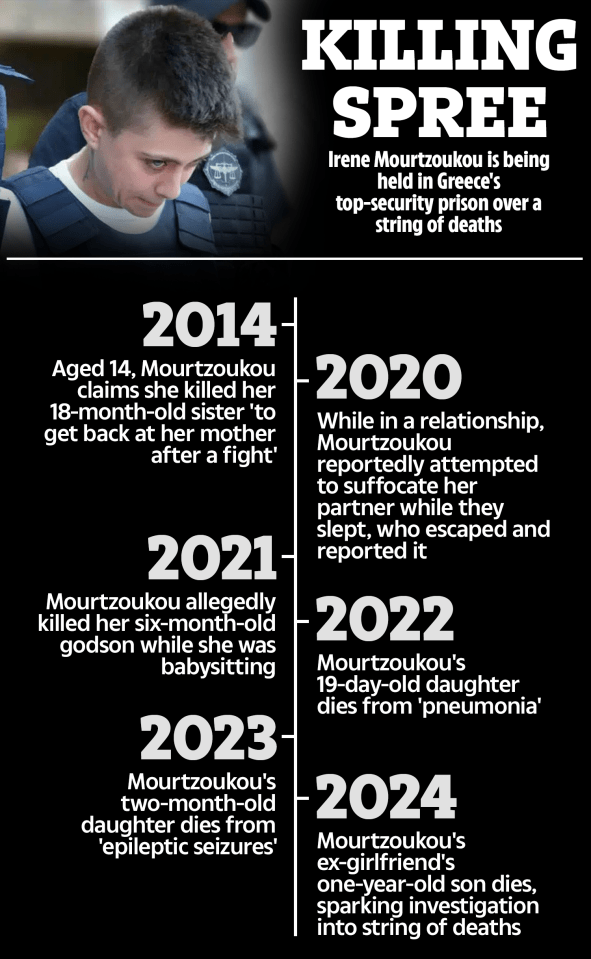 YouTube
Her confession came in July, after she came under suspicion for a series of deliberate murders and attempted strangulation of four infants who died in western Greece.
Now Irena is in a high-security facility in Greece.
She told investigators that her first victim was her 18-month-old sister, whom she killed in 2014 when she was only 14 years old.
At the time, the child's cause of death was attributed to 'breathing problems', and it raised no suspicions.
However, later Irena confessed that she committed this murder in revenge against her mother after an argument.
She also admitted to killing her six-month-old godson in 2021 while caring for him.
Next were the deaths of her own daughters — aged 19 days and less than two months — between 2022 and 2023.
Despite the fact that all four children died under her supervision, initially, forensic pathologists ruled these deaths as natural — the newborn died of 'pneumonia,' and the second child — of 'epileptic seizures'.
However, later examinations indicated possible asphyxiation.
Katerina, the mother of one of the infants whose murder Mourtzoku confessed to, described her as 'a killer without the presumption of innocence.'
Mourtzoku was also accused of attempting to suffocate her ex-partner with a pillow in 2021; the woman managed to escape and reported the incident.
In the last year, Irena became a prominent figure on Greek talk shows, initially denying her involvement in the series of deaths.
But the tragic death of her ex-girlfriend's son last August triggered an investigation that led to her arrest on suspicion of murdering five children.
A forensic expert found that the boy's death could be the result of a criminal act, reports Proto Thema.
Investigations and accusations
As a result of an in-depth investigation, laid out in a 100-page report, it was determined that Panagiotis died of 'hypoxia' — lack of oxygen, which indicates a possible 'criminal act.'
Irena constantly denies her involvement in the death of her ex-girlfriend's son.
“This child was like my own,” she told the police.
Prior to her horrific confession, she was accused of other crimes.
She is also accused of attempting to kill another child in 2016 when her family took in a woman with a child.
The mother of the child testified that when Mourtzoku was caring for the baby, she hung things on the balcony. After three to five minutes, the mother heard Mourtzoku's cry that something terrible had happened to the infant.
Finding the child unconscious with black lips, the mother suspected Mourtzoku, fled the house, and ceased all contact with the family.
The child was urgently transported to the Karamandaneyio Children's Hospital in Patras, where the doctors noted her lethargy, paleness, and excessive irritability.
A neurologist determined that the child experienced episodes of consciousness loss, which were not caused by epilepsy or any known disorder.
These accusations were not formally included in the indictment against her.
Ingratiating television appearances
In 2024, Irena became a fixture on television shows, resolutely denying her guilt.
She regularly participated in debates with journalists and forensic experts who questioned her claims of innocence.
“Her statements, along with the results of the autopsy, left no doubt,' said prominent pathologist Dr. Grigiris Leon.
Irena, in response, denied that she believed any of the examinations.
“All they do is call it murder, crime, or asphyxiation,” she stated.
A journalist cleverly pointed out: “Then who is supposed to determine the cause of death... maybe the guy from the local shop?”
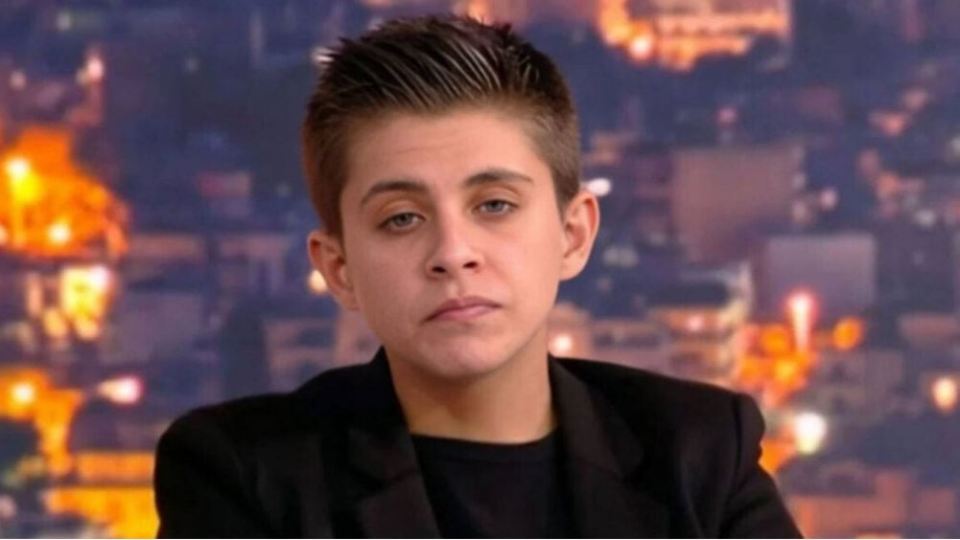
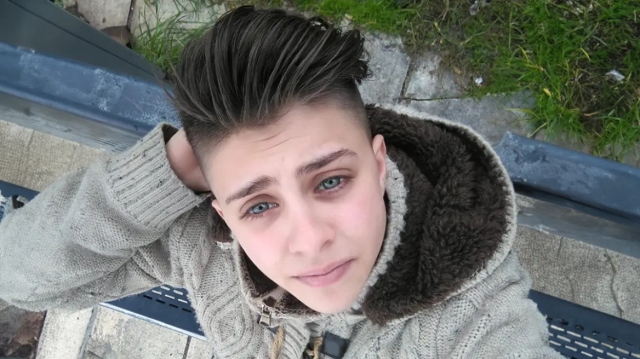 Mourtzoku is depicted before her arrest and confession to four murders.
The children's deaths connected to Mourtzoku sparked debate in Greece about the failures of the child protection system in the country.
Mourtzoku is depicted before her arrest and confession to four murders.
The children's deaths connected to Mourtzoku sparked debate in Greece about the failures of the child protection system in the country.
The public in Greece was in a state of shock. Those who knew her also came forward to meet her.
Mourtzoku's mother noted that her daughter demonstrated 'delinquent behavior' from the age of 10 and visited a psychologist who diagnosed her with 'multiple personality disorder'.
She even claimed that her daughter staged a fake kidnapping in childhood.
Irena denied claims that she was forced to engage in prostitution to support the family.
Regarding her difficult relationship with her mother, she is attributed with words of intent to harm during arguments.
“Every time I argued with my mother, I wanted to harm,” she told the police.
She also said: “She blocked my mind. I did it, I regret it, but there’s nothing I can do.”
Irena requested a transfer to a psychiatric facility instead of prison.
After appearing on television, public opinion turned against her.
When she was led to prison in July, she shouted: 'Let her die in there,' reports Kathimerini.
‘Not the only culprit’
Mourtzoku's lawyer, Nikos Alexandris, said in July to the Greek state broadcaster ERT that she 'is not the only one responsible for this tragic event of losing five children.'
Alexandris referred to the fact that 'forensic conclusions are not included' in the case.
In strict security in the suburbs of Athens, Mourtzoku is held in the same cell with a woman from Cyprus, accused of child abuse, as well as with a woman accused of sexually abusing her grandchildren.
This occurred after Roula Pispirigos, another mother from a town near the Peloponnese, was sentenced to life imprisonment in May for the murder of her three daughters.
Like Mourtzoku, Pispirigos was a frequent face on talk shows where she denied her guilt before a professional court.
The tragic deaths of children connected to Mourtzoku spurred a lively discussion in Greece about the failures of the child protection system.
In both cases, with Mourtzoku and Pispirigos, social services or psychiatric units were not involved when their children were hospitalized.
Psychiatrists discussing these cases suggest that both women may suffer from Munchausen syndrome by proxy.
 Irena asked for a transfer to a psychiatric institution instead of prison.
Irena Mourtzoku's confession to the murder of four children caused a loud resonance in society. Her case became a symbol of important issues in the context of the social protection system in Greece. The deaths of children not only exposed existing problems within the system but also led to public debates about the responsibility of adults and the role of the state in protecting children. Discussions around these events, along with media attention, will remain on the agenda as such tragic cases demand greater attention to protective mechanisms and planning in this aspect of social life.
Irena asked for a transfer to a psychiatric institution instead of prison.
Irena Mourtzoku's confession to the murder of four children caused a loud resonance in society. Her case became a symbol of important issues in the context of the social protection system in Greece. The deaths of children not only exposed existing problems within the system but also led to public debates about the responsibility of adults and the role of the state in protecting children. Discussions around these events, along with media attention, will remain on the agenda as such tragic cases demand greater attention to protective mechanisms and planning in this aspect of social life. Read also
- Seven Russian Aircraft Destroyed in Crimea as Ukraine Hits 'Saky' and 'Gvardiiske' Airfields
- A 480-Meter Asteroid Is Approaching Earth on July 4: Should We Be Worried?
- Germany and Ukraine Team Up to Build a European Air Defense System
- Ukraine Opens Criminal Case Against Russia’s Top General for July 2 Strike on Kyiv
- Ukraine's Defense Forces Launched Thousands of Strikes on Russian Targets in June, Hitting Refineries, Bases, and Crimea
- U.N. Condemns Nighttime Strike on Kyiv; Guterres Demands an Immediate Ceasefire