Tents in Kyiv Metro Take Up Shelter Space: Officials Move Toward Restrictions.

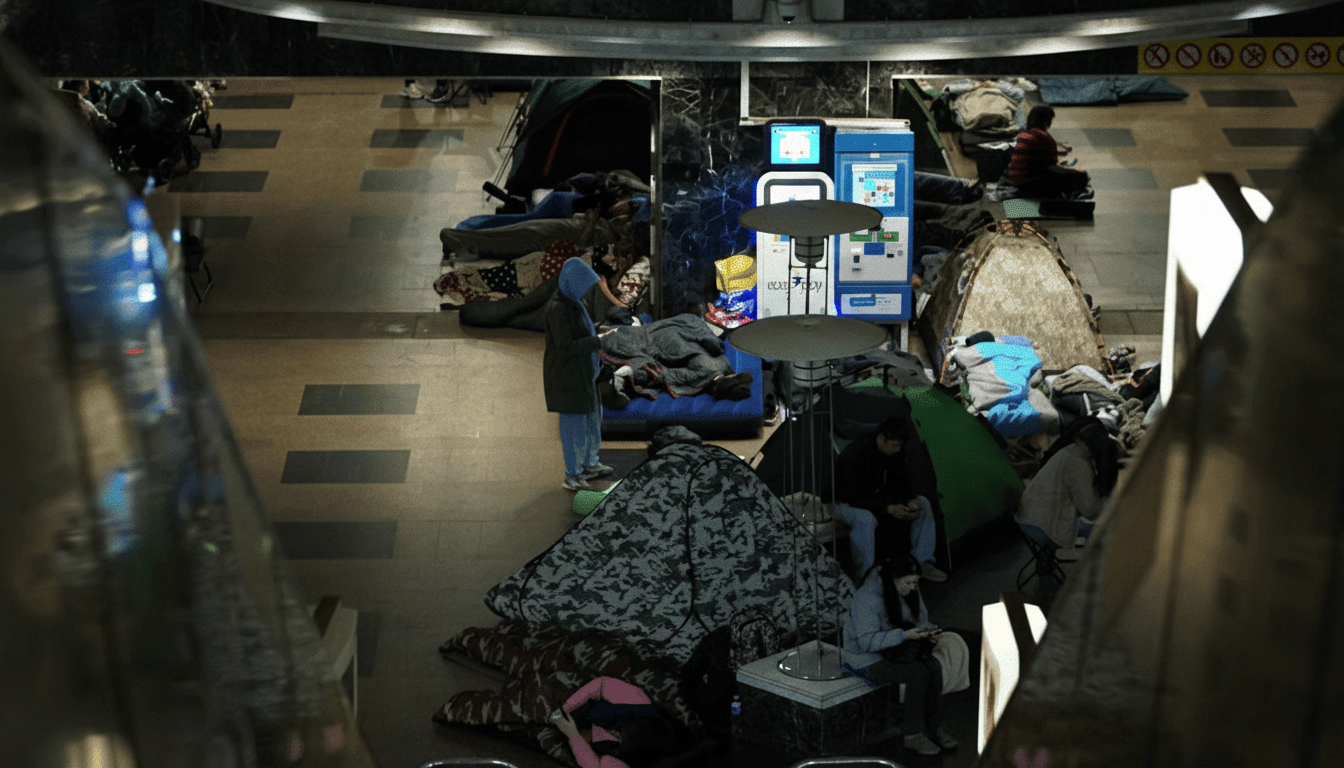
Kyiv’s Underground Faces Capacity Challenges
According to Novyny.live: Residents of Ukraine’s capital are struggling to find room in the subway system when seeking refuge from explosions. During air raid alerts, 46 underground metro stations in Kyiv operate as bomb shelters. However, experts point out that the current capacity often falls short of meeting public demand. The metro can accommodate between 50,000 and 52,000 people, but during large-scale attacks, this number proves insufficient.
Shelter design standards allocate 0.5 to 0.6 square meters per person. Deep-level stations like Arsenalna, Pecherska, and Zoloti Vorota can hold between 1,500 and 2,000 individuals. Transfer hubs such as Maidan Nezalezhnosti–Khreshchatyk and Teatralna–Zoloti Vorota can shelter roughly 4,000 people during alerts. While experts estimate the metro could theoretically hold around 70,000 to 80,000 people, questions remain about its ability to manage such a crowd in critical situations.
Challenges and Potential Solutions
As more people seek shelter, the use of tents by some passengers has become a growing concern. Kateryna Pop highlighted the issue, stating,
“Not all Kyiv residents can find space in the subway.”Authorities are now considering restrictions on tent usage inside the metro to improve the situation and ensure safety for everyone.
Additionally, metro fares in Kyiv may rise to 30 hryvnias per trip, with a monthly pass potentially costing 4,875 hryvnias. This could further affect access to shelter spaces in the system.
The problem of insufficient metro capacity in Kyiv is becoming more pressing amid ongoing security threats. As the number of people seeking refuge grows, it is crucial for authorities to respond quickly to challenges related to crowd management and safety. Restricting tent usage may be one measure to make shelters more efficient. Meanwhile, fare increases could reduce public access to this transport mode, potentially complicating emergency response efforts.
Read also
- Two Cities Under Fire: Civilian Deaths and Injuries in Nikopol and Chernihiv
- Ten Killed as Foreign Cargo Ship Sinks in Black Sea After Russian Missile Strike
- A Russian drone-missile strike on Kharkiv with a 'Banderol' weapon has left one woman dead and more than 16 people injured
- Romanian F-16 Shoots Down Drone Over National Airspace: Key Details on the Incident
- Zaporizhzhia Bombing: 30 Wounded, Including Seven Children, After Russian Airstrike
- Two Wounded, Furniture Store Damaged in July 24 Strike on Odesa