Doomsday Glacier is collapsing from within: scientists have found a new threat.

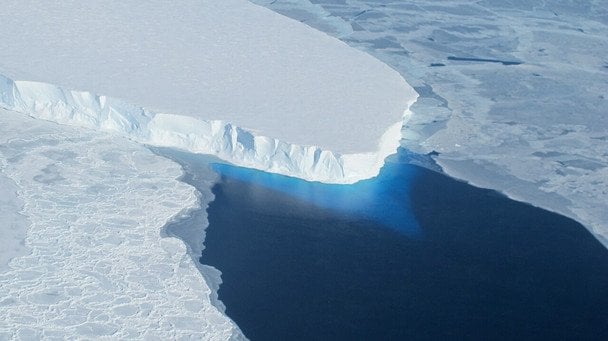
According to ТСН: The Pine Island and Thwaites glaciers in Antarctica, also known as the 'doomsday glacier,' are currently under the active influence of underwater processes. Scientists are alarmed, as the destruction of these glaciers is occurring faster than previously thought.
Researchers have discovered oceanic vortices that are breaking down the ice from within. These underwater 'storms' behave like mixers, directing warm water to the base of the glaciers, which can have serious consequences for global sea levels.
What are underwater 'storms'
These phenomena are submesoscale vortices — fast ocean currents that scientists compare to storms in the atmosphere.
'Imagine this as little water whirlpools spinning very quickly, like you are stirring water in a cup,' explains co-author of the study Mattia Poinelli from the University of California, Irvine.
Vortices form in areas where warm water meets cold. This process is similar to mixing milk with coffee, causing turbulence. In the ocean, these 'whirlpools' can reach diameters of up to 10 km.
How it works
The vortices penetrate beneath the ice shelves, bringing warm water from the depths of the ocean to the base of the ice.
Computer modeling has shown impressive results:
Only these short-lived 'storms' caused 20% of the melting of the glaciers over the studied 9-month period.
A feedback loop is formed: the melting ice releases fresh cold water into the ocean, which mixes with warm salty water, creating even more vortices and accelerating melting.
What does it threaten?
The Thwaites glacier acts as a 'plug' that restrains the vast Antarctic ice sheet.
If it melts, sea levels could rise by 60 cm.
If it is destroyed and 'releases' the rest of the ice, this would lead to a rise in global ocean levels by 3 meters.
'This positive feedback loop may intensify under climate warming conditions,' warns co-author of the study Leah Siegmann.
The world stands on the brink of a 'great melting' of mountain glaciers. Future generations may inherit a planet where glaciers become a rare phenomenon. A new study by Swiss scientists shows that the peak disappearance of glaciers could occur in less than two decades, and by the end of the century their number could decrease tenfold.
Read also
- Ukrainian Drones Stall Russian Army's Advance on Kupiansk Front: No Positions Lost
- IAEA Demands Iran Report on Uranium Stockpiles, Backed by U.S. and European Powers
- Germany’s Admiral Explains Why Ukraine Now Leads the World in Defense Innovation
- Ukraine Faces Record Night Attack: 221 Drones and Iskander Missiles Launched
- Zaporizhzhia and Sumy Under Russian Attack: Eight Wounded, Hundreds of Structures Damaged
- China Deploys HIMARS for the First Time Toward the Taiwan Strait: Exercise Breakdown