Eisenhower Matrix: How to Prioritize Tasks by Importance and Urgency.


According to inkorr.com: Effective time and task management is what makes our lives more productive. Modern time management techniques not only help organize the day but also allow us to determine which tasks are a priority and which can be delegated or postponed. This is where the Eisenhower Matrix comes in handy.
The Eisenhower Matrix, named after the 34th President of the United States, Dwight Eisenhower, helps to distinguish between what is important and urgent, focusing attention on strategic tasks. Using this matrix increases productivity, reduces stress, and simplifies decision-making processes in various areas of life.
What is the Eisenhower Matrix?
The Eisenhower Matrix is a simple yet effective tool for task management that helps assess their priority based on two criteria: urgency and importance. The method involves evaluating each task based on these parameters and placing it in one of the matrix's quadrants. This allows a focus on truly important matters rather than just reacting to urgent situations. No complicated tools are needed to use the matrix – a simple square divided into four parts is sufficient.
Four Quadrants of the Matrix: Explanations and Examples
The Eisenhower Matrix consists of four quadrants, each defining a type of task:
Quadrant I: Important and Urgent – tasks requiring immediate attention, such as crisis situations, urgent deadlines, or unforeseen problems. Example: urgent report submission or medical assistance to a patient. These tasks are performed directly.
Quadrant II: Important but Not Urgent – strategic tasks that contribute to long-term goals. These could be development plans, learning, or collaboration with partners. Such tasks require planning and regular execution.
Quadrant III: Urgent but Not Important – tasks requiring quick responses but not affecting main goals. These could be meetings or processing emails. Such tasks are usually advisable to delegate.
Quadrant IV: Not Important and Not Urgent – tasks that do not provide significant benefits. These could be social media or news browsing. Such tasks should be avoided as they waste time.
This system is straightforward and easy to use.
How to Prioritize Tasks
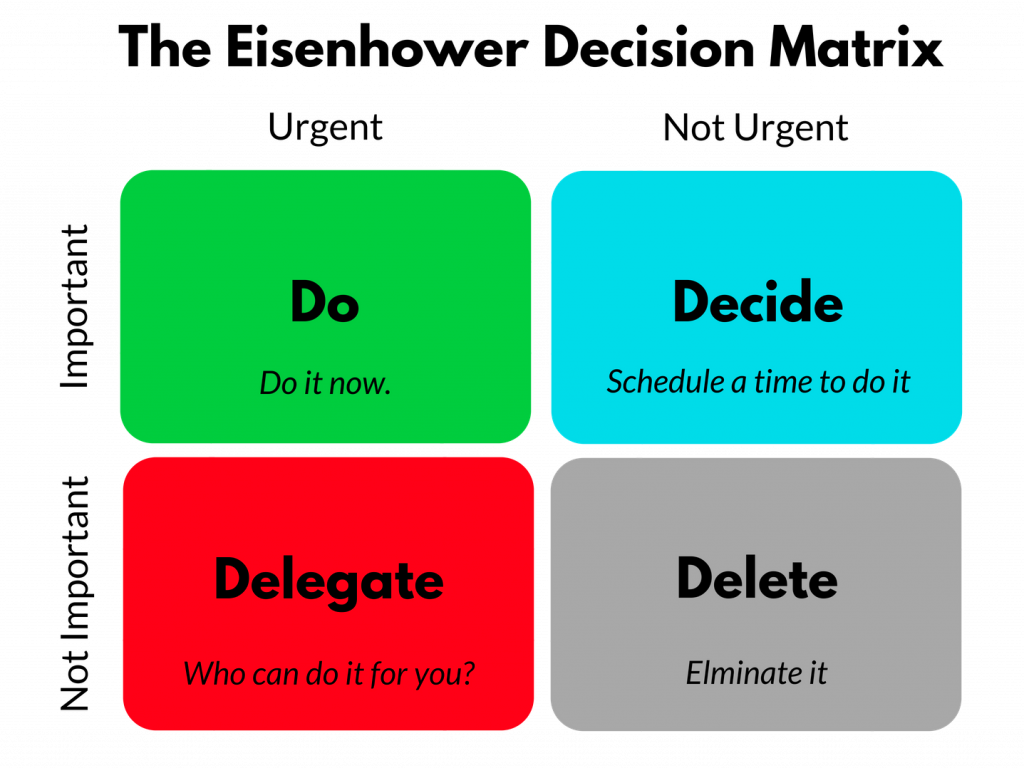
To start prioritizing using the matrix, first compile a list of all relevant tasks. Then evaluate each one based on importance and urgency. Importance is determined by how the task's completion helps achieve main goals. Next, tasks are distributed among the quadrants: critical ones are performed first, strategic ones are planned, and less important tasks can be delegated.
Benefits of Using the Matrix in Work and Life
The Eisenhower Matrix increases productivity by allowing focus on important tasks rather than urgent trivialities. This reduces stress and overload, as priorities can be easily identified. For businesses, this technique facilitates effective project management, while in personal life it helps allocate time for important goals and personal development.
Common Mistakes When Applying the Matrix

Even with the simplicity of this method, mistakes often occur. Unclear definitions of importance and urgency can diminish effectiveness. Sometimes strategic tasks are ignored as they are not urgent, or tasks that could be delegated are performed personally. Distractions with unimportant affairs reduce productivity. It is important to approach task analysis seriously, adjust priorities, and maintain discipline.
Tools and Tips for Effective Use
To maximize the effectiveness of the Eisenhower Matrix, it is recommended to use various tools. A simple option is a paper notebook or board for visual task oversight. For digital users, online services like Trello or Asana are suitable, allowing the creation of boards with quadrants and setting deadlines.
Regular planning and reviewing completed tasks will help improve prioritization skills. It is also worth combining the matrix with other methods, such as the Pomodoro technique to enhance productivity.
To avoid mistakes, it is advisable to prevent a backlog of urgent tasks in Quadrant I, pay attention to strategic tasks in II, delegate III, and minimize IV.
Examples of Successful Application in Business and Personal Life
The Eisenhower Matrix is used both in business and personal life. In companies, this approach helps manage projects: critical tasks are prioritized, while strategic ones are discussed in meetings. This reduces chaos and increases productivity.
In personal life, the matrix assists in planning. For example, a student might classify study tasks: exam preparation fits into Quadrant I, while social media browsing fits into Quadrant IV. This matrix is also useful for family matters, as it helps avoid distractions.

In business, the matrix is also applied in sales and marketing, which enhances team efficiency. It helps systematize work and reduces levels of stress and chaos.
Thus, the Eisenhower Matrix is a universal tool for prioritizing tasks and managing time. It promotes achieving high productivity and effective daily planning.
Read also
- Russian Font Found on Banknote Featuring Ukrainian Poet Stus; NBU to Redesign the Bill
- 501 Fallen Repatriated to Ukraine; Over 300 Died While in Captivity
- Ukraine Receives 522 Bodies in Its Largest-Ever Repatriation Operation
- Statehood Day Marked Across Ukraine with Prayer Services and Public Gatherings
- From Survival to Growth: How Education and Its People Are Reshaping Kharkiv
- 23 Children Rescued from Occupied Territories: A New Win for Ukraine’s Bring Kids Back UA Initiative