Medical breakthrough: individualized gene therapy saves a child's life for the first time and opens new perspectives.

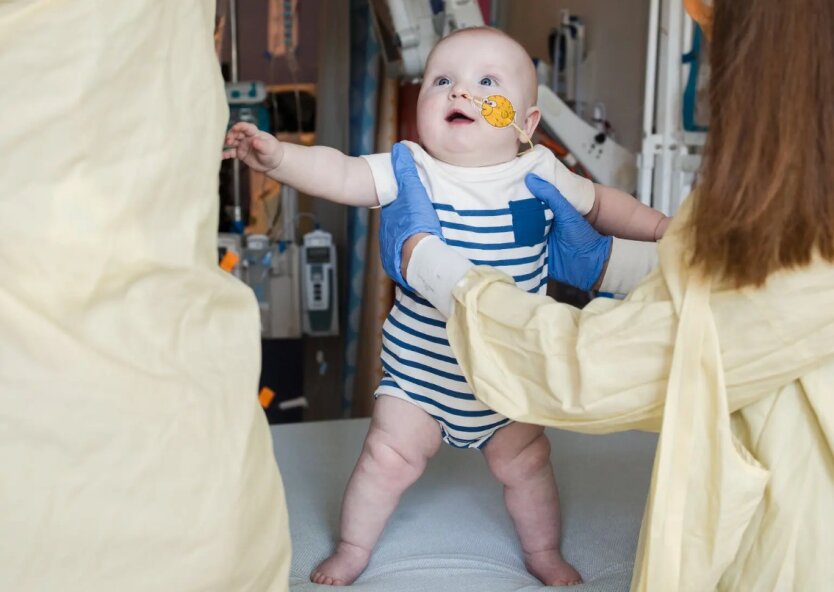
The world's first individualized therapy using gene editing
American doctors have made a medical breakthrough by creating and applying the world's first individualized therapy using gene editing to treat a 9.5-month-old boy with a rare genetic disorder.
According to The New York Times, the child named K.J. Muldun was born with a CPS1 deficiency - a rare genetic disorder. Doctors at the Children's Hospital of Philadelphia and the University of Pennsylvania developed a personalized treatment for K.J. based on CRISPR technology.
'In my opinion, this is one of the most potentially transformative technologies available,' said Dr. Peter Marks, former head of the gene therapy regulatory division of the U.S. Food and Drug Administration (FDA).
K.J. received three infusions of the experimental treatment. After the first dose, the child's condition significantly improved, and after the second, doctors were able to halve the dosage of medications that remove ammonia from his blood. The development and testing of gene editing for the baby took place in record time.
Potential of CRISPR technology
The development of treatment for K.J. opens many possibilities for treating rare genetic disorders. Researchers believe that this technology could be successfully adapted to treat many other genetic diseases. The success of the project was made possible by decades of fundamental research and technological development.
Read also
- Wheat Prices Surge After Ukrainian Drones Halt Shipping in the Sea of Azov
- Over Half a Million Russians Declared Bankrupt as Economy Cracks Under Pressure
- Ukraine’s Inflation Trend Shifts: Fuel Costs Drop While Service Prices Climb
- Fear of a New Mobilization Wave Drives Russians to Mass-Buy Property Abroad
- Moscow Admits Fuel Shortage for First Time Amid Drone Strikes: Long Lines at Gas Stations and Crisis Affecting 50 Million Russians
- World Bank Disburses $3.35 Billion to Ukraine: Here’s How the Funds Will Be Used