Russia used the Oreshnik missile: what is known about the new threat to Ukraine.

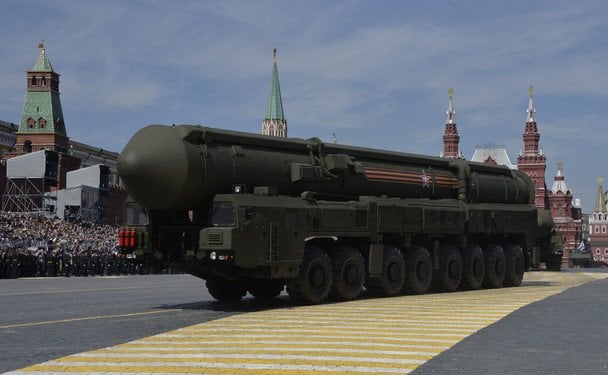
According to ТСН: On the night of January 8-9, Russia launched a massive attack on Ukraine, using missiles and drones. Explosions were heard in Kyiv, Lviv, and Kyiv region, with confirmed casualties of four people in the capital. The Air Forces reported that among the missiles used in the attack was the "Oreshnik" missile.
Strike on Lviv on January 9
In the evening of January 9, a series of powerful explosions occurred in Lviv during the announcement of an air raid alert. Reports indicate that Russia struck the city with a ballistic missile fired from the Kapustin Yar test site, which, according to monitoring channels, was the "Oreshnik" missile.
Early in the morning on January 9, Russia acknowledged the use of the "Oreshnik", claiming it was allegedly in response to "Ukraine's attack on Putin's residence in Valdai", which, in fact, did not occur.
"Tonight, in response to a terrorist attack by the Kyiv regime on the residence of the President of the Russian Federation in the Novgorod region, carried out on the night of December 29, 2025, the Russian Armed Forces delivered a massive strike... with the medium-range missile system 'Oreshnik'... on critically important facilities on the territory of Ukraine," the Russian Ministry of Defense stated.
The head of the Ukrainian Foreign Ministry, Andriy Sibiga, stated that strikes near the borders of the EU and NATO pose a serious security threat and are a test for the transatlantic community.
"Putin is using intermediate-range ballistic missiles near the borders of the EU and NATO in response to his own hallucinations — this is truly a global threat. And it requires a global response," Sibiga wrote.
The Air Command "West" clarified that the strikes were targeted at infrastructure facilities in Lviv, and the missile was traveling at a speed of about 13,000 kilometers per hour along a ballistic trajectory.
Overall, Russia launched an attack against 278 targets in Ukraine: 36 missiles and 242 drones, with the main targets being Kyiv and the surrounding area. Currently, there is no information regarding casualties in Lviv; civilian facilities and residential buildings were not damaged, but critical infrastructure was affected.
What is known about the strike
The ballistic missile launched by Russia at Dnipro on November 21 had several warheads, but did not contain explosives, causing "limited damage". There is information about destruction near a medical center, as well as damage to several houses, cars, and garages.
"In this case, (the missile) was without explosives... There were no explosions that we expected. Something happened, but not very strong," sources told Reuters.
Experts indicated that the absence of explosive substances in the "warhead" of the missile allows for its use in experiments. Russian President Vladimir Putin stated that the strike of the "Oreshnik" missile reached its target — a missile defense facility in Ukraine, and Russia will continue its tests in combat conditions.
According to American officials, Russia likely has only a few such missiles, which, according to Western experts, may be derivatives of the RS-26 missile.
"I would say that this is an incredibly expensive way to inflict possibly not much damage," said the director of the Nonproliferation Program at the James Martin Center for Nonproliferation Studies.
In the GUR, it was reported that the enemy may have about 10 such missiles, which are difficult to destroy, but feasible.
Consequences of possible nuclear charge use
If the ballistic missile "Oreshnik" is equipped with a nuclear charge, radioactive contamination could cover an area the size of half of the Dnipropetrovsk region, as noted by aviation expert Valerii Romanenko.
According to him, the consequences of radioactive contamination depend on the direction of the wind at the moment of the explosion. The missile is capable of striking six separate targets.
Information about the "Oreshnik" missile
The ballistic missile "Oreshnik" was developed in violation of the 1987 Intermediate-Range Nuclear Forces Treaty. It is considered a variant of the Russian RS-26 "Rubezh" missile, which falls within prohibited categories.
According to the Deputy Pentagon spokesperson, the missile is experimental, and only a few prototype samples had been manufactured by October.
"The missile was in 'non-nuclear hypersonic configuration', its warheads 'attacked targets at a speed of 10 Machs — that is 2.5-3 kilometers per second,'" Putin noted.
Most likely, the missile was developed by the Moscow Institute of Thermal Engineering. The reasons why such a missile may lack accuracy are related to a deviation from the target by 50 meters.
According to Valerii Romanenko, the "Oreshnik" serves as a warning that Russia is ready to deploy missiles of this class, against which European countries do not have adequate defense systems.
Read also
- Finland's President Predicts 3–4 More Months of War, Urges NATO to Raise Defense Spending to 5% of GDP
- Germany Pledges $400 Million to Ukraine for Air Defense Ammunition and Patriot Missiles
- Belarus Admits Vulnerability to Ukrainian Strikes as Lukashenko Apologizes to Zelensky
- A First Step Toward a European Missile Shield: Ukraine’s Pivotal Moment at the Ramstein Talks in Brussels
- Ukraine's Parliament Rejects Seven Budget Resolutions: Where the $1.56 Trillion Defense Allocation Will Go
- NATO Chief Rutte on Russia’s Budget: Why Moscow Can’t Defeat the Alliance