Kremlin's Donetsk Ambitions Delayed Until 2026 as Offensive Plans Falter.

The Frontline Situation
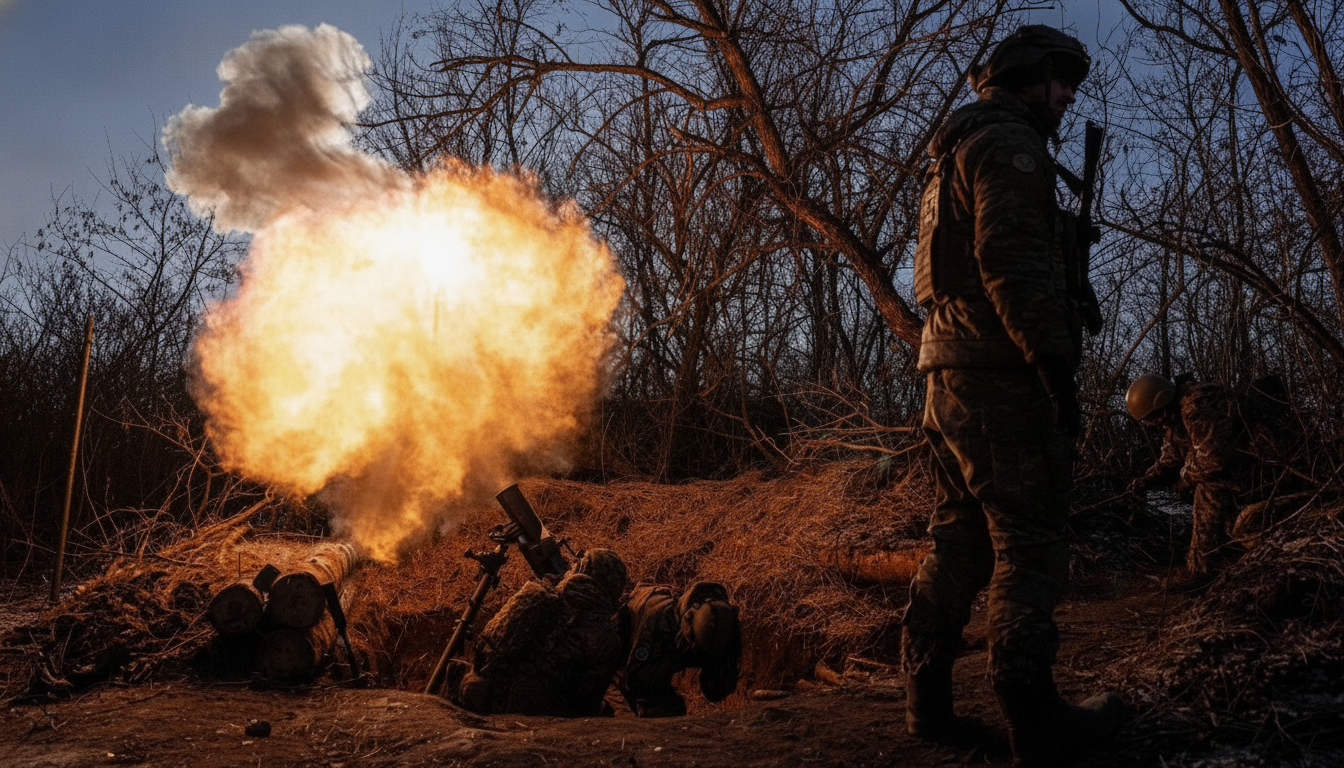
According to UATV: Russia's military campaign in Ukraine has encountered significant obstacles, forcing Moscow to postpone its goal of seizing the entire Donetsk region from late 2025 to April 2026. This delay stems from a failure to achieve a decisive breakthrough in the Donbas, compounded by the unsuccessful summer and winter offensive campaigns. The frontline remains highly contested across several key areas, from Lyman to Pokrovsk, as well as on the Zaporizhzhia axis and in the Kharkiv region. The ongoing conflict has evolved into a grueling war of attrition, testing the endurance of both militaries.
Challenges for Russian Forces
Military expert Pavlo Lakiychuk states that while the end of 2025 was the initial target date for capturing Donetsk, dictator Vladimir Putin has now pushed the deadline to April 2026. The recent summer offensive campaign ended in failure, with Russia unable to meet its planned objectives. Similarly, the winter campaign is also heading toward failure, highlighting serious flaws in the Kremlin's strategic planning.
The situation on the front remains severe in several critical sectors:
- Pokrovsk-Myrnohrad agglomeration - Fierce battles continue, but no frontline breakthrough has been observed.
- Zaporizhzhia direction - A difficult situation persists in the areas of Huliaipole and Orikhiv.
- Kharkiv region - The operational environment is complex in Kupiansk and Vovchansk.
"Despite all the problems, the front is holding, even considering the advantages the enemy possesses," - Pavlo Lakiychuk.
However, the resources Russia amassed for its latest offensive operation are being depleted. These factors indicate that the Kremlin's plans for a swift capture of Donetsk are facing major difficulties, compelling Moscow to repeatedly revise its timelines. This repeated postponement underscores a fundamental mismatch between Russian ambitions and military reality on the ground.
The delay of the Donetsk objective to 2026 signals that Russia's military efforts in Ukraine are confronting serious challenges that could affect the future course of the conflict. The loss of battlefield initiative and the failures of successive offensive campaigns may point to a diminishing combat potential of Russian forces, which could, in turn, lead to a shift in Moscow's strategic goals for the region. This situation could have significant implications not only for Ukraine's defense but also for the broader security landscape in Europe.
Read also
- Kremlin Eyes Fresh Mobilization Drive: Up to 500,000 Troops Could Be Deployed to the Front
- Putin’s Economic Claims Exposed as Manipulation by Ukraine’s Disinformation Center
- Putin Abandons Plans to Return Occupied Lands to Ukraine: What We Know About the So-Called 'Buffer Zones'
- Russia Planning a New Fall Mobilization: When Recruits Could Reach the Front Lines
- Feigin Reveals Putin's Litmus Test: When Mobilization Plans Will Become Clear
- Putin Now Acknowledges Ukraine's Strength, Says Former Polish Defense Minister, Marking a Turning Point in the War