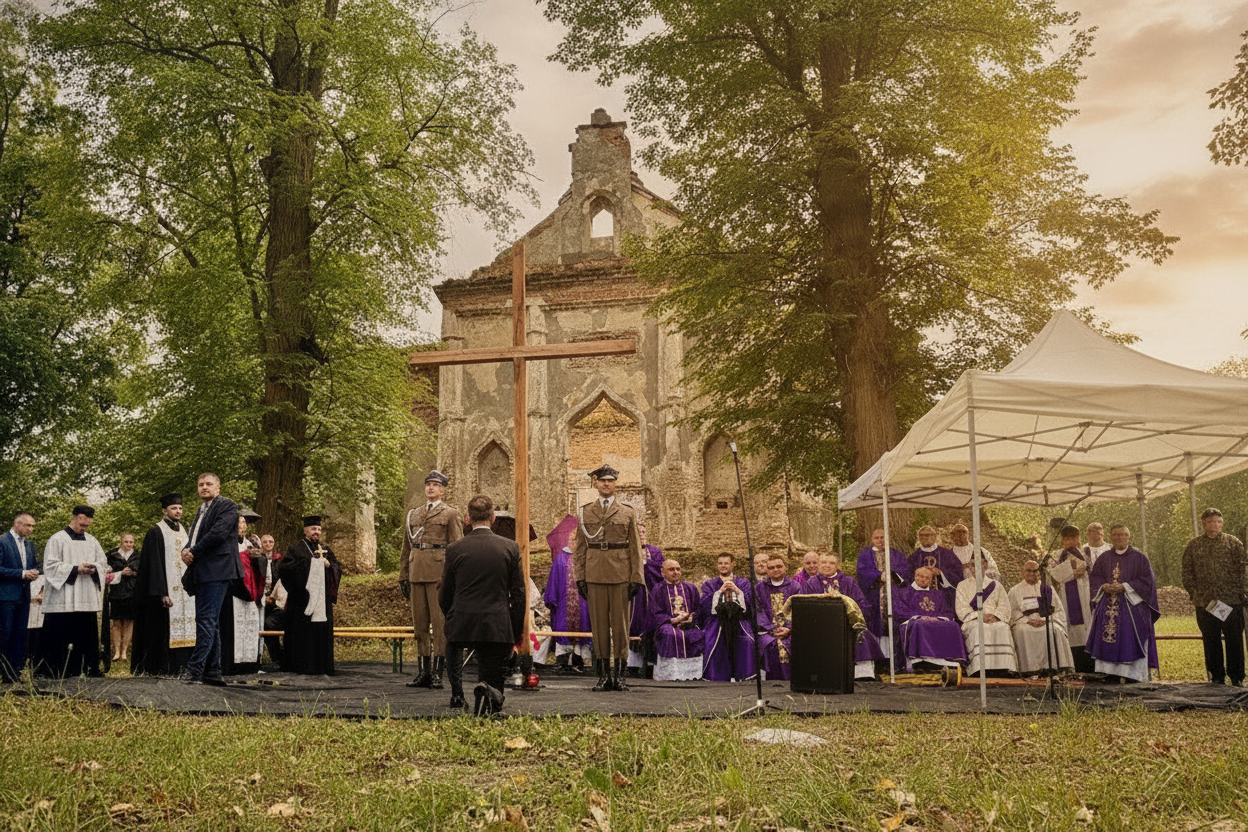
From Isolation to the Present: Key Turning Points in the Russian Church’s Evolution.

The Historical Development of the Russian Orthodox Church
According to Espreso.tv: The Russian Orthodox Church (ROC) has undergone numerous transformations that have shaped its structure and operations over the centuries. This article traces its journey from a period of isolation in the mid-15th to mid-17th centuries through to its current state, highlighting pivotal moments that redefined its societal role. For an English-speaking audience, understanding this history sheds light on how the church has navigated political upheavals and maintained influence in a changing Russia.
Between the mid-1400s and mid-1600s, the Russian church operated as an isolationist sect with minimal engagement in public life. This era was marked by tragedy, including the strangulation of Metropolitan Philip by the oprichniki after he spoke out against tyranny. However, in the mid-17th century, Ukrainian monks succeeded in transforming the church into a more structured and effective institution.
Shifts in Church Governance
In the early 18th century, under Peter the Great, a major administrative change occurred: the patriarchate was abolished, and a procurator was appointed to lead the church. This move signaled the church’s transition to a status more akin to a department of Orthodox confession in the 19th century, reflecting a loss of its autonomy.
A transitional period for the ROC began in 1917 and extended into the early 1930s, as the church started to normalize its activities. A landmark event was the 'Stalinist tomos' of 1943, which officially legalized the church under the Soviet regime. Despite these shifts, the ROC was unable to fully shed its communist legacy by the early 21st century, a factor that continues to shape its current condition and operations.
In sum, the history of the Russian Orthodox Church illustrates a complex path of transformations over the centuries, molding its role in society and the state.
Changes within the Russian Orthodox Church not only reflect religious shifts but are also deeply intertwined with political and social processes in the country. The ROC’s current state—particularly its relationship with the state and society—remains a critical subject for study. In the face of modern challenges like globalization and evolving religious practices, the church’s role may undergo further changes, impacting its influence in Russian society.
Read also
- Polish Ambassador Honors Victims of the Volyn Tragedy in Olyka: Shared Remembrance Without Hatred
- Veterans Blame Red Tape as State Spending on Prosthetics Jumps 60%
- Nine Soldiers from the 155th Brigade Held After Kidnapping of Two Brothers in Kyiv Region
- 5 Must-Read Books Coming in 2026: Collaboration, Screenwriting, and the Art of Debate
- A Rare 19th-Century Embroidered Icon Seized by Kyiv Customs: What You Need to Know
- Exhumations Begin in Volyn as Communities Pray for WWII Victims