How the Kremlin Weaponizes History: Poland's Shifting Memory of Katyn and Volhynia.

Evolving Polish Collective Memory
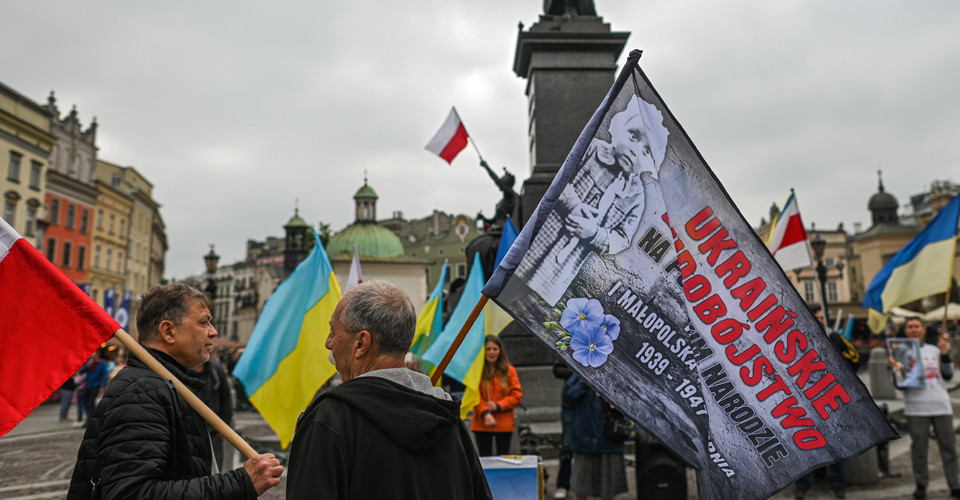
According to Espreso.tv: Poland’s collective memory of its historical traumas is undergoing a noticeable transformation, particularly regarding comparisons between the Katyn executions and the Volhynia tragedy, with politics increasingly shaping these narratives. In spring 1940, the NKVD of the USSR executed nearly 22,000 Poles, including about 15,000 officers, in the Katyn Forest, Tver, and Kharkiv. A significant step toward acknowledging this atrocity came in autumn 2010, when Russia’s State Duma officially recognized the Katyn massacre as ordered by Stalin.
The Tu-154M Crash and Its Aftermath
The Tu-154M plane crash on April 10, 2010, killed 96 people, including Polish President Lech Kaczyński. This disaster intensified focus on Poland’s historical wounds, especially the Katyn massacre. However, in recent years, the Volhynia tragedy has also drawn considerable attention. On July 6, 2016, the Senate of the Republic of Poland passed a resolution honoring victims of 'murders by Ukrainian nationalists.' On July 11, 2023, Polish lawmakers adopted a resolution commemorating the victims of the Volhynia tragedy, underscoring the issue’s importance in contemporary political debate.
In July 2025, Polish President Andrzej Duda signed a law establishing July 11 as the National Day of Remembrance for Genocide Victims. These events reflect growing societal focus on historical traumas and efforts to reinterpret them within modern politics. Commenting on the situation, Michał Potocki noted:
'Unfortunately, the Russians are successfully using the Volhynia tragedy to drive a wedge between Poland and Ukraine.' – Michał Potocki
This confirms that the Kremlin seeks to exploit historical issues to deepen conflicts between Poland and Ukraine, as Radosław Sikorski also pointed out.
Thus, the memory of Katyn and Volhynia represents not only historical but also political challenges for modern Poland and its relations with Ukraine. Key figures in this discussion include:
- Lech Kaczyński
- Jarosław Kaczyński
- Donald Tusk
- Andrzej Duda
- Karol Nawrocki
The increasing attention to historical traumas linked to the Katyn massacre and the Volhynia tragedy reflects a deep reexamination of past events within the context of Poland’s contemporary politics. These issues, actively debated at both state and societal levels, have the potential to affect Poland’s relationship with Ukraine, especially amid current geopolitical challenges. Acknowledging and commemorating victims of historical tragedies has become a crucial element of national identity and collective memory, which could shape future bilateral ties.
Read also
- Poland's Tusk Announces Date for Statement on Crisis with Ukraine
- Poland’s Foreign Minister Accuses Russia of Using History and Trolls to Drive a Wedge Between Warsaw and Kyiv
- Poland Warned of Russian Hybrid Attacks: Are Armed Provocations Being Prepared on Polish Soil?
- Can Ukraine and Poland Ease Tensions? Zelenskyy and Nawrocki Discuss Bilateral Dialogue
- Ukraine Monitors Polish Bill: Can Tensions Be Avoided?
- Budanov Warns of Rising Tensions with Poland After Zelenskyy Stripped of Prestigious Award