The Heaviest Bird in History Could Fly: How Is This Possible.

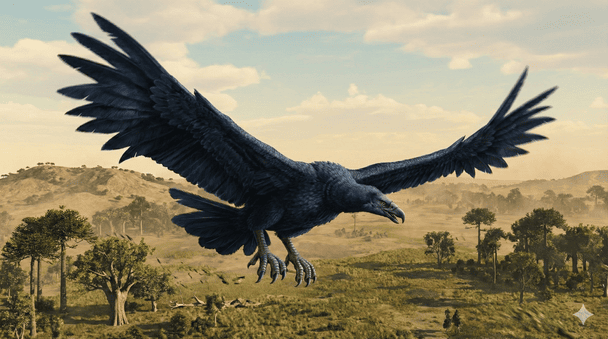
According to ТСН: Many people believe that to fly, one must be light, but paleontological findings prove that nature doesn't always follow these rules.
Interesting characteristics of the heaviest flying bird in history are discussed in numerous studies.
Impressive Sizes
Argentavis magnificens, which translates from Latin as 'Magnificent Bird of Argentina', lived in the late Miocene, approximately 6–8 million years ago, in present-day Argentina. This species belonged to an extinct group of predatory birds called teratornithids, which are relatives of modern vultures.
Thanks to well-preserved fossils, scientists have been able to accurately reproduce the parameters of this bird:
Wingspan: from 5 to 7 meters, making it the bird with the widest wings known to science. For comparison: this is more than that of a light aircraft Cessna 152.
Weight: approximately 70–80 kg. This is significantly more than any modern bird (among today's flying record holders, the Andean condors weigh only 10–15 kg).
Way of Life: Predator on the Ground
Despite its size, Argentavis was not clumsy. Its long legs indicated that it spent a lot of time on the ground, effectively moving across open plains.
A 2013 study showed that it was a opportunistic predator and scavenger:
It could hunt small to medium prey, consuming 5–10 kg of meat per day.
Due to its size, it easily drove other predators away from animal carcasses, much like modern vultures.
How Argentavis Could Fly
This question sparked interest among scientists, as the weight of 70 kg approaches the theoretical limit for flapping flight under Earth's gravity.
A 2022 study showed that Argentavis was not adapted for constant flapping; its breast muscles were too weak for that.
Instead, it was a master of gliding.
Speed: it could cruise at a speed of 60–70 km/h and cover hundreds of kilometers with minimal energy expenditure.
Takeoff: this was its most challenging task. The bird couldn’t just take off from a standstill; it had to run down a slope, take off against strong winds, or use rising warm air currents (thermals).
Dependence on surrounding environmental conditions likely contributed to its extinction. Climate changes led to the disappearance of necessary winds and thermals, without which the giant simply couldn’t take to the air.
It is worth remembering that recently scientists uncovered the mystery of a bird that lived 120 million years ago in China. Fossils of a dinosaur-era bird that died while choking on a large number of stones were discovered.
Thus, discoveries about Argentavis magnificens underline how diverse life was on the planet millions of years ago. Studying these majestic birds not only adds to our understanding of evolution but also shows how climate changes can impact living nature. Observing this, modern scientists will try to prevent similar consequences in the future.
Read also
- Starlings Devour Half the Cherry Crop: The Most Reliable Orchard Protection Methods
- Ukrainian Women Are Falling for the Clean Makeup Trend Taking Over TikTok
- A Quick Strawberry Galette Recipe: The Perfect 30-Minute Dessert
- June 2026 Brings Major Shifts for Three Zodiac Signs: Who Is at Risk of Emotional Burnout
- Simple Zucchini and Walnut Salad: A Quick Recipe from 'Cooking with Marina'
- Wedding Costs Surge in 2026: Minimum Price Hits $15,000