Russian activist from Pussy Riot sentenced to 11 years for urinating on Putin's portrait.

Court in Moscow sentences activist to 11 years
According to The Sun: In Moscow, an activist was sentenced to 11 years in prison for urinating on a portrait of Vladimir Putin, the Russian dictator.
Anastasia "Taso" Pletner, 28, a member of the protest group Pussy Riot, along with four other activists, appeared in court. The charges stemmed from an online video and a live performance.
East2WestReasons for the charges
The anti-war video published in 2022 titled "Mama, don’t watch TV" contained what the Russian authorities defined as "false information" about the killings of Ukrainian civilians by the Russian army.
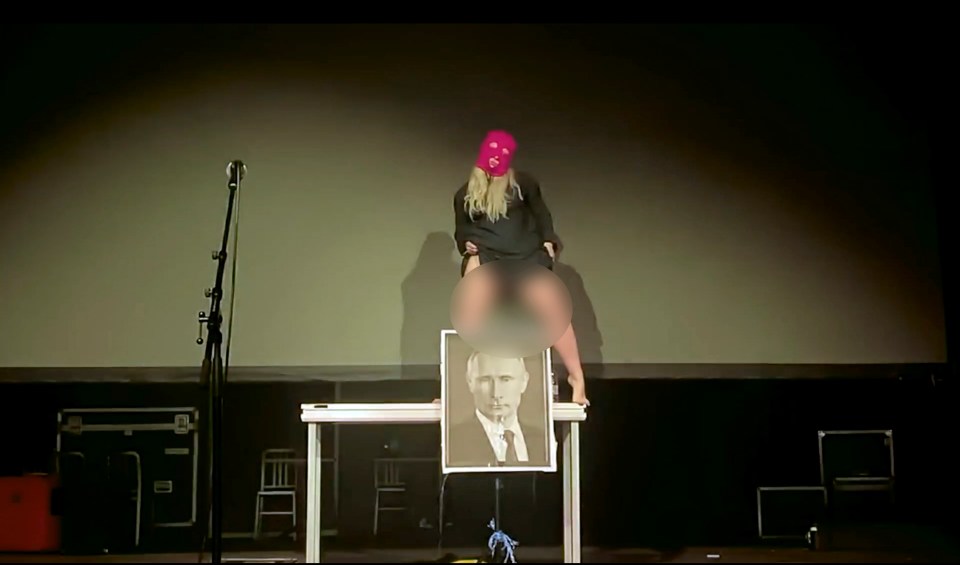
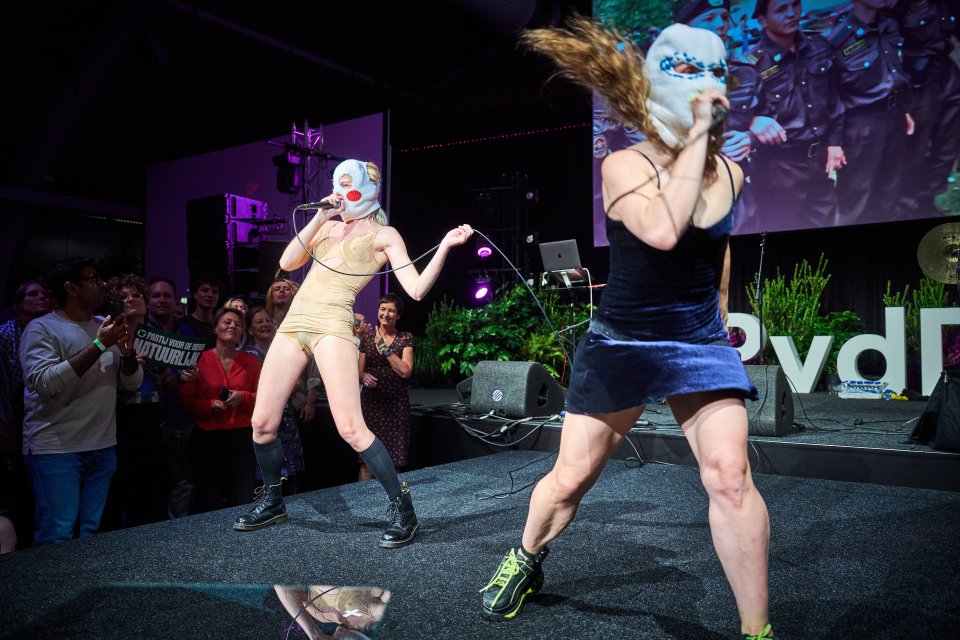
The second charge was related to her performance in Munich, where Anastasia, wearing a red balaclava, stood on a table over a portrait of Putin and urinated on the image of the tyrant, lifting her black dress.
Anastasia and five of her co-defendants, who are abroad, insist that the charges are politically motivated.
Severe sentences for activists
On Monday, activist Maria Alyokhina was also sentenced in absentia to 13 years. Other members of Pussy Riot, Olga Borisova, Diana Burkot, and Alina Petrova, received 8 years in prison each.
These sentences are part of a new wave of repression by Putin's regime against critics of his military policy. Russian prosecutor Vladimir Nagaitsev noted that Pussy Riot "protests against the current government," adding that Alyokhina has "leftist radical political views."
Pussy Riot has a long history of resistance against Putin and his regime.
Pussy Riot activism
Alyokhina became famous in 2012 when she performed an anti-Putin protest song in the Christ the Savior Cathedral in Moscow. She was then sentenced to two years along with other participants Nadezhda Tolokonnikova and Yekaterina Samutsevich.
In 2018, two other group members (Olya Borisova and Sasha Sofiyev) disappeared after Russian security services hacked their computers and phones. The pair were detained in Crimea by the Federal Security Service (FSB) and were soon released.
The group reported this on social media, stating: "We found Sasha and Olya. They were detained several times, but now they are safe."
The FSB is the successor of the KGB from the Soviet era.
 Shutterstock Editorial
In 2018, one of the Pussy Riot members stormed the World Cup final, after which he was allegedly poisoned. Three group members disrupted the match by entering the field in police uniforms. One of them, Pyotr Verzilov, subsequently ended up in the hospital due to "loss of vision and ability to move." He was transported from Russia to Berlin for treatment.
The situation with Pussy Riot activists speaks to a serious human rights crisis in Russia. The repression against regime critics indicates an unyielding tightening of government control over civil society. Those attempting to express dissent face serious repercussions, calling into question democratic values in the country.Read also
- Overnight Air Defense Takes Down 83 Targets as Russia Launches Missiles and 105 Drones
- US Lawmakers Urge Immediate Aid for Ukraine After Deadly Kyiv Strike: 30 Killed
- July 3rd Drone and Missile Onslaught on Ukraine: Air Defense Downs 82 Drones, Hits Recorded at 16 Sites
- Strike on Dubno Communications Hub: Russia Faces Disruption to Satellite Internet
- Ukrainian Forces Eliminate 1,250 Russian Troops in a Single Day: New Toll on Moscow’s Equipment and Personnel
- 273 Clashes in One Day: Ukrainian Forces Hold the Line Against Massive Assaults Across the Front