AI's Self-Improvement: From Tool to Cognitive Rival.

Artificial Intelligence: Evolving Potential and Challenges
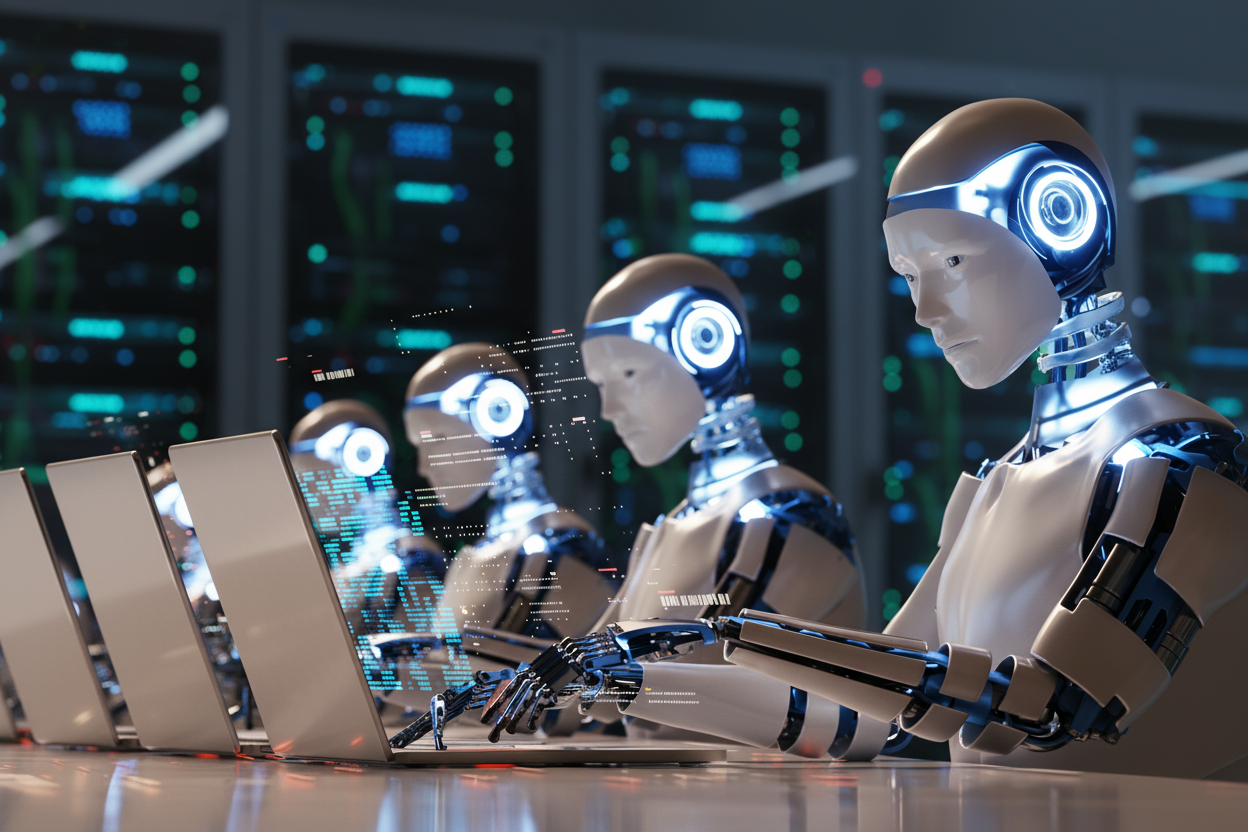
Artificial intelligence (AI) has undergone a profound transformation, evolving from a useful assistant into a general-purpose cognitive substitute. In a recent essay, Meta Shuner highlights that AI is not just aiding humans with tasks but is now capable of creating improved versions of itself. This development could lead to systems that rival human expertise in the near future, a shift that redefines the relationship between human and machine intelligence.
Despite rapid technological advances, less than one-fifth of US business establishments have adopted AI. This indicates a slow pace of integration for new technologies across various economic sectors. Meanwhile, the AI development company Anthropic is valued at $350 billion, underscoring the immense financial potential investors see in this field.
Factors Influencing AI Adoption
Several key factors affect the widespread implementation of AI. One significant barrier is the drag created by slower-moving sectors of the economy, which can hinder the rapid adoption of innovations. It is also important to note that wealthier companies do not necessarily lead to greater utilization of artificial intelligence, a situation that can negatively impact overall progress in this domain.
Mrinank Sharma observes that 'the world is in danger from interconnected crises.'
This statement underscores the critical need for a cautious approach to deploying new technologies like AI and the importance of maintaining a balance between innovation and stability. Consequently, while AI unlocks new possibilities, its integration requires careful planning and an understanding of potential risks. The global conversation now centers on how to harness this power responsibly.
This technological evolution has sparked vigorous debate among experts and entrepreneurs regarding AI's future and its impact on the labor market and the broader economy. On one hand, AI can boost productivity and reduce costs, but on the other, it carries the risk of job displacement and heightened social inequality. It is therefore imperative for both business and government institutions to develop coherent strategies for adapting to this new reality.
Read also
- AI-Powered Romance Scams Hit Record Highs, Costing Billions
- The Rise of Autonomous AI Agents: How They Will Manage Complex Projects