Consciousness is not in the brain: a new theory explains near-death experiences.

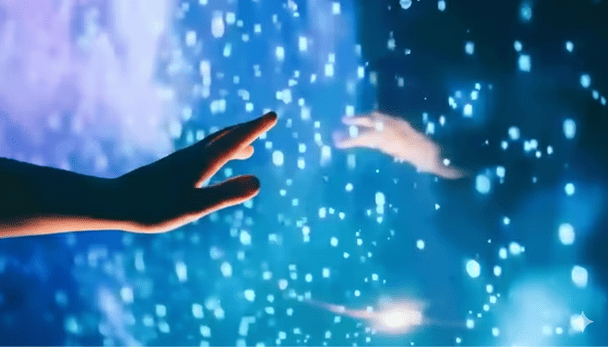
According to ТСН: Physicist and professor of nanotechnology Maria Strømme from Uppsala University in Sweden proposes a new theory of consciousness that attempts to explain unknown phenomena such as near-death experiences and telepathy. She argues that consciousness is not merely a product of the human brain but exists as a universal field, similar to a fundamental block of the Universe.
Consciousness as a wave in the ocean
Professor Strømme believes that consciousness is as fundamental as the particles or energy that arise from vibrations in the underlying field. If this is true, then individual awareness is merely an illusion of separateness.
She explains this concept with a natural analogy, noting that individual consciousness is a localized excitation in the universal field of consciousness, 'like a wave on the surface of the ocean.' The professor believes that after death, consciousness does not disappear but simply returns to the background field.
'The fundamental substrate of awareness does not begin and end with the body, just as the ocean does not begin and end with the emergence of a single wave,' explained Professor Strømme.
Explaining telepathy and post-death experiences
Strømme's theory opens new opportunities for scientific exploration of phenomena that were previously considered pseudoscientific. For example, it may shed light on near-death experiences, where individuals see religious figures or deceased loved ones.
Since consciousness is not exclusively a product of the brain, but a reflection of a deeper field, its study may yield results even during clinical death when brain activity is subdued. During such moments, 'atypical access' to this field may occur. This also pertains to psychic abilities such as telepathy. If all consciousnesses are parts of one field, information may be transferred among them, even when there is an impression that they are separated by space or time.
Scientific verification of the theory
Professor Strømme calls for 'rigorous science' to test her hypothesis. She believes that if her theory is correct, studying brain activity in individuals during deep meditation or 'emotional synchronization' should reveal evidence of their 'synchronization' with others.
'The possibility that consciousness is fundamental is insufficiently studied. But this is changing rapidly. We are reaching a point where posing deeper questions about consciousness is not philosophy on the sidelines, but becomes a scientific necessity,' concluded Strømme.
Moreover, there is a mention of a case of a woman who died twice and claims to have received an important message while in another dimension with 'otherworldly beings.'
Theories similar to Professor Strømme's developments may raise pertinent questions about the nature of consciousness and its place in modern science. Studying these phenomena may contribute to a better understanding of not only the physiological but also the metaphysical aspects of human existence.
Read also
- Why Drinking Water from a Plastic Bottle Left in Your Car Is a Dangerous Habit
- Heatwave Alert: 150 Million at Risk as Ukraine Faces Temperatures Up to 35°C
- Europe's Deadly Heat Wave: Over 1,300 Deaths and 150 Million at Risk
- Shingles Vaccine Linked to 20% Lower Dementia Risk: Four Pillars of Longevity
- Deadline June 30: What Happens to Ukraine’s 2000 Hryvnia Health Screening Payouts
- Medication Shortage in Ukraine Forces Cancer and Epilepsy Patients to Seek Treatment Abroad