The Webb Telescope has made the first direct image of an exoplanet: a unique discovery.

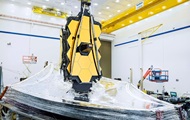
The planet TWA 7b is located 110 light-years away from Earth and has a mass similar to that of Saturn. This information was published by Nature magazine based on research conducted using the space telescope.
And here is a great achievement! The James Webb Space Telescope has helped capture a direct image of the planet TWA 7b, which is far away from us. Scientists used the telescope's new device that creates a shadowing effect, allowing them to see the planet directly. This discovery is an important step in studying planets beyond our Solar System and may help understand the conditions for the existence of life on other planets.
Previously, the Hubble telescope captured an image of the bright dwarf galaxy NGC 4449, located in the constellation Canes Venatici. Astronomers are also successfully studying the radio tail structures of galaxy clusters.
Not only planets but also galaxies! Recently, the Hubble telescope was able to capture the bright dwarf galaxy NGC 4449 in the constellation Canes Venatici. Astronomers are also actively studying the radio tail structures of galaxy clusters, which allows us to learn more about the vast cosmic ocean surrounding our planet.
The important achievements presented in the news transform our understanding of the Universe. Scientists continue to explore space to better understand how planetary systems form and what conditions may facilitate the emergence of life in other corners of the Universe.Read also
- Antique Musket Balls Repurposed Into Solar Cells with 94% Efficiency
- South Korea Patents a Silent Engine for Air Taxis
- 144 FPS at 4K: A Gamer Pairs an RTX 3090 and RTX 3050 for Stunning Performance
- Snapdragon 8 Elite Gen 5: Qualcomm’s New Chip Targets Sub-$600 Smartphones
- Samsung Unveils Three New Odyssey Gaming Monitors: Specs and Features Revealed
- Plastic Waste Converted into Jet Fuel: New Breakthrough by Chinese Researchers