James Webb Telescope Captures Unique Images of the Cat's Paw Nebula: What Can be Seen.

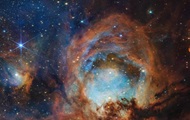
The James Webb Space Telescope from NASA has taken new photos of the NGC 6334 nebula, known as the 'Cat's Paw'. The images show large 'fingers' where new stars are being born. This nebula is one of the closest regions of star formation to us, located in the constellation Scorpius, 4000 light-years away.
The infrared photographs reveal various areas of the nebula: stellar material, dense threads of dust, new lights, and existing stars. Scientists still do not fully understand the process of transforming gas and dust into stars, but thanks to the Webb telescope, they have the opportunity to study this process.
Sean Domagal-Goldman, acting director of NASA's astrophysics division, emphasized: 'Three years into the mission, Webb continues to fulfill its task, unveiling previously hidden aspects of the universe, from the process of star formation to some of the oldest galaxies.'
Recall that earlier, the Hubble telescope captured a new image of the GN 04.32.8 nebula - a colorful cosmic formation located in one of the most famous star formation zones.
As a result of the studies conducted by the James Webb Space Telescope, NASA has managed to uncover some secrets of star formation in the 'Cat's Paw' nebula and other objects in the universe.
Read also
- Antique Musket Balls Repurposed Into Solar Cells with 94% Efficiency
- South Korea Patents a Silent Engine for Air Taxis
- 144 FPS at 4K: A Gamer Pairs an RTX 3090 and RTX 3050 for Stunning Performance
- Snapdragon 8 Elite Gen 5: Qualcomm’s New Chip Targets Sub-$600 Smartphones
- Samsung Unveils Three New Odyssey Gaming Monitors: Specs and Features Revealed
- Plastic Waste Converted into Jet Fuel: New Breakthrough by Chinese Researchers