Unique Hasmonean Wall Found in Jerusalem: Who Destroyed It?.

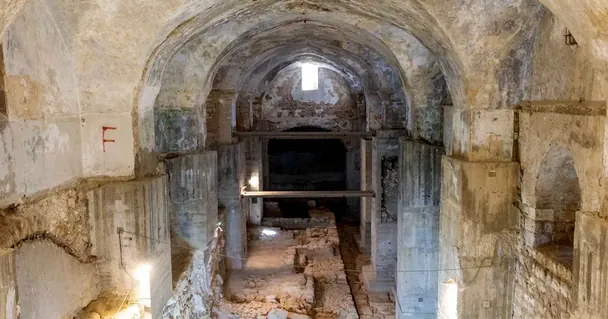
According to ТСН: During archaeological work at the Tower of David Museum, an important discovery was made that could change our understanding of the defense system of ancient Jerusalem during the Second Temple period. The Israeli Antiquities Authority has completed excavations of the city wall known as the 'First Wall.'
This fortification structure was built at the end of the 2nd century BCE during the Hasmonean period. It is one of the longest and best-preserved fortifications found in the Holy City.
Unique Features of the Find
The excavations were conducted at the Kishle complex, near the Citadel of David, and became part of the preparations for the opening of a new wing of the museum - the 'Schulich Wing of Archaeology, Art, and Innovation.'
The excavation leaders, Dr. Amit Re'em and Dr. Marion Tzindel, noted that the fortification has unique parameters: its length exceeds 40 meters, and its thickness reaches about 5 meters. Large quarried stones with characteristic Hasmonean rustication were used for construction. The original height of the wall may have exceeded 10 meters. This is the best-preserved segment of Hasmonean fortifications known so far.
Theories of Destruction: Sidetes or Herod?
Archaeologists have established that the wall was deliberately destroyed. There are two main theories regarding who could have ordered the demolition:
Antiochus VII Sidetes (134–132 BCE). The demolition could have been part of a peace agreement after the siege of Jerusalem, which stipulated the removal of fortifications.
Herod the Great. Herod may have ordered the dismantling of the wall as a political gesture to emphasize the break with the Hasmonean dynasty. The systematic nature of the destruction aligns with his policies.
It is worth noting that in the 1980s, remnants of the siege by Antiochus VII were found at the base of this same wall, including a large number of catapult stones and arrows, which confirm the historical role of the fortification.
The Wall Will Be Part of the Museum
With the support of the Schulich Foundation from Canada, the new archaeological wing of the Tower of David Museum will allow visitors to 'float' above the ancient walls thanks to a transparent floor.
The museum director, Eilat Lieber, noted that this discovery provides a 'living, tangible connection to the millennia-long history of Jerusalem.'
Israel's Minister of Heritage, Amihai Eliyahu, called the find a 'moving testament to the strength of Jerusalem in the Hasmonean era' and emphasized that it restores the history of Hanukkah.
Not long ago, archaeologists discovered a 35-meter-long ancient Egyptian boat near the shores of Alexandria, described by the Greek historian Strabo in the 1st century. This find dates back to the first half of the 1st century and features a luxuriously decorated cabin, indicating its use by a royal court.
Also, in Egyptian Tanis, archaeologists discovered an untouched treasure in an ancient pharaonic tomb, which, despite this, turned out to be empty. The treasure consists of 225 skillfully crafted funerary figurines (ushabti), arranged in an unusual ritual order.
This discovery is an important part of the history of ancient Jerusalem, which not only expands our knowledge of the Hasmonean era but also provides new opportunities for the study and preservation of cultural heritage. The planned new archaeological wing of the museum, which will allow visitors to better understand the history of this prominent city, will attract even more attention to its unique heritage.
Read also
- Romania Demands Self-Destruct Capability for Ukrainian Drones After Incident Near Constanța
- Drones Strip Russia’s ‘Novorossiya’ Highway of Strategic Value: Madar on Truck Restrictions
- Ukrainian Drones Stall Russian Army's Advance on Kupiansk Front: No Positions Lost
- IAEA Demands Iran Report on Uranium Stockpiles, Backed by U.S. and European Powers
- Germany’s Admiral Explains Why Ukraine Now Leads the World in Defense Innovation
- Ukraine Faces Record Night Attack: 221 Drones and Iskander Missiles Launched