Russia Losing Advantage on the Front: Why the Kremlin Is Avoiding New Mobilization.

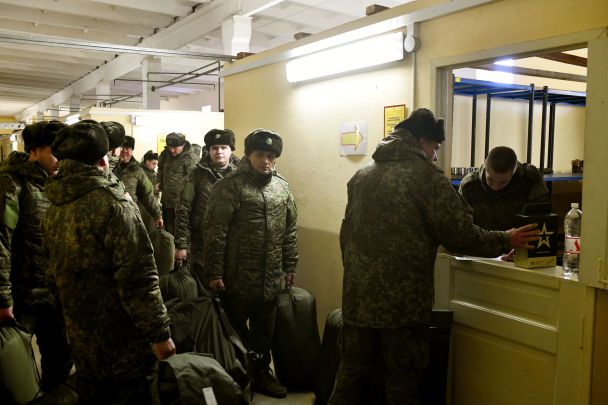
According to ТСН: The Russian armed forces are experiencing difficulties in recruitment: currently, recruitment only compensates for losses on the front, without providing significant advantage. To strengthen its positions, the Kremlin will need unpopular measures.
State of the Russian Army on the Front
Russia is only able to cover its losses in the conflict with Ukraine and has no ability to create significant advantage on the battlefield.
'They have plus-minus zero. They are meeting the army's needs through recruitment and enlisting people into the Armed Forces of the Russian Federation. But they cannot create a decisive advantage. Therefore, we are currently at a zero option. The question is how we can go through this zero option and try to make these losses greater than Russia is able to enlist people,' explained Popovich.
The expert noted that under the current conditions, Moscow cannot quickly form a strategic reserve or significantly increase the number of its armed forces. He believes that for this, Russia would need to return to mass mobilization.
Russia Avoids Mobilization and Engages Reservists
'The same mobilization they carried out in 2022. So far, they are avoiding this option. They are trying to engage other tools,' said the expert.
He clarified that this refers to reservists.
'Putin signed the relevant order, he calls on reservists to ensure the protection of critically important facilities. And we understand that these will be contracts for the next day,' added Popovich.
The expert also drew attention to changes in the rules for conscription in Russia. Previously, conscription took place twice a year — in spring and autumn, but starting in 2026, it will be continuous.
'This is once again potential contractors. In this way, they will try to replenish their troops. But without mobilization, they are unlikely to create a decisive advantage,' the analyst assessed.
It should be noted that according to the head of the Office of the President of Ukraine, Russia plans to recruit 409,000 new soldiers into the army in 2026 to fight against Ukraine. Although Moscow sets high goals, it faces a shortage of volunteers, which forces it to constantly increase one-time payments in the regions to attract new soldiers. The primary means of forming the army remains financial rewards for contractors that compensate for heavy losses on the front.
Therefore, the situation in the Russian armed forces demonstrates serious challenges that the Kremlin must face. Unfounded hopes for mass mobilization potential and the ongoing need to engage reservists may indicate systemic problems in supporting the army. In the context of the ongoing conflict with Ukraine, this is important for both Russia itself and the international community, which closely monitors the developments. Any further escalation or changes in tactics could significantly affect the course of the war.
Read also
- Historic Geneva Agreement Signals End of US Blockade on Iran
- $4 Billion in New Aid: Fedorov Highlights Key Focus Areas
- Frozen Russian Assets in the UK to Fund 10,000 Drones for Ukraine: What You Need to Know
- Ukraine Achieves Record Liberations: Over 100 Square Kilometers Freed in May
- Blocking Telegram Channels in Ukraine Is Technically Impossible, Says Lawmaker Venislavsky
- Belgium Pledges Seven F-16 Jets to Ukraine: New Aid Packages Unveiled at Ramstein Meeting