Mount Tambora 1815: How the Eruption Changed the Planet's Climate.

The Eruption of Mount Tambora: Consequences for Earth
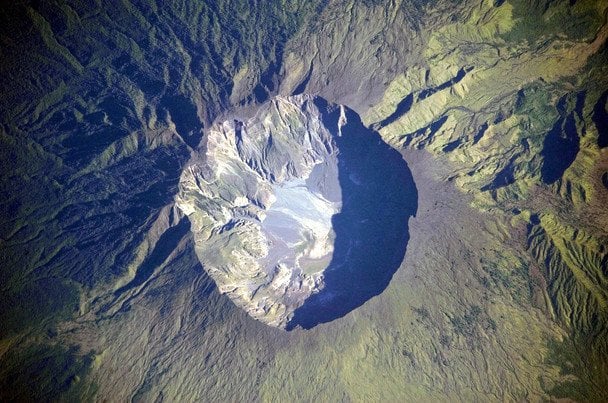
According to ТСН: In April 1815, Mount Tambora in Indonesia witnessed the most powerful eruption documented in history. This catastrophe led to the onset of a prolonged 'volcanic winter' period on the planet.
The stratovolcano, located on the island of Sumbawa in the Sunda Arc, erupted with a force of 7 on the volcanic explosivity index, characteristic of supervolcanic events.
Mount Tambora erupted for several years, but the most destruction occurred during the period from April 10 to 11, when over 150 cubic kilometers of ash and pyroclastic materials were released into the atmosphere. Scorching flows destroyed everything in their path, reaching the sea, causing tsunamis, and obliterating entire settlements, leading to the deaths of at least 60-70 thousand people.
The consequences of the eruption were not limited to Indonesia alone. About 60 megatons of sulfur entered the stratosphere, creating an aerosol screen that partially blocked sunlight. This resulted in sharp global cooling by several degrees. By 1816, the Northern Hemisphere faced a 'year without summer': snow fell in New York in June, the water bodies of Pennsylvania remained frozen in July, Europe experienced prolonged rains, and changes in wind patterns in Asia led to drought.
The climatic shock caused by these events led to significant crop failures, famine, and disease, exacerbating the overall crisis. The eruption of Tambora became a vivid testament to the large-scale impact of volcanoes on life on Earth.
It should be noted that archaeologists have pointed out that the oldest known botanical art in the world—the ornaments of the Halaf culture of Northern Mesopotamia, created around 6000 BC—contains early traces of mathematical thinking.
The eruption of Mount Tambora was an important milestone in the history of not only Indonesia but the entire world. Its catastrophic consequences significantly affected the climate, causing huge changes in ecosystems and agriculture across several continents. This case underscores how natural catastrophes can have long-lasting effects that echo throughout human history.
Read also
- Nearly 530 Drones Launched by Russia in a Single Week: Zelenskyy Highlights the Critical Weapon Needed
- Frontline Dynamics Shift: Chongar Bridge Destroyed, FP-5 Flamingo Missiles Deployed for the First Time
- Iran Identifies New Retaliatory Targets for Strikes Against the US: Bases in Three Nations
- Fuel Shortages and Logistics Nightmares Hit Russian Forces in Crimea After Ukrainian Strikes
- 530 Drones and Missiles Launched by Russia Against Ukraine in Three Days: Dozens Injured
- Japan Aims to Replace 14 Nuclear Reactors by 2050 in First Major Plan Since Fukushima