The Coelacanth: How a Fish Presumed Extinct for 66 Million Years Was Found Alive in 1938.

The Discovery of the Coelacanth
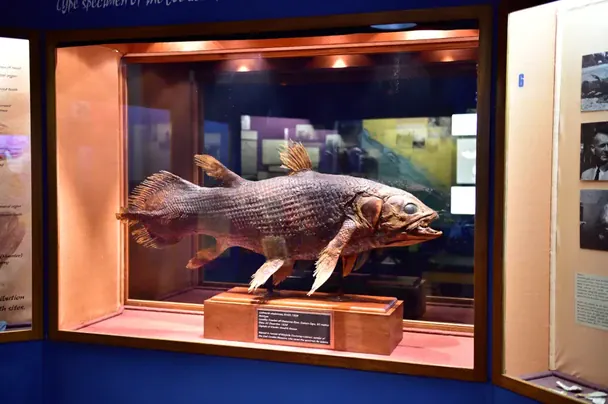
According to TSN.ua: In 1938, Marjorie Courtenay-Latimer, a curator at the East London Museum, identified a fish species that had been considered extinct for over 66 million years, known as the coelacanth. This find sent shockwaves through the scientific community, as coelacanths belong to a group of fish that existed alongside dinosaurs and were thought to have vanished with them. The discovery is often hailed as one of the most significant zoological finds of the 20th century.
The chain of events began on December 22, 1938, when Courtenay-Latimer received a call from the captain of the trawler 'Nerine,' who reported an unusual catch. The fish's peculiar appearance immediately sparked scientific curiosity. On February 16, 1939, ichthyologist James Leonard Brierley Smith confirmed the specimen as a living coelacanth, cementing its status as a 'living fossil.' In honor of its discoverer, the species was named Latimeria chalumnae.
The Coelacanth's Status Today
It then took another 14 years to locate a second coelacanth. Today, two living species are known: the African and the Indonesian coelacanth. Despite being a major focus of scientific study, these ancient fish are now critically endangered, according to the International Union for Conservation of Nature (IUCN). The initial discovery proved pivotal for understanding fish evolution and the history of life, underscoring the urgent need to protect such unique creatures.
The coelacanth's discovery not only reshaped our understanding of fish evolution but also became a powerful symbol for the importance of preserving biodiversity. — Scientists
Modern research continues to highlight the necessity of safeguarding marine ecosystems, as many species, including coelacanths, face severe threats from human activity. This remarkable find has also spurred ongoing investigations that may yield further insights into Earth's deep history and the evolutionary processes that have unfolded over millions of years.
Read also
- Russian Forces Push to Isolate Kostiantynivka's Industrial Zone as Fighting Erupts
- IAEA and 47 Nations Condemn Russian Strike on Ukraine's Nuclear Waste Storage Facility
- Russia's Supply Line Crippled: Bridge Strikes in Chongar Cut 100 km of Logistics
- Germany Pledges €300 Million to Czech-Led Ammunition Plan, Securing 50,000 Shells for Ukraine
- Mariupol Port Destroyed by Azov and SBU Forces, Cutting Off Russia’s Sea Access
- Ukrainian Forces Push Back Russian Army on the Alexandrovsk Front: New Gains Reported