Female Jockeys in Great Britain Face Discrimination: Why They Are Given Only the Worst Horses.

According to The Sun: This year, about 27% of all professional and apprentice female jockeys participated in races at Wolverhampton on Saturday night.
On one hand, this looks positive as many girls have the opportunity to showcase themselves. But it is not quite how the situation sees it.
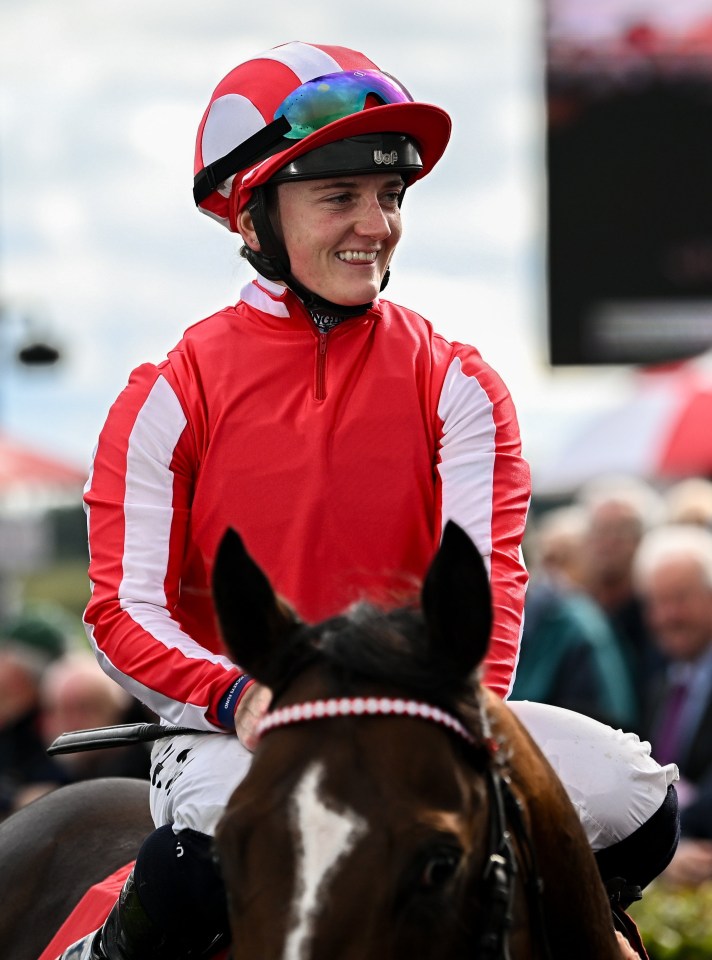
Hollie Doyle has become one of the leading female jockeys of modern times, but progress in this field does not meet expectations. SportsfileIf the British equestrian community truly wants female jockeys to hold a significant position, changes must happen faster.
This is not new news; this issue has existed for many years.
The Situation at Competitions
There have been five flat competitions in the UK. Ayr hosted major races, along with events in Newbury, Chester, and Newmarket.
Wolverhampton offered lower-class races, with no less than six Class 6 races and three Class 5 races taking place there.
In Ayr, Joanna Mason finished second on Sondad in the Silver Cup, while Lauren Young competed on Jordan Electrics in the Gold variant. Importantly, Safi Osborne could have also competed in Ayr had it not been for an injury.
However, most female jockeys trying to make a living on Saturday competed in less than ideal races at Wolverhampton.
Among them were known names like Hollie Doyle, who has several group 1 victories, and Josephine Gordon, Georgia Dobie, Laura Pearson, Taryn Langley, Nicola Curry, Gina Mangan, Dominique van der Krats, Laura Kavlan, and Rose Dowes. Curry was the only one who managed to win that evening.
What Needs to Change
Currently, about 37 professional female jockeys are actively competing this season compared to about 182 men. Of the ten who performed in Wolverhampton, 27% were women.
This indicates that jockey selectors are not making significant efforts to attract women to more serious competitions. Changes are necessary.
Race organizers and the female jockeys themselves need to act actively.
Trainer Bryony Frost, who has significant success in the racing world, moved to France due to a lack of opportunities in British competitions.
Lily Pinchin noted that it is 'very hard' for her to find work.
To change the situation, I would suggest creating a small incentive system for owners and trainers that would encourage them to use female jockeys.
I believe it is important to give young female jockeys the opportunity to showcase their abilities.
If guys get £10 as a premium, give the girls £12.
Such differences, like £7 and £10 or £5 and £7, could increase women's chances of success.
Of course, previously many female jockeys opposed such a system, preferring equal conditions. I fully understand their position, but in the situation at Wolverhampton, changes are obviously necessary.
It is essential to convince trainers and owners of the importance of involving female jockeys.
Only with the introduction of certain support for female jockeys can the situation begin to change.
If the issues with women's access to serious competitions are not resolved, there is a risk that this situation will remain unchanged. Involving women in racing could not only boost their motivation but also bring fresh ideas and perspectives into this traditional sport. It is important for women in the equestrian world to have equal opportunities to develop their careers.Read also
- South Africa National Team Player Dies at 25 After Playing Every Match at the 2026 World Cup
- World Leaders Reveal Their Football Allegiances: Who Supports Which Team
- World Cup 2026 Quarterfinal: Belgium vs. Spain – Where and When to Watch the Clash
- Mbappé and Dembélé Each Score Twice as France Crushes Morocco in 2026 World Cup Semifinal
- European lawmakers demand FIFA ban Russia from tournaments over child deportations
- Marta Kostyuk's Wimbledon 2026 Run Ends: Finalists Now Set