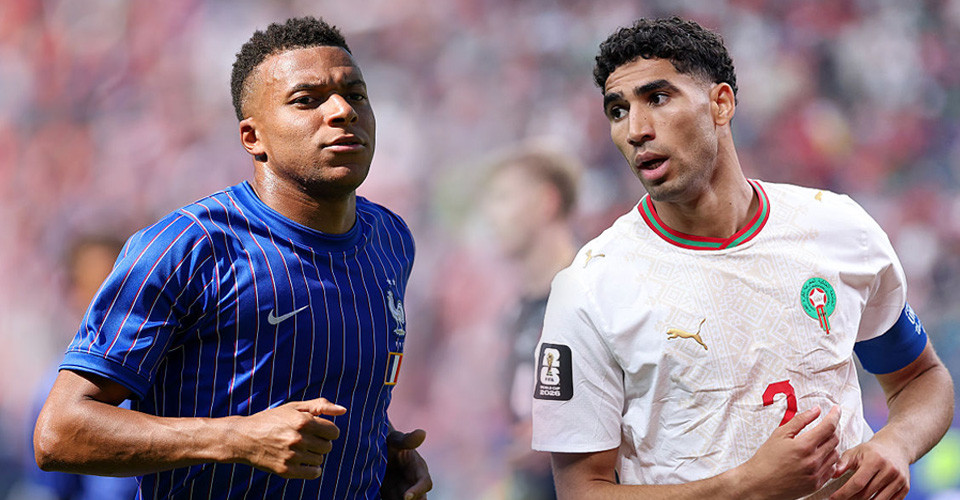
World Leaders Reveal Their Football Allegiances: Who Supports Which Team.

The 2026 FIFA World Cup
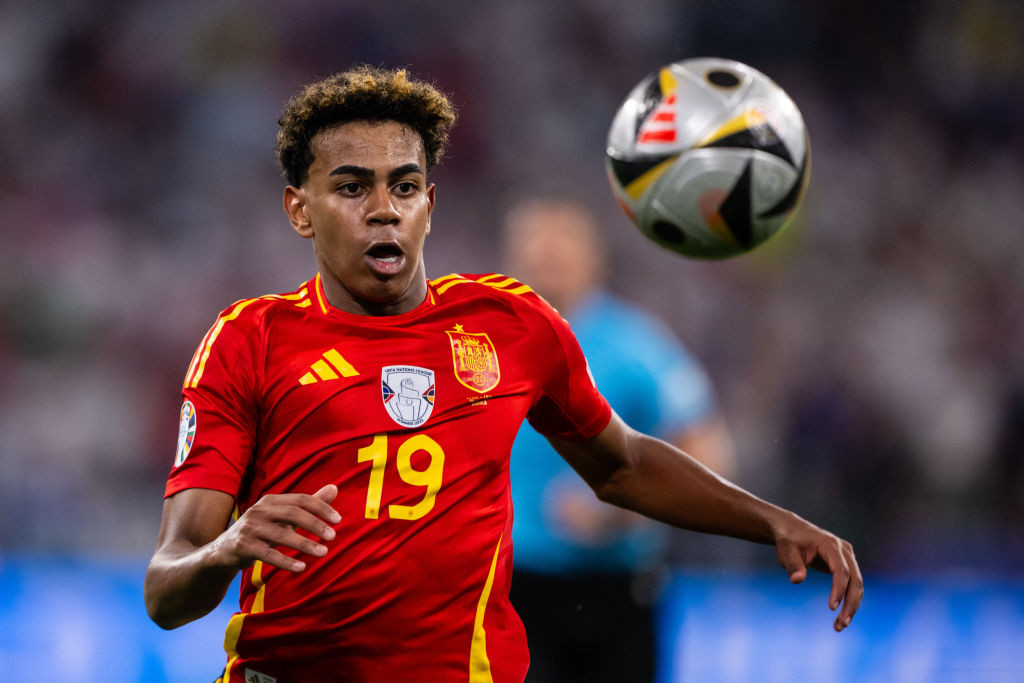
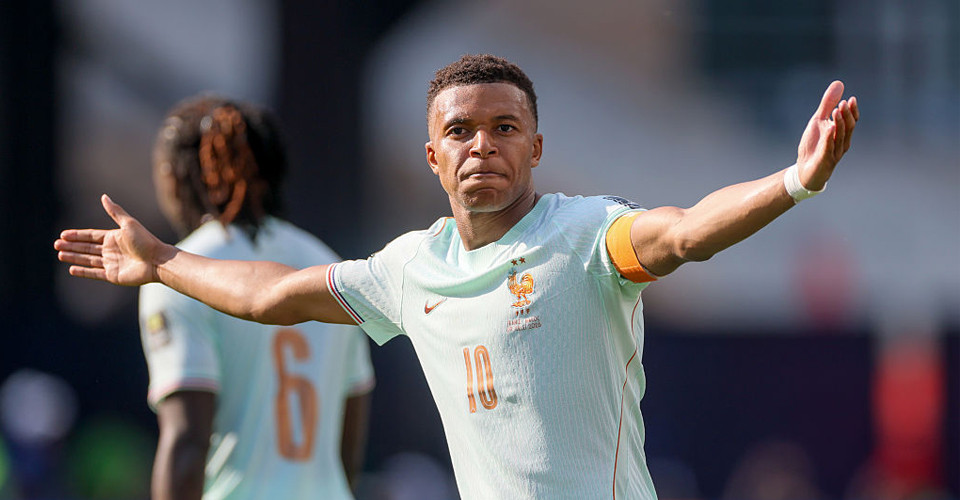
According to Слово і Діло — Інфографіка: The 2026 FIFA World Cup is capturing attention not only from fans but also from politicians around the globe, who are actively cheering for their favorite teams. This tournament features exciting matches, including notable encounters such as:
- Spain versus Belgium
- Norway versus England
- Argentina versus Switzerland
Despite thrilling games, there have been disappointments: Germany's national team was eliminated from the championship on June 30, 2026, a major blow to its supporters.
Politicians and Their Preferred Clubs
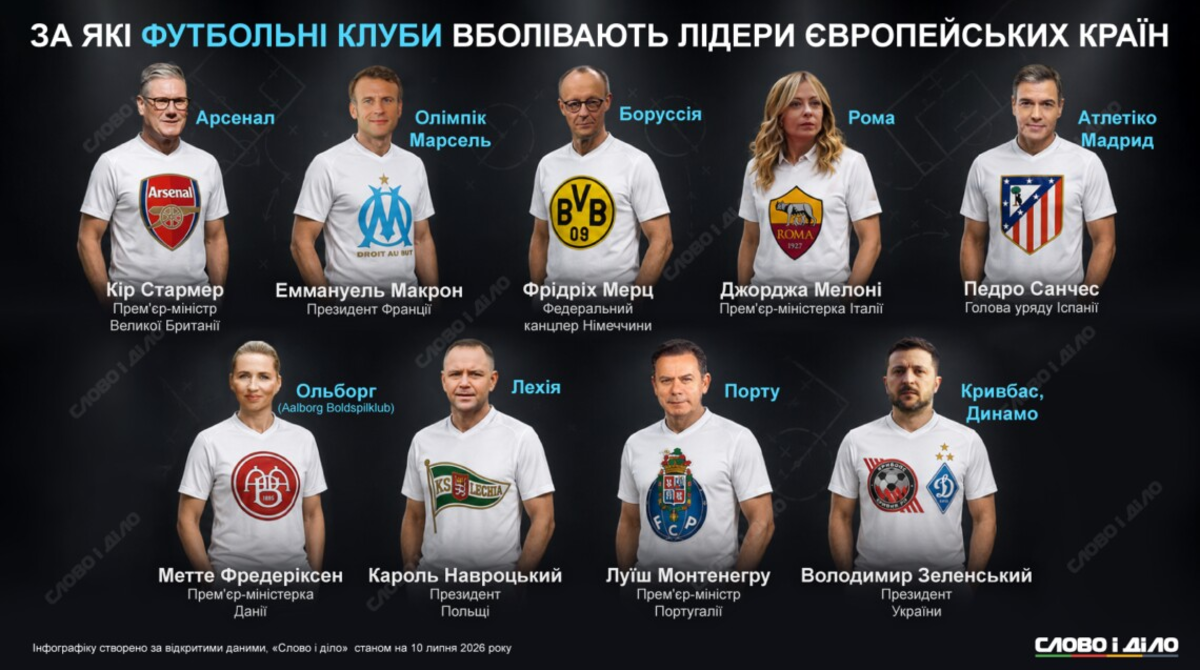
Among the politicians backing their teams, French President Emmanuel Macron stands out, having declared Olympique de Marseille his favorite club in 2023. Keir Starmer, leader of the UK's Labour Party, is a devoted fan of Arsenal, a club founded in 1886. He remarked:
'22 long years for Arsenal. But finally, we are back where we belong.' - Keir Starmer
Arsenal, which has won the English championship 14 times, last claimed the national title in 2004, but recently secured the trophy again in May 2026.
Friedrich Merz, chairman of the Christian Democratic Union (CDU), supports Borussia Dortmund and, despite Germany's elimination, commented on the team:
'Even if the tournament exit is painful: what a performance, Germany! With your dedication and team spirit at this World Cup, you have inspired our country.' - Friedrich Merz
Italian Prime Minister Giorgia Meloni roots for AS Roma, a club established in 1927, while Spanish Prime Minister Pedro Sánchez is a fan of Atlético Madrid.
Danish Prime Minister Mette Frederiksen became a supporter of Aalborg BK in 2025, whereas Luís Montenegro backs FC Porto. Karol Nawrocki is a fan of Lechia Gdańsk, and Ukrainian President Volodymyr Zelenskyy supports Kryvbas, a club that folded in 2013 but was revived in 2015. Zelenskyy tasked Yuriy Koryavchenkov with reviving the club in 2020, demonstrating his commitment.
Additionally, FIFA is considering reinstating Russia into international football following an IOC decision, while UEFA has extended its ban on Russian clubs and national teams for another year. These developments highlight how football unites people, including politicians who cheer for their teams during the 2026 World Cup.
The 2026 FIFA World Cup not only showcases athletic achievements but also reflects broader social and political trends, as politicians use football as a platform to express their support. The tournament's significance extends beyond sports, becoming a venue for discussing international relations, cultural identities, and national pride. For instance, Germany's elimination could impact national self-perception and the political climate within the country. Upcoming matches may further underscore how football influences political sentiments and societal ties across different nations.
Read also
- New EU Negotiation Cluster for Ukraine Unveiled: What’s Inside
- Ukrainian International Broadcasting Sets New Records: UATV Viewership Jumps 33% in June
- Ukraine and Moldova Ready to Unlock All Five EU Accession Clusters
- Ukraine Strikes Russia's Largest Oil Refinery 2,500 km Away: Zelenskyy Outlines Sanctions Strategy
- Zelenskyy and Coalition Leaders Set for Landmark Paris Military Parade
- Ukraine and Moldova Are Poised to Launch All Five EU Accession Clusters