AI is Changing Science: How Artificial Intelligence Accelerates Discoveries and Medicines.

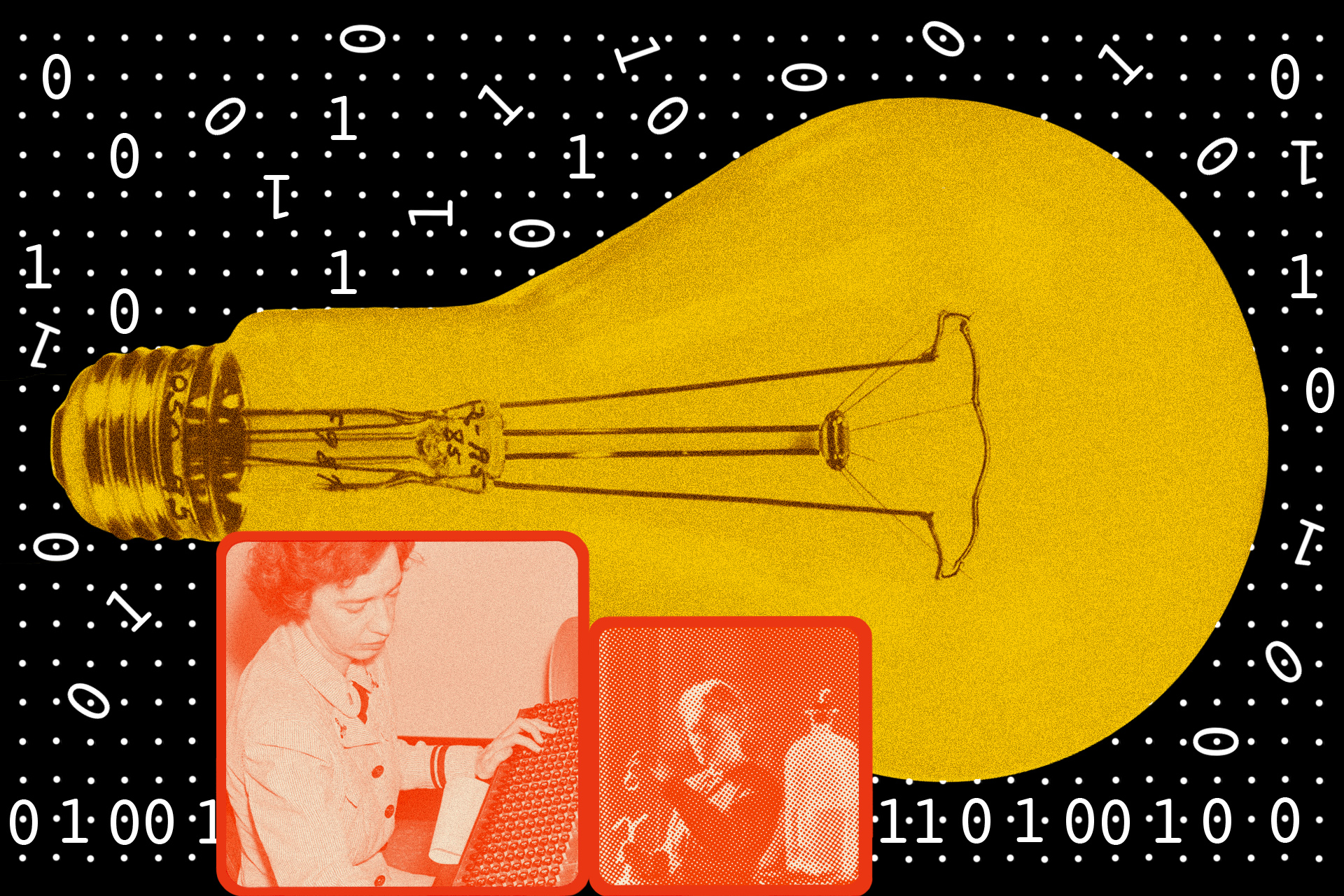
According to Vox: America, you have made your opinion clear: you do not like AI.
According to a Pew Research Center survey published in September, 50% of respondents are more concerned about AI than they are excited by it; only 10% expressed the opposite view. The majority, 57%, believe that the social risks posed by AI are high, while only 25% are confident that the benefits of its implementation will be significant. In another survey, only 2% of respondents fully trust AI's ability to make fair and unbiased decisions, while 60% either partially or completely distrust it.
Despite the fact that Americans are actively using AI, these fears are entirely understandable. People worry that AI is taking away their jobs, resources, and opportunities. Even the most optimistic visions of AI promising a world without work feel so utopian that they can also instill fear.
Our conflicting feelings are well illustrated by a chart from the Dallas Fed predicting how AI may impact the economy in the future:
The red line: AI singularity and nearly unlimited resources. The purple line: total destruction of humanity by AI and, uh, zero resources.
We Really Need Better Ideas
But here’s the bad news: there is mounting evidence that humanity is generating fewer new ideas. In one widely cited study, economist Nicholas Bloom and his colleagues found that it now takes significantly more researchers and R&D spending to maintain productivity at a normal level. In other words, we have to work harder to stay in place.
The situation in science is similar. In 2023, a study published in Nature analyzed 45 million articles and nearly 4 million patents, finding that work is becoming less 'disruptive' over time. There is also a demographic problem: new ideas arise from people, so a smaller population means fewer ideas. In wealthy countries, birth rates are below replacement level, and the global population is likely to soon peak and then begin to decline, leading to a 'empty planet' scenario.
One of the main issues is that scientists have to sift through too much literature. They become too absorbed in the data to use it in real scientific work. But these bottlenecks can be addressed by AI.
AI Professor at Your Service
A vivid example is AlphaFold, a system from Google DeepMind that predicts the 3D structure of proteins based on their amino acid sequences. Thanks to AlphaFold, biologists gain high-quality predictions regarding nearly the entire protein universe, facilitating the development of new drugs, vaccines, and enzymes. AlphaFold even received the Nobel Prize in Chemistry in 2024.
Or consider materials science. In 2023, DeepMind introduced GNoME, a graph neural network trained on data about crystals that proposed around 2.2 million new inorganic crystalline structures.
If we are serious about making life more accessible and rich — if we are serious about growth — the greater political project is not to ban AI or worship it.
Or consider weather forecasting. The GraphCast model from DeepMind can learn from decades of data and provide a global 10-day forecast in less than a minute.
In each of these examples, scientists can leverage AI to analyze existing data, allowing them to perform tasks that were previously impossible.
Automated Laboratory
The next wave is stranger: AI systems that can actually conduct experiments.
One example is Coscientist, a 'laboratory partner' created by researchers at Carnegie Mellon University. The system can read documentation, plan experiments, and operate real instruments in an automated lab.
There is also FutureHouse, a small nonprofit organization with the ambition of creating an 'AI scientist'. This year, FutureHouse launched a platform with four specialized agents that can alleviate the burden on scientists. One of these agents is Robin, which aggregates all these tools into something close to an ultimate scientific workflow.
By bringing all these elements together, it is possible to envision a future where scientists focus more on selecting important questions and interpreting results. At the same time, the AI system takes care of the routine tasks, serving as an army of free graduate students.
We Must Use AI for Important Tasks
Even if the global population levels off, and the U.S. continues to complicate immigration for scientists, powerful AI in science can actually increase the number of minds working on complex problems. Thus, by using resources wisely, we can make existing researchers more productive.
However, the application of AI carries risks. AI models that can assist in interpreting scientific papers can also misinterpret them, potentially leading to harmful experiments.
When I look back at the Dallas Fed chart, I realize that the true missed line is the invisible infrastructure that helps scientists find good ideas and restore productivity faster.
The public has the right to be concerned about potential dangers of AI; a call for a halt is a rational response if the solutions seem worse. But if we truly care about making life more accessible, the genuine political project is not to ban AI but to utilize this new technology effectively in scientific work that will significantly impact health, energy, climate, and all the other values we hold dear.
Read also
- Antique Musket Balls Repurposed Into Solar Cells with 94% Efficiency
- South Korea Patents a Silent Engine for Air Taxis
- 144 FPS at 4K: A Gamer Pairs an RTX 3090 and RTX 3050 for Stunning Performance
- Snapdragon 8 Elite Gen 5: Qualcomm’s New Chip Targets Sub-$600 Smartphones
- Samsung Unveils Three New Odyssey Gaming Monitors: Specs and Features Revealed
- Plastic Waste Converted into Jet Fuel: New Breakthrough by Chinese Researchers