B&M closes supermarket in the UK: all products discounted by 50%.

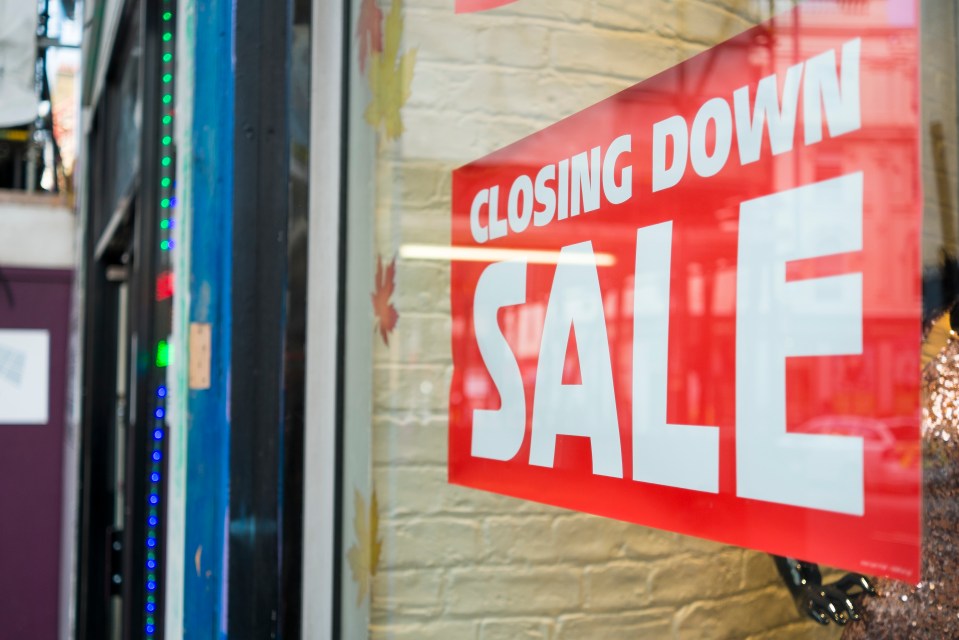
Closure of the superstore with a sale
According to The Sun: The well-known chain store B&M has announced significant discounts ahead of the closure of one of its supermarkets.
In order to clear the stock, the company is offering discounts of up to 50% on all products.
GettyAlthough B&M has over 777 points of sale in the UK, one of its stores in Stoke-on-Trent will no longer operate: the supermarket in Henley will close on September 27, Saturday.
Product Sale
Before the closure, customers can take advantage of a 50% discount, but some shelves are already left empty.
This supermarket opened in the Century retail park in 2014.
The closure was covered by StokesonTrentLive, where staff confirmed that the store is indeed closing on Saturday.
A representative of B&M also commented on the store's closure.
Official Statement
“The lease for our store in Century Retail Park, Henley, has ended, and it will close on Saturday, September 27. All employees have received job offers at nearby B&M stores,” said the representative.
“We strive to provide the best possible B&M stores for the Stoke-on-Trent area, where customers can find great deals at our other stores on Old Hall Street and Festival Park.”
Customers in Stoke-on-Trent do not need to travel far for good purchases, as six more B&M stores remain in the region.
The chain is also planning to close another store at the beginning of 2026.
Additional information about store closures
Various stores are also preparing to close in October. Primark has confirmed its first store closure in more than a decade, and the British home decor chain will close its last store in the UK after 120 years of operation.
Why are stores closing?
Stores are under significant pressure due to the pandemic, and consumers are forced to reduce spending due to a sharp rise in the cost of living.
High energy costs and the shift to online shopping are also negatively impacting the retail sector. Many stores are unable to survive under these conditions.
The British Retail Association predicts an increase in costs of £2.3 billion for the retail sector due to rising employer contributions.
As of April 1, the minimum wage will rise to £12.21, and for individuals aged 18-20, it will rise to £10 per hour, an increase of £1.40.
It is anticipated that around 17,350 retail outlets will close in 2024.
In the challenging year of 2024, 13,000 stores closed permanently, which is 28% more than the previous year.
Professor Joshua Bamfield, director of CRR, noted: “The results of 2024 indicate that while the situation is not as critical as in 2020 or 2022, there are still worrying trends, and worse times may come in 2025.”
This comes amid the backdrop of approximately 170,000 retail workers losing their jobs in 2024.
According to the Centre for Retail Research, job losses increased during the bankruptcies of major chains such as Homebase and Ted Baker, with a total loss of 169,395 jobs in the retail sector – 41.9% more than in 2023.
This is the highest figure since 2020 when over 200,000 jobs were lost due to the pandemic.
The Centre reported that 38 major retail companies filed for bankruptcy in 2024, including Lloyds Pharmacy, Homebase, The Body Shop, Carpetright, and Ted Baker.
One third of all job losses in the retail sector in 2024 – 33% or 55,914 in total – were a result of bankruptcies.
Experts noted that small stores may face particular difficulties in 2025 due to changes in budget taxation and wages.
Professor Bamfield warned of bleak prospects for the next year, noting that up to 202,000 jobs may be lost in the sector.
“Increasing costs of maintaining stores and expenses for each household may lead to job losses in the retail sector exceeding the pandemic levels of 2020,” he added.
Halifax, Lloyds, and Bank of Scotland also announced the closure of another 49 branches, while a major sports chain closed 13 stores due to falling sales and profits.
GettyThe closure of the B&M store in Henley is part of a broader trend in retail, where many businesses are facing difficulties due to changing consumer behaviors and rising costs. The closure of supermarkets and bank branches underscores the growing economic challenges in this sector.
These changes may affect the infrastructure and availability of goods in the region, forcing consumers to adapt to new market conditions.
Read also
- Starting July 1, 2026, Ukraine Mandates New Fuel Standards: What Drivers Need to Know
- Putin Acknowledges Russia's Fuel Crisis: Long Lines at Gas Stations and Disappearing Gasoline
- Business Electricity Prices Set to Surge 22%: What It Means for Store Costs
- Russians' Debt Hits Record 45 Trillion Rubles as 22 Million Defaulters Emerge
- Putin Acknowledges Ukrainian Strikes on Oil Refineries as Russian Gasoline Output Plummets
- How Bananas Reshaped the World: The Fruit That Sparked Revolutions