Beethoven: Interesting Facts About the Life and Work of the Great Composer.

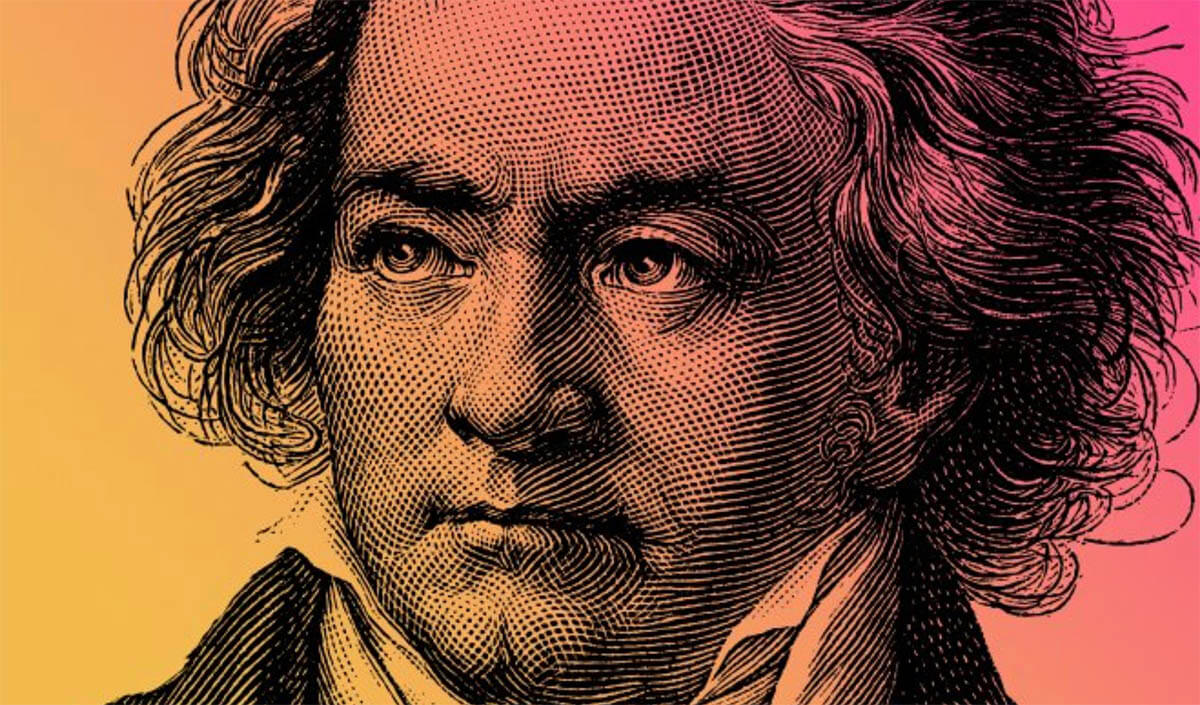
Ludwig van Beethoven is a name that stands alongside the greatest geniuses in human history. His music, filled with passion, drama, and unstoppable force, became a bridge between the Classicism of the eighteenth century and the Romanticism of the nineteenth. He created immortal masterpieces: "Moonlight Sonata," "Appassionata," "Eroica Symphony," and the magnificent Ninth Symphony. But behind the greatness of his music lay a complex fate full of suffering and trials. He lost his hearing, the most valuable thing for a musician, but managed to overcome this tragedy and create the most genius works in a state of complete deafness. His life is a story of indomitable will, struggle against fate, and boundless love for music.
Hearing Problems
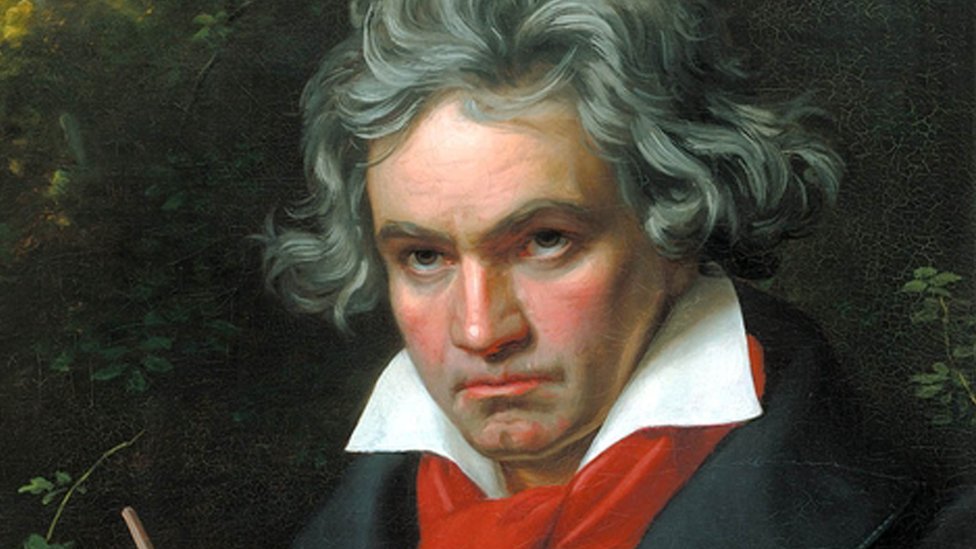
When considering interesting facts about Beethoven's life, it is worth immediately mentioning the most famous fact about the artist. Hearing problems began to trouble Beethoven at the age of 26-27. He noticed that he was having difficulty hearing high notes and also found it hard to distinguish words in conversation. At first, he hid his ailment from those around him, fearing it would ruin his career as a virtuoso pianist. He only wrote about it to his closest friends. Doctors could not accurately determine the cause of his hearing loss.
Modern researchers suggest several theories: systemic lupus, typhus, or Paget's disease. Another theory claims that the cause was his habit of immersing his head in cold water to avoid falling asleep. This was his way of fighting the drowsiness caused by other ailments. By the age of thirty, he was already experiencing strong tinnitus, and by the age of forty-five, he was almost completely deaf. Beethoven tried various remedies: washed his ears with cold water, took almond oil, used special tubes. But nothing helped. He fell into despair and even thought about suicide. However, his love for music proved stronger. He wrote about these torments in the famous Heiligenstadt Testament. This letter, addressed to his brothers, articulated his suffering. Beethoven wrote that only art prevented him from taking his own life.
The Ninth Symphony was Composed Nearly Completely Deaf
The Ninth Symphony, one of Beethoven's most outstanding works, was written when the composer could hardly hear anything. Its premiere took place in Vienna on May 7, 1824. Beethoven sat on stage with his back to the audience. He could not hear the loud applause or the enthusiastic shouts. After the symphony ended, one of the soloists, Carolina Unger, turned him towards the hall. Only then did he see the frantic response of the audience. People waved handkerchiefs, hats, and applauded standing.
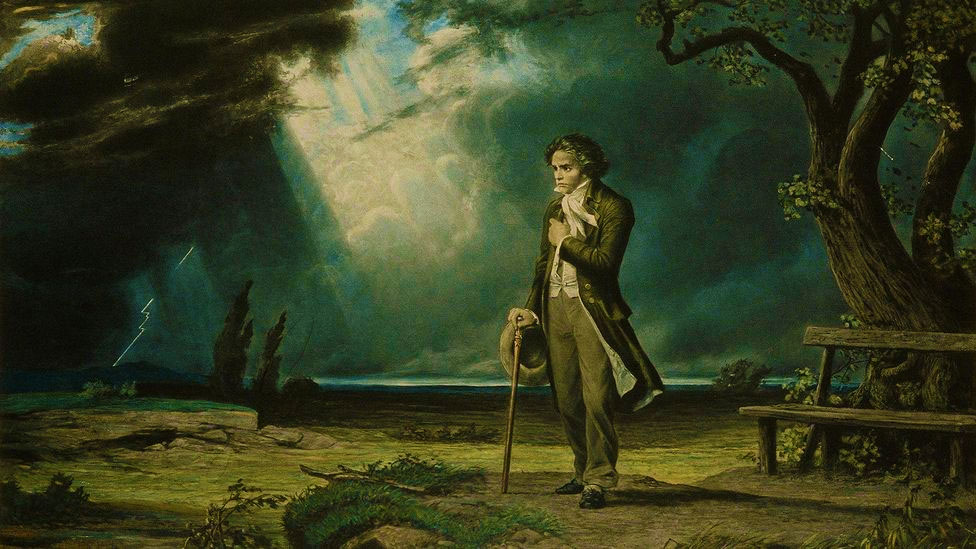
History shows that the police had to intervene to stop the ovations. Usually, the imperial family was the first to greet artists. The audience was so impressed that they ignored the rules. The Ninth Symphony became an innovative work. Beethoven was the first to introduce a choir and soloists into the symphony. For the text, he used Friedrich Schiller's ode "To Joy." He dreamed of this all his life. This symphony became the anthem of human unity. It declares that all people are brothers. Musicians performed this work under the direction of a conductor who helped Beethoven feel the rhythm. Today, the Ninth Symphony is part of the repertoire of all symphonic orchestras in the world. It is a hallmark of world culture.
The Influence of Deafness on His Creativity
The loss of hearing had a profound effect on Beethoven's creativity. It can be divided into three periods. The early period, before the onset of hearing problems, is predominantly represented by chamber music. It is still very close to the style of Mozart and Haydn. The middle period began with the realization that his deafness was inexorably progressing. In this music, drama, heroism, and rebellion are felt. He wrote the "Eroica Symphony," "Appassionata," and "Kreutzer Sonata."
The late period coincided with the time of nearly complete deafness. The music became philosophical, introspective. The forms of the works became more complex. New, previously unheard harmonies appeared. Deprived of the ability to hear the outside world, he immersed himself in his inner world. He began to hear music with his soul. Deafness forced him to seek new ways of expression. He started experimenting with registers and timbres. His music lost its lightness but gained incredible depth. He wrote, relying not on hearing, but solely on the inner sensation of harmony. As a result, works emerged that were decades ahead of their time. It was the deaf Beethoven who created his most genius masterpieces. He proved that true art is born not in the ear but in the heart and brain.
Beethoven Never Married
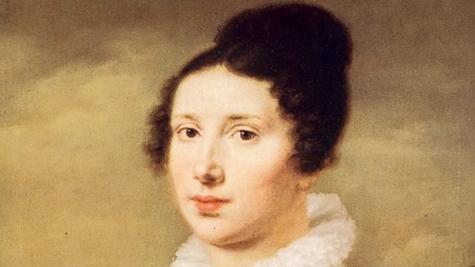
Despite wishing to find family happiness, Beethoven never married. He had several romantic attachments, but none ended in marriage. He loved women from high society who were unattainable for him. The main obstacle to marriage was his social status. He was not an aristocrat, but merely a "free artist." At that time, this was considered an insufficiently prestigious match. Furthermore, deafness made him withdrawn and distrustful. He feared that his illness would make him a burden to a family. He wrote in letters that he could not ask a woman to share his sufferings. Another factor was his poverty.
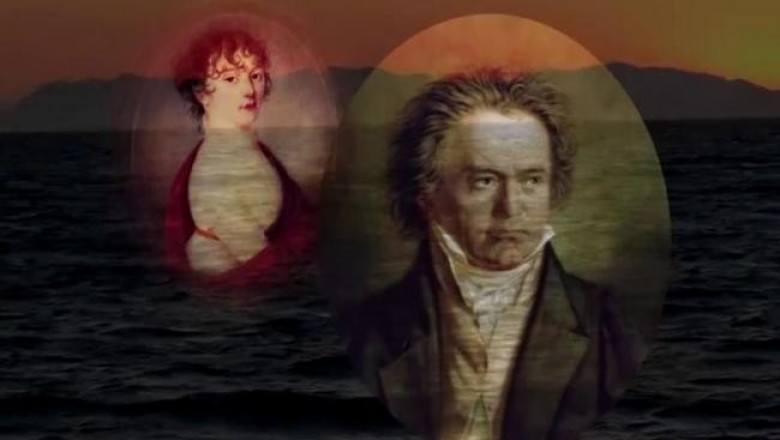
He did not have a stable income and often lived in debt. He could not provide his family with a decent standard of living. Among his beloved were Josephine Brunswick, Giulietta Guicciardi, to whom he dedicated the "Moonlight Sonata," and Theresa Malfatti. He proposed to one of them but was rejected. Letters to his lovers, found after his death, testify to the depth of his feelings. They are filled with passion and despair. Despite not finding personal happiness, his love for music was boundless. It became his wife, children, and home.
He Had No Children
Beethoven died childless. His illnesses probably affected his reproductive function. But there is no reliable information about this. The absence of a family he compensated for by caring for his nephew Karl. After his brother's death, he became the boy's guardian. This brought him much suffering. His relationship with his nephew was very complicated. Karl did not meet his uncle's expectations. He did not want to become a musician and tended towards a military career. He even tried to commit suicide. This worried Beethoven greatly. Legal battles for guardianship lasted for years.
He spent a lot of money and nerves on it. In his letters, he referred to his nephew as the "prodigal son." Despite everything, he loved him and wanted good for him. In his will, he left Karl his small fortune. After Beethoven's death, Karl went into military service. He married and had children. But he did not preserve the memory of his great uncle. He sold Beethoven's manuscripts and letters. Although the composer had no direct descendants, his legacy lives on through the ages. His music educates millions around the world. He became a spiritual father to many musicians. His work influenced the composers of Romanticism.
Desperate Character and Conflicts with Contemporaries
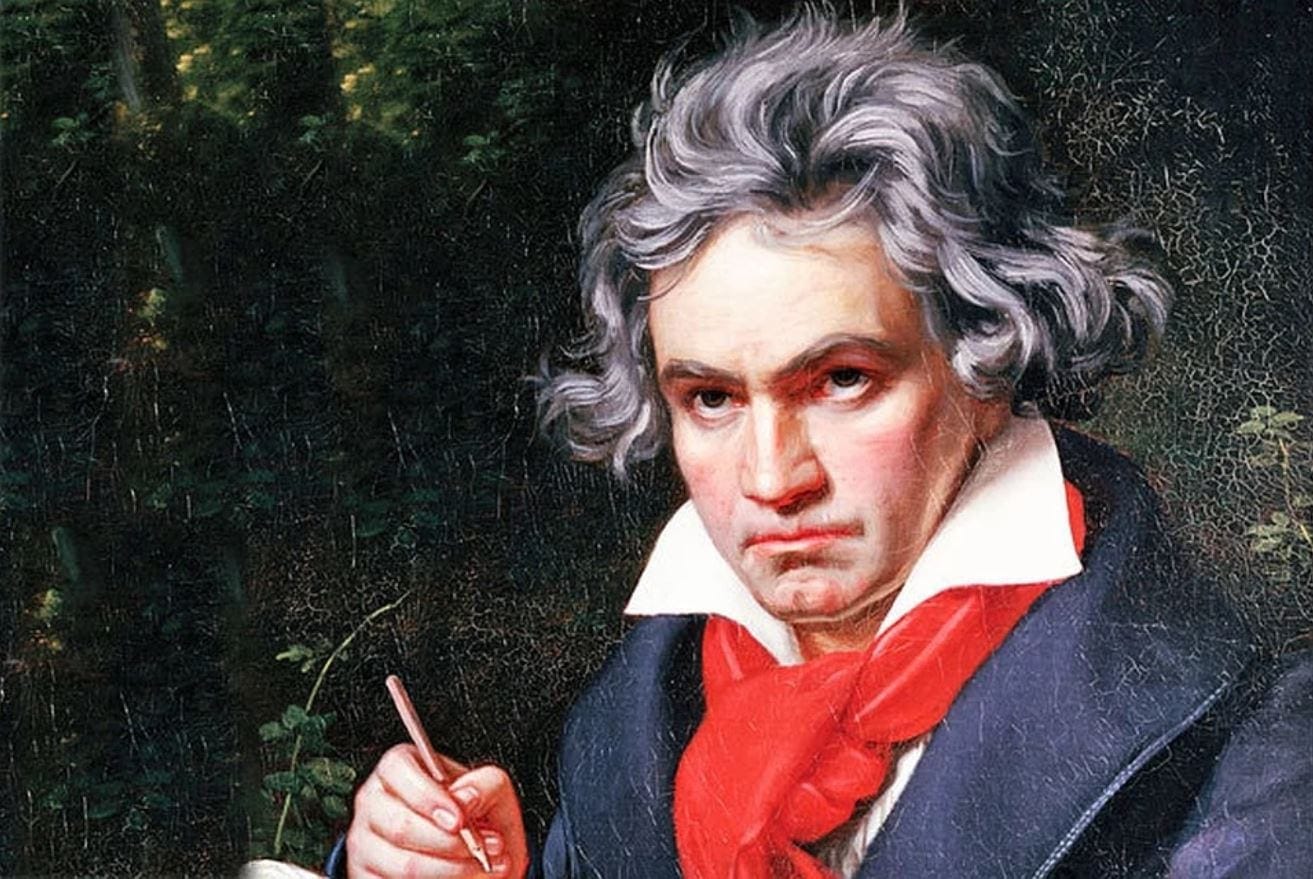
Beethoven had a very complex, unpredictable character. He was often called a misanthrope. He was harsh, rude, and intolerant of fools. His contemporaries were afraid of his sharp tongue. He could offend a patron regardless of status. Famous were his conflicts with Prince Lichnowsky and other aristocrats. Once he wrote a letter to a prince stating that there would be thousands of princes like him in history, while Beethoven was one. The reason for such behavior was the combination of several factors.
Firstly, it was his deafness, which made him suspicious and irritable. He constantly feared being laughed at. Secondly, it was his libertarian character. He hated humiliation and slavery. He was an adherent of the ideas of the French Revolution. He dedicated his third symphony to Napoleon but later crossed out the dedication. When Napoleon declared himself emperor, Beethoven became disillusioned with him. His conflicts with contemporaries often arose over money.
He could demand payment for works in advance in the rudest form. He could quarrel with a friend over trifles. But his friends, despite everything, loved him. They forgave his antics, understanding the suffering of genius. He could be tender and considerate. He loved children very much, although he had none. His complex character was his curse, but also a part of his genius.
Friendship and Support from Patrons
Beethoven, despite his complex character, had devoted friends and patrons who supported him financially and morally. In an era when musicians depended on aristocratic patrons, Beethoven managed to build relationships differently. He was not a servant at the court like his predecessors. He was perceived as an equal. Prince Karl Lichnowsky, one of his first patrons, granted him a monthly stipend. However, when he tried to dictate to Beethoven whom to play for, he was outraged. He wrote a letter where he said that there were thousands of princes, and Beethoven was one. This incident did not ruin their relationship, but Beethoven left Lichnowsky's estate.
Another important patron was Archduke Rudolf, son of Emperor Leopold II. He was not only a patron but also Beethoven's pupil. The Archduke took piano lessons and composition lessons from him. Beethoven dedicated several works to him. Their friendship lasted until the composer's death. Rudolf supported Beethoven financially, especially in the last years of his life when deafness hindered earning income. The composer's gratitude was immense. He dedicated to the archduke the magnificent "Missa Solemnis" and the "Great Piano Sonata."
Count Andrey Razumovsky, a Ukrainian aristocrat, also played a significant role. He was the Russian ambassador in Vienna. He commissioned Beethoven three string quartets. These works became innovative. They seemed too complex to contemporaries, but today they are considered the pinnacle of chamber music. Razumovsky maintained his string quartet, which performed Beethoven's works. He paid the composer a generous fee. Thanks to this, Beethoven could stop worrying about his daily bread. His friendship with Razumovsky lasted many years. Together with Prince Lobkowitz and Prince Kinsky, they arranged an annual stipend for Beethoven. This was a condition for Beethoven not to leave Vienna. The money was enough, but war and inflation devalued it. Beethoven found himself in need again.
His close friend was Nikolai Zmeskall, a talented cellist. He helped Beethoven with everyday affairs. After losing his hearing, Zmeskall accompanied the composer on walks and helped him communicate with people. He carried notebooks in which Beethoven wrote his thoughts. Another friend was Ignaz Schuppanzigh, a violinist and conductor. He organized the first performance of the Ninth Symphony. His support was invaluable. Friends called him the "soul of the collective."
Unusual Habits and Rituals
Beethoven had many strange habits that surprised contemporaries. He was very untidy. His room was always in chaos. Paper, things, and food leftovers were scattered everywhere. He might spill an inkwell on the piano without noticing it. He could walk in dirty clothes, oblivious. He disliked bathing. Servants had to forcibly take his dirty clothes away to wash them. He could be offended by this. He often rearranged furniture, forgetting where everything was.
In the morning, he would immediately sit down to work. First, he wrote music, then had breakfast. He brewed coffee for himself. He counted exactly 60 coffee beans per cup. He couldn't stand it when someone cooked coffee for him.
While working, Beethoven had a habit of pouring cold water on his head. He believed this stimulated the brain. He could do this right at the table. The water dripped on the floor and his papers. This annoyed his neighbors. He frequently went for walks. Walks were his way of creating. He carried sheet music with him. He might stop in the middle of the street to write down a melody. He might sing or whistle loudly. Passersby were surprised. He did not pay attention. During walks, he entered cheap taverns. He might fall asleep there and, upon waking, pay for the table without ordering anything. He could carry a small notebook with him.
Beethoven adored his nephew Karl. He cared for him after his brother's death. He could call him ten times a day. He constantly gave advice. This annoyed Karl. He tried to escape from his uncle. He could leave the servants unattended. He could put dirty dishes on the balcony if dissatisfied. Neighbors complained. He didn't pay attention. He could yell at a guest who spoke during the performance of his music. He valued silence. He could not tolerate disorganization in others. He was a man of mood. Today he could kiss hands, tomorrow spit in the face.
Influence on Future Composers
The influence of Beethoven on the next generations of musicians is difficult to overestimate. He became a bridge between Classicism and Romanticism. He broke old forms and created new ones. He showed that music can express deep philosophical ideas. He liberated composers from serving the aristocracy. His legacy inspired the romantics: Schubert, Schumann, Liszt, Wagner. Schubert, who lived at the same time, idolized Beethoven. He carried a torch at his funeral. He dedicated his songs to him. He wished to be buried next to him. His wish was fulfilled. Schumann wrote that Beethoven's music acts like a storm on the soul. He claimed that Beethoven opened a new era in music. Wagner regarded him as a god. He saw him as the pinnacle. He wrote many articles about this.
Brahms, who was born after Beethoven's death, felt the pressure of his genius. He long hesitated to write a symphony. He feared comparisons. When he finally wrote his first symphony, critics called it "Beethoven's Tenth." This was recognition. Beethoven influenced composers from various countries. Tchaikovsky admired his strength. He wrote articles about Beethoven. He acknowledged that he learned to build form from him. Beethoven even influenced contemporary music. Films, advertisements, and rock music use his melodies. Ode to Joy became the anthem of the European Union. His music is relevant today. It does not age. He became the archetype of the rebellious musician. Beethoven taught future generations to be brave. He proved that creativity is possible despite circumstances.
Read also
- Why Natalka Denysenko and Yuriy Savransky Are Signing a Prenuptial Agreement Before Their Wedding
- Dylan Sprouse and Barbara Palvin Reveal Baby’s Gender: It’s a Girl
- Netflix’s Top Spot Goes to Mystery Miniseries ‘I Will Find You’ with 11.5 Million Weekly Viewers
- Pregnant Ukrainian Actress Kateryna Tyshkevich Gains 9 Kilos and Borrows Her Husband’s Clothes
- At 16, Monica Bellucci’s Daughter Makes a Stunning Runway Debut for Dolce & Gabbana
- Scammed in Greece: Anna Salivanchuk’s Family Forced to Urgently Find New Accommodation