Russia tests new tactics for city capture: what is happening near Pokrovsk.

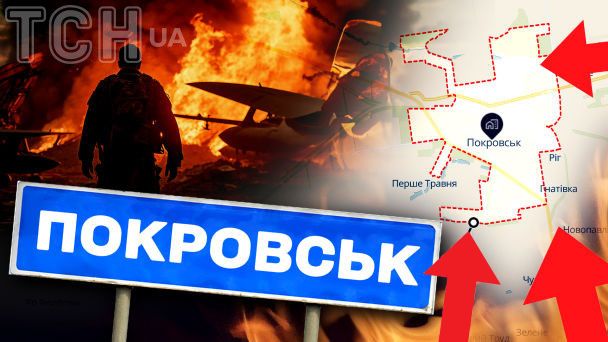
According to ТСН: The Russian army is implementing a new strategy for capturing Ukrainian cities, which is evident in the situation in Pokrovsk. This campaign demonstrates that Russian forces are capable of adapting, and if not stopped, it could pose serious threats to Ukraine in the near and medium-term perspectives.
According to analyst George Barros of the Institute for the Study of War (ISW), the Kremlin is exaggerating the importance of capturing Pokrovsk, trying to create an impression of the inevitability of Russian advancement on the front line. This perception is spreading among some members of Trump's negotiating team, who are formulating a peace proposal for Ukraine.
In reality, Russia has suffered significant losses in its campaign in the Donetsk region. Over the last 20 months, Russian troops have advanced only from Avdiivka to Pokrovsk, losing at least five divisions of armored vehicles and tanks (more than 1000 units of equipment and over 500 tanks) during operations conducted in this region from October 2023 to the summer of 2024.
Recently, Russian troops have changed tactics, focusing on small infantry units instead of mass mechanized attacks. This may be done to preserve equipment, which has suffered significant losses from Ukrainian drone strikes. This change has allowed for the continuation of the offensive, albeit at a slow pace and with great losses.
George Barros believes that the fall of Pokrovsk is unlikely to result in a significant breakthrough for Russia. Russian forces in this region are already familiar with positional warfare and lack the capability to quickly capture new territories. Given Russia's enormous losses—over 1 million, including more than 250,000 dead—and difficulties in recruiting new forces, it lacks the resources for a large-scale offensive, especially considering Ukraine's strong defenses, which include a network of field fortifications west of Pokrovsk.
However, Russian troops have demonstrated a new approach to capturing cities: first, they systematically destroy Ukraine's logistical lines using drones, and then send infantry groups to suppress Ukrainian defenders. In this context, Russia's ability to strike at medium range raises concerns.
The defense of key cities such as Sloviansk, Kramatorsk, Druzhkivka, and Kostiantynivka will become significantly more complicated if Russia can disrupt the rail and road connections necessary for supplying these strongholds. Currently, Russia is trying to implement the lessons learned from the attacks on Pokrovsk. For instance, in early November, Ukraine halted rail connections with Kramatorsk due to the threat from Russian drones.
In the author's opinion, the Defense Forces should find effective ways to counter this strategy by implementing counter-drone measures to protect the rear and targeting Russian drone operators.
However, a real halt to the Russian offensive is only possible with help from the West. Ukraine needs to continue exchanging intelligence and receiving new supplies of conventional weapons to strike medium-range targets, including artillery and missiles. As long as Russia continues to achieve successes on the battlefield, it is unlikely to abandon its plans to negotiate an end to the war.
Earlier, Ihor Yaremenko, the head of the artillery reconnaissance division of the National Guard of Ukraine, shared information about changes in Russian tactics in Pokrovsk.
Thus, the situation in Pokrovsk and the new tactical approaches of Russian troops indicate Russia's desire to achieve military goals, which could have serious consequences for Ukraine's defense. The armed forces must adapt their strategies to counter Russian changes, while international support remains key to controlling the situation.
Read also
- Zelenskyy Arrives at Ramstein Meeting: Key Topics on Military Aid for Ukraine
- Germany and Ukraine Sign New Defense Deal: Merging Tech to Counter Ballistic Threats
- Fuel shortages and gas station restrictions in Russia triggered by Ukrainian strikes, says Zelensky
- At Ramstein Summit, Zelenskyy Highlights Critical Weapon Shortages Facing Ukraine
- Zelensky Reveals Russia's Monthly Toll on the Battlefield: At Least 30,000 Casualties
- A Mobilization Overhaul: Ukraine Plans to Cut Financial Ties with Recruitment Centers and Mandate Video Recording