Return from captivity in Ukraine: why a new circle of hell begins for Russian soldiers.

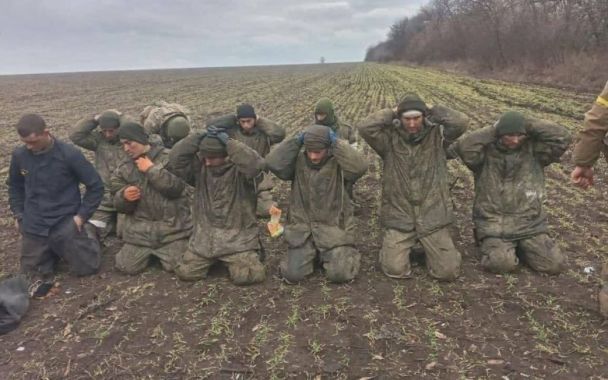
According to ТСН: The return of Russian military personnel from Ukrainian captivity turns into a new circle of suffering. Instead of the expected honor, they face interrogations by the Federal Security Service, humiliation from their commanders, and swift deployment to the front lines without weapons.
In one instance, it concerns a middle-aged soldier who considered himself a patriot. He was released from a Ukrainian POW camp, hoping to celebrate his son's birthday. But that did not happen.
Interrogations, humiliation, and the brand of disgrace
Upon returning home, Russian fighters undergo weeks of interrogations by Russian security forces, after which they are sent back to the front. Soon, one of them goes missing near occupied Donetsk. Relatives fear he has died. One of them notes that this situation is a vicious circle of hell.
Before being sent to the front, Russian commanders often convince soldiers that suicide is a better choice than being captured by Ukrainians. Former prisoners of war and their relatives note that the feeling of joy upon returning quickly disappears. Those who were captured face suspicion and humiliation. Financial aid and payments, which were important motivations for participating in the war, can be suspended after capture.
“The country is at war. The state does not encourage voluntary surrender,” said lawyer Valery Vetoshkin, associated with the Russian human rights organization “OVD-Info”.
Return to Russia usually occurs through Belarus, from where former captives are transported by bus. For an extended period, they are kept in isolation, allowed only sporadic calls to relatives during interrogations by the FSB and other agencies.
Sentences for surrendering
The purpose of the interrogations is to find evidence of treason or collaboration with the enemy. Law enforcement seeks grounds for criminal prosecution. In 2022, during mobilization, Russia introduced criminal liability for voluntary surrender. One of the first cases was the sentence of soldier Roman Ivanishin, who received 15 years in a strict regime colony for voluntary surrender and desertion after returning from captivity.
Ex-prisoners sent back to the front
After interrogations, most Russian soldiers return to their units, but some are no longer trusted with weapons. Others are immediately sent to the front lines. Families try to ensure that their sons do not end up on exchange lists, believing that Ukrainian POW camps are significantly more humane.
The publication cites the example of a 31-year-old Russian occupier, whose family learned about his captivity and fears that he will be sent back to the front. One relative notes that soldiers returning from captivity are perceived as unreliable.
“We have no prisoners — only traitors”
The Geneva Conventions prohibit involving former prisoners of war in hostilities, but an internal document from the Russian Ministry of Defense claims that certain provisions of the Convention do not apply to Russian prisoners of war due to the war.
This attitude has historical parallels with World War II. The phrase attributed to Joseph Stalin, “We have no prisoners — only traitors,” remains relevant.
This year, a former Russian prisoner of war was brought before the court facing up to eight years in prison for giving an interview to Ukrainian journalists. He also spoke about his experience in captivity and his attitude towards the war.
In a video recorded after the exchange, the man recalled the FSB interrogations and how other soldiers were reproached for not destroying themselves and voluntarily surrendering.
According to him, the FSB classifies such soldiers as “those who have lost trust.” Others may undertake dangerous tasks without access to weapons.
“They are not allowed to go home,” he said, using prison jargon “zecks.” “They are used as labor.”
Stories from other former prisoners confirm this same pattern: interrogations, prohibition to visit families, and swift return to the front. Another ex-prisoner, who was diagnosed with depression, noted that he does not receive proper treatment.
Let us recall that during a “direct line” with the president of the Russian Federation, Russian prisoners of war recorded a video appeal asking why Russia does not fulfill the terms of exchange. Among the authors of the appeal are the wounded, youth, and representatives of the “Akmat” unit.
The described situation shows how repeated interrogations and pressure from commanders create extremely difficult conditions for those returning from captivity. These events highlight not only the suffering of individual servicemen but also the attitude towards former prisoners within the Russian army, raising concerns from a human rights perspective. The war has been ongoing for many years, and in light of this practice, the prospect of a peaceful resolution to the conflict appears even more distant.Read also
- De-Reservation Cannot Be Canceled by Military Enlistment Offices: What Ukrainian Law Actually States
- Armenia Holds Parliamentary Elections: 18 Political Forces Compete for 101 Seats
- For the First Time Ever: Russian Vessel Carrying Grain from Occupied Lands to Be Handed Over to Ukraine
- Nuclear Weapons Use by 2050 Predicted by Russian Strategists: Report Insights
- London Summit: Zelenskyy and European Leaders Map Out Negotiation Strategy with Russia
- Budanov Calls Kakhovka Dam Destruction an Act of Ecocide That Demands Accountability