How Business Electricity at 15 UAH per kWh Will Drive Up Food Prices.

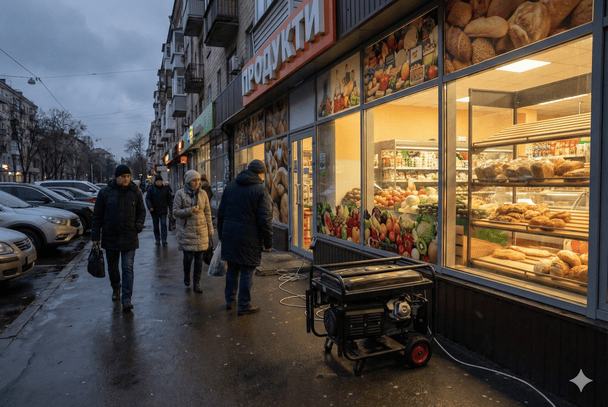
Food Prices in Ukraine Set to Rise Further in 2026
According to TSN.ua: Food prices in Ukraine are projected to continue climbing in 2026. A key driver is the sharp increase in electricity tariffs for industrial consumers, which reached 15 hryvnias per kilowatt-hour as of February 9, coupled with persistent power blackouts. For context, the residential tariff remains significantly lower at 4.33 hryvnias per kWh. This substantial price disparity is forcing businesses to rely on costly backup generators, directly increasing their operational expenses.
To cope with frequent outages, many companies are running diesel generators, which consume roughly 2 liters of fuel per hour. For an enterprise operating 8 hours a day, this translates to about 16 liters of diesel, costing nearly a thousand hryvnias daily. Small businesses can expect to spend $700–800 per month on generator power alone, a significant burden in a challenging economy.
Oleh Pendzin observes: 'The price for businesses has reached 15 hryvnias per kilowatt-hour, which is almost triple the tariff for the population.'
The tariff hikes are expected to hit bread and flour-based products hardest, as they are most sensitive to energy cost changes. Additionally, price increases for vegetables in the traditional 'borscht set' are anticipated in early spring, likely causing further concern among consumers.
Pendzin adds: 'The main problem is not the grid price, but what a kilowatt-hour from a generator costs,' highlighting the severe challenges businesses face under current conditions.
Against this backdrop, a critical question emerges: is there a limit to how high food prices can go? Given the ongoing economic pressures, consumers should prepare for further volatility in the food market.
The rise in food prices, fueled by soaring business electricity costs and an unstable power supply, points to serious challenges for both industry and households. With staples like bread and vegetables being directly affected, further inflation could significantly impact living standards. Government bodies and entrepreneurs urgently need to explore solutions to mitigate these impacts and stabilize the food market.
Read also
- Ukraine to Receive €5.9 Billion for Drones as First Installment of €90 Billion Loan
- New Income Caps Could Drive 200,000 Sole Proprietors into the Shadow Economy
- Despite Budget Deficit, Ukraine Allocates 3.5 Billion Hryvnias for Road Repairs
- No Automatic Draft Exemptions for Diia.City Residents: Criteria You Must Meet
- New Phase of Metro Construction on Vynohradar Launched by Autostrada: Key Changes Ahead
- Which Brand Holds Value Better Over Five Years: Toyota or Mazda?