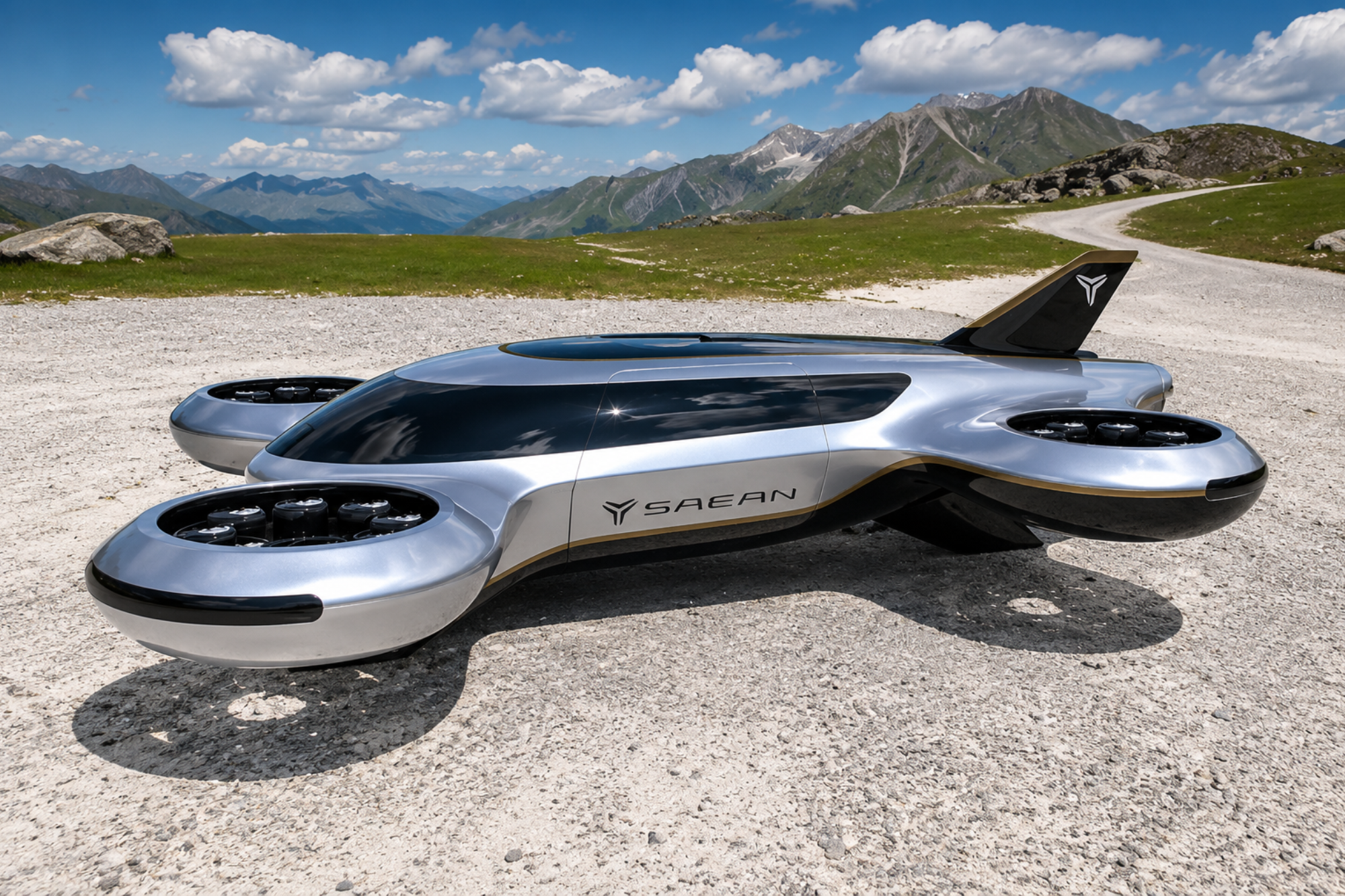
China launches the world’s first flying car factory: deliveries have begun.

According to Korrespondent.net: Chinese company Xpeng Motors, through its subsidiary Aridge, has officially launched mass production of modular flying cars, reports CarNewsChina. The first prototype of the Land Carrier model has rolled off the assembly line in Guangzhou, which will be used for test flights and production process checks. Full deliveries of the cars are planned for 2026.
Production capabilities and model features
The production complex occupies about 120,000 square meters and is specifically created for the manufacture of a next-generation flying car that can be split into two separate modules: a ground vehicle and an aircraft. The 'mother' ground module has three axles, six wheels, all-wheel drive, and rear axle steering, providing high off-road capabilities and load capacity.
Photo: XpengThe car measures 5.5 meters in length, 2 meters in width, and 2 meters in height, fitting easily in a standard parking space and can be operated with a regular driving license. The air module is an electric six-rotor aircraft with two air systems, a body and blades made of carbon fiber, as well as a panoramic cabin with a 270° view, providing wide visibility during flight.
Flight modes and production processes
The Land Carrier model supports both manual and autonomous flight modes. The pilot can control the aircraft with a single stick, while the autonomous mode provides intelligent route planning, automatic flight along a specified path, as well as one-button takeoff and landing and 3D visual navigation.
Production consists of five main workshops: composite, power, assembly, painting, and final integration. The composite shop manufactures carbon elements with an annual capacity of up to 300 tons. The power shop is responsible for the assembly and testing of lift and flight control systems, using the world's first integrated automated line for electric engines and rotors.
The body assembly is carried out using 'cold joining' technology with rivets and adhesive joints. The painting shop applies a multi-layer technology on a flexible automated line, and the final department integrates major systems and conducts checks for compliance with safety and flight readiness requirements. The cloud calibration system automatically tests the autopilot, flight control system, and center of gravity balancing.
Ecological initiatives and production plans
It is noted that the factory uses solar energy, energy-efficient equipment, and a digital energy management system, which helps reduce CO2 emissions. When fully operational, the facility will be able to produce up to 10,000 flying cars per year, initially - 5,000 units, which means producing one unit every 30 minutes.
It is reminded that earlier it was reported that an electric air taxi made its first flight between airports in Britain.
The launch of flying car production is an important step for the innovative development of the automotive industry. Xpeng Motors, due to its technological achievements, may become a leader in this new field, where automotive and aviation transport merge. In the future, we may witness the development of technologies that can change our perception of transport.
Read also
- Antique Musket Balls Repurposed Into Solar Cells with 94% Efficiency
- South Korea Patents a Silent Engine for Air Taxis
- 144 FPS at 4K: A Gamer Pairs an RTX 3090 and RTX 3050 for Stunning Performance
- Snapdragon 8 Elite Gen 5: Qualcomm’s New Chip Targets Sub-$600 Smartphones
- Samsung Unveils Three New Odyssey Gaming Monitors: Specs and Features Revealed
- Plastic Waste Converted into Jet Fuel: New Breakthrough by Chinese Researchers