China has launched the world's most powerful floating wind turbine: how it works.

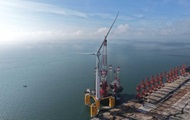
According to Korrespondent.net: China has completed the installation of the world's largest floating offshore wind farm with a capacity of 16 MW, as reported by the South China Morning Post. This process took place in the city of Beihai in the south of the country.
The rotor of the new turbine has an impressive diameter of 252 meters. The power plant is expected to generate about 44.7 million kWh of electricity annually, enough to supply power to over 4,000 average households.
All key components, from cables and gearboxes to the ballast control system, are made in China. The turbine is mounted on a platform that is partially submerged in water and features the country's first dynamic ballast system. This system automatically regulates the stability of the structure by injecting or extracting water in the platform columns depending on wind and wave conditions. This significantly reduces the risks of listing and halting.
Soon, the power plant will be towed to open sea at a depth of over 50 meters for testing and connection to the power grid.
Comparison with other projects
In comparison, the first commercial floating wind farm with five turbines and a total capacity of 30 MW was launched off the coast of Scotland eight years ago.
The project is being implemented by the state corporation China Three Gorges Corporation, which is the world's largest developer and operator of hydroelectric power stations. This corporation gained popularity for the construction of the grand 'Three Gorges Dam'. Recently, it was reported that its construction has slowed down the rotation of the Earth.
Chinese Envision has presented a unique two-blade wind turbine
News from Korrespondent.net on Telegram and WhatsApp. Subscribe to our channels.
This new floating power plant will be an important step in the development of renewable energy sources in China. Connecting to the power grid will open new opportunities for the energy sector and contribute to reducing carbon emissions. Additionally, this project may serve as an example for other countries looking to develop their energy systems based on renewable sources.
Read also
- Antique Musket Balls Repurposed Into Solar Cells with 94% Efficiency
- South Korea Patents a Silent Engine for Air Taxis
- 144 FPS at 4K: A Gamer Pairs an RTX 3090 and RTX 3050 for Stunning Performance
- Snapdragon 8 Elite Gen 5: Qualcomm’s New Chip Targets Sub-$600 Smartphones
- Samsung Unveils Three New Odyssey Gaming Monitors: Specs and Features Revealed
- Plastic Waste Converted into Jet Fuel: New Breakthrough by Chinese Researchers