Interstellar comet ATLAS abruptly changed brightness: what astronomers discovered.

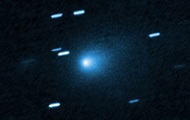
Increase in brightness of comet 3I/ATLAS
According to Korrespondent.net: The brightness of the interstellar comet 3I/ATLAS, which has approached the Sun, is increasing much faster than scientists had anticipated. As reported by Science Alert, over the past month, the comet has been almost behind the Sun, so observations are being conducted only by space technology.
Research on the comet
Astronomers Kicheng Zhang from the Lowell Observatory (Arizona) and Carl Battams from the US Naval Research Laboratory have detected significant changes in the comet's appearance using data from the STEREO-A, SOHO, and GOES-19 missions.
From mid-September to the end of October, when 3I/ATLAS reduced its distance to the Sun from 2 to 1.36 astronomical units, its brightness increased twice as fast as many other comets. This may indicate unusual processes on the surface of the celestial body.
Scientists also noted that the comet appears bluer than sunlight, indicating active gas emissions - likely cyanogen or ammonia. Previously, the comet's surface had a reddish hue.
Observations from Earth
The comet passed perihelion - the closest distance to the Sun - on October 29 and is now returning to the dark sky, so it will be observable from Earth in November and December, even with amateur telescopes.
The reasons for such a rapid change in brightness remain unknown. Astronomers suggest that it may be related to the comet's chemical composition or its movement characteristics through interstellar space.
Recently, it became known that astronomers have discovered caves on the comet for the first time, similar to those found on comet 67P/Churyumov-Gerasimenko.
NASA found water on the comet between Jupiter and Mars
News from Korrespondent.net on Telegram and WhatsApp. Subscribe to our channels
Comet 3I/ATLAS attracts astronomers' attention not only for its brightness but also for its unusual behavior. Observing it may provide new insights into interstellar objects and their characteristics. These studies will help understand how comets influence our perception of the formation and evolution of the Solar System.
Important discoveries related to the change in the comet's brightness may be the key to new scientific theories and approaches in space exploration. Astronomers will continue observations to unravel the mysteries of this celestial body, which has already intrigued the public and the scientific community.
Read also
- Antique Musket Balls Repurposed Into Solar Cells with 94% Efficiency
- South Korea Patents a Silent Engine for Air Taxis
- 144 FPS at 4K: A Gamer Pairs an RTX 3090 and RTX 3050 for Stunning Performance
- Snapdragon 8 Elite Gen 5: Qualcomm’s New Chip Targets Sub-$600 Smartphones
- Samsung Unveils Three New Odyssey Gaming Monitors: Specs and Features Revealed
- Plastic Waste Converted into Jet Fuel: New Breakthrough by Chinese Researchers