The Greenland Glacier Disappeared Only 7,000 Years Ago: What This Means for Us Today.

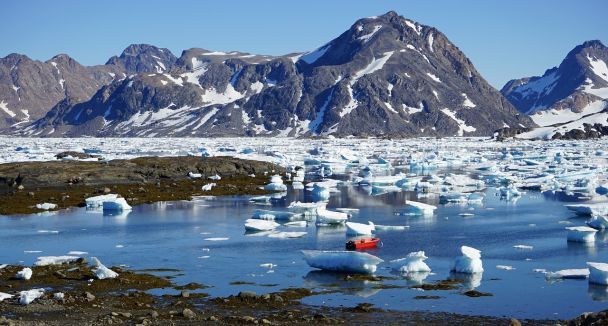
According to ТСН: A new study has shown that the Prudhoe Dome ice sheet in Greenland melted away about 7,000 years ago, significantly later than previously thought.
The research was conducted as part of the GreenDrill project, jointly organized by the University of Buffalo and the Lamont-Doherty Earth Observatory at Columbia University. The team of scientists collected samples of rocks and sediment beneath the ice sheet to determine the timeframe of its last state change.
The results, published in the journal Nature Geoscience, indicate that Prudhoe Dome was quite sensitive to changes in average temperatures during the Holocene—a warm interglacial period lasting about 11,000 years and known for its stable climate.
“This was a time when humans began to embrace agriculture and take the first steps toward civilization. If natural climate changes melted Prudhoe Dome and kept it in a state of retreat for thousands of years, then today it’s possibly just a matter of time before modern anthropogenic climate changes begin to affect the glacier,” says Jason Briner, a professor in the Department of Earth Sciences at the University of Buffalo.
The GreenDrill Project
GreenDrill was the first project to successfully drill the Greenland ice sheet for ancient rock samples beneath the ice. Analyzing the chemical composition of the samples allows scientists to determine when the rocks were last exposed to sunlight.
As part of the first GreenDrill study, samples were taken from a depth of 500 meters at the top of Prudhoe Dome, collected during the 2023 expedition. Luminescence dating revealed that the rocks were last exposed to sunlight approximately 6,000–8,000 years ago.
“This means that the Prudhoe Dome glacier melted away around the beginning of the Holocene, when temperatures were 3–5°C higher than today. Some forecasts suggest that by 2100 we may reach similar levels of warming,” says Caleb Wolcott-George, a co-author of the study.
Implications for Modern Climate and Sea Level
Discovering such relic ice caps helps scientists identify areas of the ice sheet that are most prone to melting, which is crucial for predicting sea level rise and assessing risks for coastal communities.
“The rocks and sediments beneath the ice show which parts of the ice sheet are most vulnerable, allowing for more accurate predictions of melting,” adds Jörg Schaefer, a co-author of the study.
Expedition on the Ice
Researchers worked at two drilling sites on Prudhoe Dome—at the top and at the edge of the glacier, where the ice thickness is much less. They collected ice cores, drilled hundreds of meters of ice, and cleared snow blown in by the wind from the camp.
“It felt like a tense game until the last minute, but we successfully completed the drilling and obtained the necessary samples,” recalls Briner.
The researchers emphasize the importance of teamwork and the logistical challenges that were necessary to carry out this project. Such studies help better understand how ice sheets respond to climate changes and why their melting is occurring faster than expected.
Notably, scientists have recorded a disturbing signal in polar waters: genetic material from a virus previously associated with severe illnesses and mass mortality of marine mammals was found in the exhalations of Arctic whales.
Read also
- Frontline Dynamics Shift: Chongar Bridge Destroyed, FP-5 Flamingo Missiles Deployed for the First Time
- Iran Identifies New Retaliatory Targets for Strikes Against the US: Bases in Three Nations
- Fuel Shortages and Logistics Nightmares Hit Russian Forces in Crimea After Ukrainian Strikes
- 530 Drones and Missiles Launched by Russia Against Ukraine in Three Days: Dozens Injured
- Japan Aims to Replace 14 Nuclear Reactors by 2050 in First Major Plan Since Fukushima
- Oil facilities in three Russian regions ablaze after Ukrainian strike