Expert explains why Shahed drones fell during the attack on January 9.

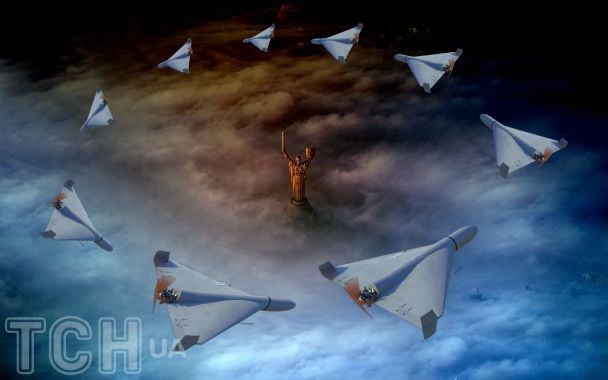
According to ТСН: The chief specialist of the Radio Technology Center, Sergey Beskrestnov, with the callsign 'Flash', believes that during the powerful Russian attack on Ukraine on the night of January 9, 'Shahed' drones could have fallen due to icing.
In his comment, he noted that these drones are vulnerable to low temperatures.
'Shahed' can indeed catch ice and fall. This happens because 'Shahed' is not designed for flight in winter conditions. Although it has several heating elements inside that allow it to fly in frost, the surface of the drones does not get heated, so icing can occur,” explained 'Flash'.
He also noted that the drone's fall depends on several conditions: humidity, rain, and sudden temperature changes that contribute to ice formation.
“This usually happens in the air, when the temperature fluctuates between minus five and plus five degrees. This is, so to speak, a classic,” the specialist added.
Beskrestnov emphasized that a drone cannot fall instantly; it needs to gain sufficient mass for that.
“It can carry a load of several hundred kilograms if that load is evenly distributed. If ice covers it evenly, that's normal. But if the ice somehow shifts its balance, then 'Shahed' can fall faster than in the case of critical icing. I am sure such cases have occurred,” Beskrestnov said.
What is the situation with the attack on Ukraine on January 9?
On the night of January 9, Russia launched a large-scale combined attack on Ukraine's critical infrastructure, releasing 278 air attack means: 242 drones of various types, 22 Kalibr missiles, 13 Iskander-M/S-400 missiles, and a medium-range ballistic missile.
The air defense forces shot down 244 targets. The main blow fell on Kyiv and the region, where strikes from 18 missiles and 16 drones were recorded. The enemy also struck the Lviv region with a missile, damaging an infrastructure facility.
As a result of the attacks in Kyiv, four people died, and another 25 were injured, including medics and rescuers. Destruction was observed in six districts of the capital, where high-rise buildings, a kindergarten, and critical facilities were affected.
This news highlights not only the technical vulnerabilities of enemy drones but also the tragic consequences for the civilian population of Ukraine. The attack on January 9 has become yet another stage in the prolonged war, causing damage to infrastructure and human lives, continuing to raise concern among Ukrainians.
Read also
- Europe Can Only Build a Strong Army with Ukraine, Zelensky Tells Ramstein Allies
- Finland's President Predicts 3–4 More Months of War, Urges NATO to Raise Defense Spending to 5% of GDP
- Germany Pledges $400 Million to Ukraine for Air Defense Ammunition and Patriot Missiles
- Belarus Admits Vulnerability to Ukrainian Strikes as Lukashenko Apologizes to Zelensky
- A First Step Toward a European Missile Shield: Ukraine’s Pivotal Moment at the Ramstein Talks in Brussels
- Ukraine's Parliament Rejects Seven Budget Resolutions: Where the $1.56 Trillion Defense Allocation Will Go