Why Ukraine Left Munich Without EU or Security Guarantees.

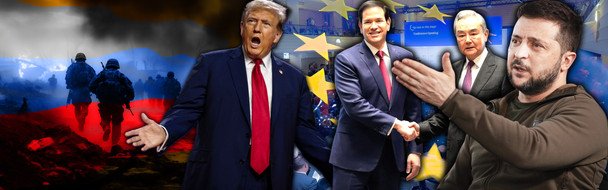
The 62nd Munich Security Conference
According to TSN.ua: The 62nd Munich Security Conference, held on February 14, served as a key forum for debates on global security, U.S.-Europe relations, and the roles of Russia and China in the context of the war in Ukraine. The event was opened by German Chancellor Friedrich Merz and included U.S. Secretary of State Marco Rubio among its participants. These annual gatherings are a critical barometer for transatlantic security policy.
A central focus was China's role in Russia's war against Ukraine, with European nations actively seeking a new balance in their relations with Beijing. A large American delegation notably asserted that the U.S. does not view Russia as a direct threat to Europe. Despite the intense focus on security, the conference concluded without any firm agreement to provide Ukraine with concrete security guarantees or a clear path to European Union membership.
Key Statements and Positions
Ukrainian President Volodymyr Zelenskyy reiterated his insistence on the country joining the EU by 2027. China's top diplomat, Wang Yi, addressed the conference but pointedly declined to affirm support for Ukraine's territorial integrity. European Commissioner Marta Kos emphasized the need to find the right pathway for Ukraine's EU accession, highlighting the political complexity of the issue.
European representatives made several stark remarks framing the regional security dilemma. One European general observed, 'For all these decades, the U.S. provided Europe with security, and Russia provided gas. The time has come to settle the bill.' A senior Lithuanian official stated bluntly, 'If Ukraine is not with us tomorrow, we will have to sit down and draft a strategy against Ukraine.'
"As long as Ukraine defends Europe, the danger to Europe itself is not so great."
- Wolfgang Ischinger
French President Emmanuel Macron expressed concern over the risks of intervention, stating, 'Today, if we intervene, we take responsibility for the escalation.' Latvian official Edgars Rinkēvičs underscored that the timeline for Ukraine's EU membership is tied to a peace settlement, noting, 'The war will not end in 2026.' The conference thus proved a vital platform for airing these critical, and often divergent, perspectives.
The discussions reflected Europe's deepening anxiety over security amid the ongoing war and the shifting roles of major powers like China and the U.S. Core questions regarding regional security architecture and Ukraine's European integration remain unresolved, pointing to a clear need for further negotiation and strategic alignment. This year's conference may mark a pivotal moment in shaping new approaches to global security during a period of profound international instability.
Read also
- Latvia and Ukraine Join Forces for Drone Production: New Frontiers in Bilateral Cooperation
- Ukraine Extends Strike Range to 2,000 km: Which Russian Targets Have Been Hit
- Abramovich’s Role in Talks Exposed by Rybachuk: Putin’s Key Question for Zelenskyy
- Putin Acknowledges Russian Military Setbacks: 'Progress Not as Fast as We Would Like'
- Up to 400,000 UAH in Extra Pay for Soldiers: Zelenskyy Unveils Contract Overhaul
- New Military Pay Hikes Announced by Zelensky: What Soldiers Will Earn