Munich Security Report Warns: Russia Could Be Ready for Baltic War Within Two Years of Ukraine Ceasefire.

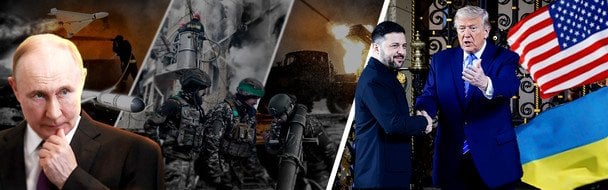
Ukraine's Conflict and the Emerging European Threat
According to TSN.ua: A report presented at the Munich Security Conference warns that following a potential ceasefire in Ukraine, Russia could reconstitute its military forces for a regional war in the Baltic region within two years. The analysis further indicates Russia could be prepared for a localized conflict in as little as six months after the end of hostilities in Ukraine.
These warnings are underscored by recent provocations. In the autumn of 2025, approximately 20 Russian drones violated Polish airspace, and three Russian MiG-31 fighter jets breached Estonian airspace for 12 minutes. Such incidents point to a potential escalation of military activity in the region, raising significant alarm among European nations.
Political Repercussions and Public Sentiment
The report also examines the political fallout from former U.S. President Donald Trump's policies and European public opinion regarding America's role in resolving the Ukraine conflict. Polling data reveals:
- 72% of respondents in Germany do not view U.S. policy toward Germany as favorable;
- 69% of Germans consider Trump's foreign policy to be unsuccessful;
- 40% of those polled in France believe achieving peace in Ukraine is impossible without U.S. involvement;
- 42% of Germans share this view;
- 36% of British and 33% of Italian respondents also deem U.S. engagement necessary.
The report concludes that 'The era in which Europe could rely on the U.S. as an unquestionable guarantor of security is over.'
Conference experts further cautioned that 'if Europe fails to show leadership, it will be left in a grey zone between the U.S. and China.' A 28-point peace plan, backed by the U.S. in November 2025, played a key role in discussions and reportedly caused surprise in European capitals. This evolving security landscape suggests European nations may need to pursue greater military and political integration to reduce dependence on external powers and address potential threats.
Consequently, the situation in and around Ukraine remains a focal point for the international community, with the prospect of Russian military action in the Baltic region posing new security challenges for Europe. The growing tension and skepticism about the U.S. role in securing regional peace highlight the urgent need for European countries to develop new approaches to their security architecture.
Read also
- Peace Talks Top Agenda as Zelensky and Trump Speak Ahead of G7 Summit
- Russia’s Black Sea Fleet Flees Crimea: Command Center Moving to Novorossiysk
- Russian Lawmakers Push Putin for a War Exit Strategy: Here’s Why
- St. Petersburg Lawmakers Call for Nuclear Strike: What the Kremlin Says Amid the War
- No Path to Zaporizhzhia: General Malomuzh Rules Out Russian Breakthrough
- Border Threat Drops: Russia Scales Back Sabotage Teams in Three Ukrainian Regions